Showing posts with label American Politics. Show all posts

February 07, 2011

A note on the unemployment rate


Various wags around the blogosphere are having a lot of fun at the expense of Hilda Solis, Secretary of Labor, and her Bureau of Labor Statistics, which some have taken to calling the Ministry of Truth with reference to the dystopian misinformation bureau in Orwell's Nineteen Eighty-Four. The latest fuel on the fire came in the form of Friday's NFP (Non-Farm Payroll Report) which claimed that 36,000 Americans found jobs in the prior month, and that as a result the U-3 unemployment rate (which is the only one the media/political class ever pays attention to) had fallen from 9.4% to 9.0%.


Since as everyone knows (because the fact is repeated endlessly everywhere you look) the United States hatches about 125,000 to 150,000 new workers each month just through the maturation of the population, many looked askance at the effect of a number approximately 1/4th the size of the average of these two numbers in lowering the overall UE rate. Some cynics then suggested that if 36,000 new workers could lower the UE rate by .4%, then a bonanza month of hiring, say on the order of 360,000, well within historical precedent for previous recoveries, should take us all the way down to about 5%, which in Darwinian capitalism (the kind we practice) represents full employment. In other words, we're almost there.

Yet that seems a little crazy. How could such a huge problem of unemployment be solved with one fairly average good month, and with such a paltry number compared to the problem? Thus, rather than being like the other guys & gals writing about this, I decided to hike on over to the Bureau of Labor Stats website and see what was going on. Is Hilda, the lovely child of Mexican and Nicaraguan immigrants, a loyal cadre of BarackObama's 2008 campaign who was rewarded for helping the O-Man with the Latino vote with a plum job in his administration despite virtually no visible qualifications for the position - is she cooking the books?

Of course not. For one thing, Hilda began as a supporter for Hillary Clinton and only started delivering La Raza for Barack when that fell through (though I was thinking, she must be quite an operator to turn on a dime like that and convince the wily Obama she was worth bringing onto his team). Hilda's a good California kid from the San Gabriel Mountains area, educated at Cal State Poly-Pomona, who worked her way up through the ranks of California state politics. It's just a guess, but I doubt that she knows anything more about statistical manipulation than she does about labor policy, whatever that might be. In general, with the notable exception of Steven Chu at Energy, there isn't much correlation between career expertise and cabinet position. It's more what the cabinet-appointees "have been interested in" at some point, such as a rancher being "interested" in the Interior or Eric "Place" Holder being "interested in" law.

But one thing I learned at Albion H. Horrall Elementary School in San Mateo, California, in the halcyon 1950's of this great country of ours was that a percentage is essentially a conversion of a fraction. 3 is 60% of 5 because 5 divided into 3 = .6. It's just that simple. So these cynics and carpers can go on all they want about the ridiculousness of 36,000 hires lowering the UE rate by .4% but it still all comes down to a matter of a numerator and a denominator. And the denominator is the Obama Administration's friend, see, because the FAQ for the BLS tells you exactly who is in that pool:

Who is counted as unemployed?

Persons are classified as unemployed if they do not have a job, have actively looked for work in the prior 4 weeks, and are currently available for work.

Workers expecting to be recalled from layoff are counted as unemployed, whether or not they have engaged in a specific jobseeking activity. In all other cases, the individual must have been engaged in at least one active job search activity in the 4 weeks preceding the interview and be available for work...


So there you go. Now if I can do that, why can't the other wiseguys? It's right there in front of us. Hilda has delivered once again for Obama, because I can assure you that the number he's going to use is that 9.0%, not some exotic indicator like the U-6, which sounds a lot worse, and he's not going to go into a lot of detail about how the denominator for U-3 is calculated. That's how politics works in a mass-media society, a subject which admittedly fascinates me. The public, the media, everything and everyone, are simply worn down by the repetition of the residual number, in this case 9%. There just isn't the patience or the mental space in our frenetic, crowded culture, every damn time out, to go into a whole routine about how the U-3 actually got better because the economy is so uber-shitty that no one even bothers to look for a job anymore, which is the actual, literal truth, but to point that out takes time and understanding, and those things don't exist anymore. The key to effective Presidentialness, and Obama understands this, I think, better than he understands anything else (it is the whole secret of his success) is to seize the headline numbers and make them work for you because no one, ever, is going to look at anything else, and your opponents are going to battle you on that turf.

Which is to say: modern mass-media politics is not actually about reality. It is essentially, only, exclusively, about the management of perceptions. It cannot do anything about real problems because it does not engage real problems; it only engages their simulacra, their indicia, their Platonic Shadows on the Cave Walls of Reality.


December 31, 2010

Closing thought for 2010


I leave you with this idea, as we see the headlight of Train #2011 appear far down the track, heading toward the station: a constitutional democracy is something of a learned discipline, not so different from the scientific method in some ways. It takes a certain habit of mind, a kind of intellectual persistence to sustain. There is nothing automatic about it. "Serious" people in our society often seem to discount the idea that a democracy such as ours can degenerate into some far less desirable form of polity, but such thinkers suffer from the fallacy known as the normative tendency of the factual. This fallacy inculcates the illusion that the social and political arrangements around us are in some sense permanent and indestructible.


This is not really the truth at all. Democracy is actually the aberration; humans are far more predisposed to arrange themselves into hierarchical systems which are anti-democratic, which repose absolute power in elites accepted either by acclamation or by acquiescence in Divine Right. Looking back over history, and around the world even now, we can see that kings and dictators have been far more plentiful than democratic governments. Such tyrannies are the default position, anthropologically speaking, just as religion is the default position in the absence of a scientific establishment.

What is going on right now in Washington, D.C. is a modern, technologically-driven form of this degeneration. Sheldon Wolin calls it "inverted totalitarianism," Chris Hedges calls it a move from "Brave New World" to the dystopia of "1984." What it doesn't seem much like is the democracy in the United States which existed even twenty years ago. It's true we still have elections, as poorly attended as they are. There are still "sea changes" in our government, even "hope and change," yet you can still discern the inexorable slide toward a government of men and not of laws. If you pay attention, if you don't get caught up over much in partisanship and just observe how almost all of our leaders are behaving, you can see this. It has become the norm to disregard statutory law and the Constitution, most particularly the Bill of Rights. To my way of thinking, this is neither a "liberal" nor a "conservative" position, the act of pointing out this devolutionary process. Absolute power, once it is achieved by elites, is indifferent to "left" or "right." Was National "Socialism" a disease of the "left" or of the "right?" Were Stalin's gulags features of a "leftist" government or a "rightist" dictatorship? What's the difference, really? In neither system did the common person have any rights. Both systems were simply about the exercise of absolute power by those who seized it.

It has become standard practice in Washington never to punish a member of the political/financial/military elite for anything except betrayal of the elite's interests. That is the only crime now. Torture, lying to Congress and the American people in furtherance of a war, routine violations of the Fourth Amendment, suppression of First Amendment rights, fraud on an industrial scale - nothing ever is done about it through the justice system. Wars were launched first without a Declaration as required by Article 1 of the Constitution. Now they are pursued, as in Yemen, without even the token (and constitutionally insufficient) compliance with the War Powers Act. No government official seeks a FISA warrant to spy on us. If Wikileaks is too big a problem for the U.S. government, it employs a specious distinction which does not exist between Julian Assange and Daniel Ellsberg, as far as First Amendment rights are concerned, in order to silence the former while leaving the latter, contradictorily, untarnished as an American hero.

In some way the power elites, as C.Wright Mills called them, have managed to confuse the common American into thinking that patriotism consists in party loyalty and not devotion to the best interests of the country. This is a very clever trick, and one that the Tea Party has completely fallen for. The Tea Party demands that "the Bush tax cuts" be enshrined and perpetuated, without seeming to realize that the evisceration of the U.S. Treasury cannot possibly serve the interests of the middle classers who tend to populate the movement. They cheer on wars that are supposed to keep us "safe," without thinking through that the wars are for the same purpose as the tax cuts, to keep taxpayer money (and the huge borrowing which such dwindling income makes possible) flowing to well-connected defense contractors and war profiteers. The power elites have managed to incite hate between liberals and conservatives by getting them to argue about such things as wars and tax cuts for the rich in symbolic terms - being for war and tax cuts for the wealthy is patriotic; being against such things is subversive and anti-American.

Eventually, when all the bills come due, the commoners always realize they've been had, when intellectual distinctions or the fine points of partisanship are no longer relevant, because the Queen is telling you to eat cake if there isn't enough bread. Then you wind up with France in 1789, or the American colonies in 1776. Or more darkly, Russia in 1917 or Germany in 1933.

While I don't really see how we're going to do it, I hope we begin to figure such things out before events themselves compel the changes. History teaches us that's often a disastrous way to evolve.

August 19, 2010

Crabwalking the Ground Zero Mosque


Laurence Kotlikoff, an economist at Boston University, wrote a recent piece for Bloomberg News in which he argued persuasively that the USA is utterly, thoroughly, irrevocably bankrupt, with its total liabilities, honestly counted, in the $202 trillion range, or about four times the annual gross world product, and 15 times the annual American GDP. We've reached, he writes, the end of our Keynesian rope and there's simply no way out. We're trapped in zero interest rate paradigms (ZIRP) because the national debt, and the rate of new debt issuance, have become so monumental that the slightest tick upward means that debt service alone will crush the federal budget and cause the country to implode. Kotlikoff is the author of The Coming Generational Storm, a prescient look at the impending war between young and old concerning the attempts of the Baby Boom generation to retire and draw Social Security and Medicare in amounts that the American economy simply cannot support, despite what clowns like Krugman write about "trust funds" and the rest of the illusionary nonsense. Nor will the various governments, federal, state and local, be able to fund, in full, all of the pension promises they have made to former and existing employees. The money is simply not there, and future funding is based on completely unrealistic, quasi-hallucinatory 8% rates of return which haven't been around since the Clinton Administration.


While these Depressionary realities continue to roll out, it's only natural that the MSM and the Klown Kollege in D.C. would disport themselves with any distraction at hand, since if one thing has become absolutely, completely obvious, it is that the political system in this country cannot handle any real problem whatsoever. Those days are over. No part of the federal government has the resources, the competence or the good faith to deal honestly with anything, and they are going to ride the Titanic right into the iceberg, stripping the crystal chandeliers and pocketing the sterling silverware while they party on into the night.

So we learned that much, at least, with the election of Barack Obama: nothing is going to help. Good to know. You, me and the cockapoo over there at the corner of the greensward taking a dump - we're all on our own. So what's to report?

Well, we can get excited about whether Muslims will build a new mosque within a few blocks of "hallowed" Ground Zero. Barack calls it "hallowed ground," echoing Lincoln at Gettysburg, as if that makes any sense whatsoever. Gettysburg was hallowed ground, in Abe's estimation, because of the pitched battle which had occurred there not long before his speech at the height of the Civil War, and the deaths of soldiers on both sides, particularly the armies of the North fighting to preserve the Union. That's not the same thing at all as the site of a terrorist attack; it gives way too much credit to the terrorists. But Americans are not deep historians, so who cares.

Obama began his participation in the "controversy" by saying something banal, obvious, almost principled: in America, under the First Amendment, the right to practice religion shall not be abridged, for anyone, and the equation of American Muslims with al-Qaeda or the terrorist cell which attacked on 9/11 is bigotry. So far, so good. Then, as usually happens, he frightened himself with his unguarded candor and began hemming and hawing, in his usual irritating way. What he meant was, see, yeah, we have a First Amendment and everything, I'm not taking that back, but is it such a good idea for Muslims to be building a mosque near Ground Zero, because, you know, those were Muslims who attacked us and everything, and people could get the wrong idea, and...

So then we were back to Louis Gates, the Cambridge cop and the Biergarten moment. Lah dee frickin dah. Where else could we wind up? For the aid of invertebrates everywhere, here are what I think are the two principled positions possible on this issue:

1. We have freedom of religion. Thus, the right to build a place of worship is equally accessible to any religion which applies. Thus, Muslims can build a mosque in Lower Manhattan, and Catholics can build cathedrals near elementary schools.

2. There is something suspect about Islam. They don't make enough noise about anti-Americanism, they won't condemn terrorists, they tend to institute Shariah law whenever they get enough critical mass together to influence politics. We have to start rolling back Islam in this country, as some European countries are doing now, as in France with the anti-head scarf rules, et cetera. What the United States is doing in Afghanistan and Iraq, and probably soon in Iran, really is a crusade against Islam, not a coincidence connected to oil or oil pipelines, and we're taking the war to the new battlefield, right here at home.

Take your pick. Strict Constitutional approach or something different. What's it gonna be? Saying you wonder about whether it's "wise" to build a mosque in Lower Manhattan is not leadership. It's an attempt not to take a position. Not that I'm telling you anything you didn't already know.

January 20, 2010

So long, Massuchusetts


The one positive development I can see in the election of Scott Brown to Ted Kennedy's former seat in the Senate is that I don't think we'll have to listen to Harry Reid talk about the "60 vote rule" nearly as much anymore. Indeed, I imagine that 2010 will be Harry's own last year in the Senate, since if the Republican "tsunami" is going to sweep anyone from office in November, surely Mr. Mumbles would be one of the first to go.


I never quite understood why the Democrats thought they had 60 votes before this election, however. There were only 58 Democratic Senators when Ted Kennedy was with us. They count Bernie Sanders, the independent Socialist from Vermont, as one of their own, of course, and that makes sense. But they also count Joe Lieberman, and that makes no sense at all. Joe Lieberman is an Independent who simply plays the Democratic Leadership for fools, claiming to caucus with them in order to keep his committee chair, and otherwise doing anything he can to thwart their ambitions, whatever those might be. Joe Lieberman campaigned for John McCain. How bright a picture does a guy have to paint?

Still, this nonchalance of mine can only carry a person so far. The election of a Republican as a Senator from Massachusetts, cradle of our liberal democracy, is a very ominous sign. The cable news guys & gals, always looking for a takeaway line, read these results as a "wake up call" for the Dems. They better get cracking, et cetera. We all know it's too late for that. The Democratic ascendancy was about one thing and one thing only: public revulsion at the manifest atrociousness of the Bush Administration. It did not have much to do with enthusiasm for Democrats per se. They were, however, the other brand, and the good people of this battered land invested their hopes with them.

That would have been the moment to do everything differently - January, 2009. A Democratic Renaissance. Institute radical departures from everything Bushian. Withdraw all the troops from Iraq and Afghanistan, begin the process of dismantling half of all those foreign bases and forts, investigate and prosecute all the horrendous torture and detainee abuse, perp walk half of Wall Street for massive securities fraud, begin massive investment in a new energy regime and public transportation - clean the frigging house. The American people would have been thrilled with the prospect of a new sheriff in town, and American progress toward sustainable prosperity.

Instead, Obama and the Democratic Leadership wanted to see how many of the Bush-era "initiatives" and "approaches" could be salvaged and continued under their regime. Can you believe that? That's what they decided to do. In their view, Bush had been such a singular success in managing all of his wars and the American economy that he was worthy of emulation. It worked for him, why not for us? Let's just leave everything the way he left it.

Astounding. So, for now, we have 57 Democratic Senators, 41 Republicans and 2 Independents, one of whom is a Democrat and the other is another Republican, so it's 58-42, which means Harry Reid can stop counting and resume mumbling about parliamentary procedure or whatever it is that he gets paid to do. As we all have learned by now, absolutely nothing can be accomplished in American government unless there are 60 Democratic Senators.

Except, of course, when the Republicans win a few seats in November and, mirabile dictu, for some reason find themselves capable of doing anything they want, just as they did under Bush. That's something I never quite understood. I'm at a loss to think of a single crappy thing Bush wanted to do where he was stymied by the "60 vote" rule. Did the Democrats ever deny him war funding? Stop his illegal wiretaps? Repeal the Patriot Act? Force him to balance a budget?

Nope, none of that ever happened. I would say it's just as well that the Republicans Are Coming, the Republicans Are Coming, but it isn't just as well, as we all know. It's going to be a nightmare. The Republican Party has transmogrified into some very weird parody of its old self, typified by such political practitioners as Sarah Palin and Liz Cheney, who operate on the outside (currently), and by guys like Tom Coburn ("death penalty for ob-gyns who do abortions!"), James Inhofe ("global warming is the greatest hoax on mankind in history!") and Mitch McConnell (well, - Mitch McConnell). All the solons in Washington are going to be living in communal frat houses with Bible readings every morning, and carrying on strange, ritualistic practices at night by candle light, and then swaddling themselves up in diapers and calling in the madams to administer their discipline. American government is going to descend into a kind of hybrid version of 1984 and Rosemary's Baby.

So - a weird, fetishistic government, crucifixes painted on our tanks as they roll through Islamic countries as our wars rage on, a bankrupt Treasury, a lawless approach to Constitutional rights, a decimated economy. Let me know when the fun begins.

A pundit once said, commenting on Michael Jackson's habit of sleeping each night in a hyperbaric glass coffin, "there's a fine line between the weird, and the really, really weird, and Michael has crossed it." We are nearing that Rubicon ourselves. Think fondly on 2009 and 2010; for all of their shortcomings, they will be remembered as the pause before the Storm.

July 02, 2009

Happy Fourth

After I finish Halberstam's majestic The Fifties, I think I'll read Kevin Starr's Golden Dreams, which covers California during the same era. It was my late, great cousin Jim Houston, writer and highly-practical philosopher, who taught me that when one's own times fail to satisfy, it's best to revert mentally to some earlier epoch when life seemed better. Jim went all the way back to the turn of the last century, 1890 to 1910, what the Parisians may have called La Belle Epoque. Before the First World War, before income tax, before all the improvements to modern life which have made it largely unlivable.


Usually when one expresses such an opinion, one is met immediately with the objection that modern improvements in health care, and particularly the eradication of many infectious diseases and improvements in surgical techniques, make such nostalgia silly and misplaced. An intellectually honest person must yield to the truth of some of this; although I would say that human life span, as opposed to expectancy, has remained largely unchanged over the last few thousand years or so. About 85 to 95 years is the human life span, and probably the best predictor of a long life is the fact that you're alive at a certain age. My Southern relatives tended to achieve this life span almost to a person, and it's fatuous to think that modern medicine "allowed" them to live as long as they did. It's really more tautological than that. They lived long lives because they were long-lived people. When your German Shepherd goes to that Great Kennel in the Sky at age twelve, you do not ascribe it to the wonderful work done by his vet. You figure it's because he lived out his normal life span.

I find myself becoming more of a Luddite as I age, perhaps in keeping with the masthead of this blog. I think all of our mediated experiences of reality have turned back against us: television, the Internet, Twitter, Facebook, iPhones and Blackberrys, texting, e-mail, video games. We've let the world turn into a shit pile because we don't pay that much attention to the Real Thing, just reality as represented in pixel images. How could the Great Pacific Garbage Patch exist without anyone even talking about it? How could there be 600,000 pieces of trash orbiting the Earth? California's broke, and one of the first cost-saving measures proposed by our Austrian governor is to close all the state parks, maybe on the realistic notion that no one will notice that all the preserves of nature have become suddenly inaccessible. We can still watch them on TV, I guess.

Anyway, while wandering around in the past, I came across this remarkable quote in Halberstam's book:

"Years later, when Ike gave his farewell speech warning against the power of the military-industrial complex, he was much heralded; but the truth was that such views were always the bedrock of his philosophy. He was the second President who had to make difficult choices about complex and expensive weapons systems. He worried about the potential drain on the economy, and he believed that the Joint Chiefs cared little or nothing about the dangers of inflation. He spoken often in private about the danger of spending so much on weaponry and defense and in the process destroying the economy and thus weakening the country these weapons were going to protect. The federal budget, he liked to say, had risen from $4 billion a year in 1932 to $85.5 billion in 1952 - with some 57 percent of that increase going to the Pentagon. 'This country," he once noted, 'can choke itself to death piling up expenditures just as surely as it can defeat itself by not spending enough for protection.' Defense spending, he believed quite passionately, was dead weight; it was inflationary and subtracted from the nation's vitality rather than added to it."

I don't think anyone can say with a straight face that the Supreme Commander of the Allied Forces, the supervisor of D-Day, did not know an awful lot about wars and the military. Now it's a commonplace for the Commander in Chief to defer to the judgment of the generals. What matter are the opinions of the "commanders on the ground" in our endless theaters of war. Obama now has his war of choice, Afghanistan, and he gets to play army, with real lives at stake, in a Marine assault in Helmand Province. He wants to root out the Taliban and their illicit drug trade so that the warlords can return and resume running the drug trade under a regime with free elections, and so that Osama bin Laden, who left eight years ago, cannot be harbored by the Taliban. While we're in Afghanistan we will also kill all the al-Qaeda terrorists, and I believe it is very obliging of these terrorists, very thoughtful even, to gather in one narrow corridor of the world so we can kill them all at once, and not disperse to, say, Egypt, Indonesia, Pakistan, Saudi Arabia, Algeria, Morocco, Tunisia, the Sudan, Yemen, the UAE, Kuwait and other Muslim countries. Life imitates old jokes, like the one about the guy who drops his car keys in a parking lot at night and asks his friend to help. His friend walks around in circles at the far end of the lot. "I think I dropped them around here," the first guy says. The friend answers, "Yeah, but the light is better over here."

Eisenhower's warning is now a very faint echo from the past. No one even talks about military spending anymore - it's a given, an untouchable, our raison d'etre, as Lafayette, who did so much so long ago to put us on the map, might have said.

June 28, 2009

My Fact Finding Mission to Buenos Aires


Recently, I suggested that Governor Mark Sanford should be our next President. To say the least, this is not the majority view in the United States. Maureen Dowd in her column in the New York Times today, for example, wrote a whole number accusing Sanford of a Mark/Marco duality ("he was in love with her, and in love with the image of himself in her eyes," etc.) consistent with her usual pop psychological approach. I use Freudian references in my own amateur psychology; if you're going to use uninformed generalizations, be sure to borrow from the best - the classics.


The South Carolina Democrats are now calling, of course, for an "investigation" into the state money spent on Sanford's trysts. This was all too predictable. The fun part of these scandals always gets ground to dust under the relentless assault of the scolds and bluenoses. We move from tan lines and magnificent parts to special prosecutors and audits. I still maintain that Americans do not know how to really mount, so to speak, a sex scandal, and I return to my own gold standard on the subject, Silvio Berlusconi, the 72 year old Prime Minister of Italy. Prosecutors there are interviewing 30 young women in connection with Silvio's habit of throwing parties where the guest list includes a lot of prostitutes, although Berlusconi has grandly dismissed the idea he's ever paid for it.

Does anyone ever ask why someone's sex life has anything to do with serving in office? In Eliot Spitzer's case, it was at least obvious that the Bush Administration's Justice Department tapped Spitzer's phone at the behest of the big investment banks on Wall Street which Spitzer had prosecuted in connection with their illegal laddering and insider trading frauds, arising from their IPO and mutual fund scams. Spitzer made them pay fines which were tiny in comparison to the bonanzas they'd stolen in violation of the securities laws, but still...it was the principle of the thing. It was as if Spitzer had taken the regulatory laws seriously or something. So he had to be run out of office by a compliant Bush Administration and media industry. Thus, the public lost one of its last remaining firewalls against systematic cheating, but gained a minor scandal for a couple of weeks. The tableau with the distraught wife, the giggles about knee socks, pictures of the whore. Tee-hee. We're such a mature people.

As for Wide Stance Larry Craig, Diaper-Clad David Vitter, and the rest of the gang, the usual explanation for their persecution is that they persecuted Bill Clinton when he was impeached. This explanation now extends to Mark Sanford, since he was a congressman at the time of the impeachment. This is one of those explanations that explains nothing. Yes, they're hypocritical about sex, but what, again, does that have to do with their fitness for office? It's as if the press, in digging up quotes from more than a decade ago, says "See? Tah-dah!" And we're supposed to instantly get that these guys have got to go.

See tah-dah what? What two ideas have been connected in the mind? I was reading a book by Pascal Boyer called Religion Explained not long ago, and he was discussing some of the recent thinking in evolutionary psychology, and the inference systems which we use to acquire knowledge and build on our existing database. For an example of such an inference, if I say that an ooglarp is an animal, you know a little - it's not a mineral or a plant. But in evolutionary terms, you're not much farther along than when we started. Should I be afraid of it? Can I eat it? That kind of essential hunter-gatherer knowledge. If I say that the ooglarp is the main predator of the zebra, you suddenly know an awful lot. It's probably a feline or canine creature, it's carniverous, it's probably fast and powerful, it has four legs and sharp teeth, and it lives in Africa. If it's feline, you would probably encounter one or two hunting together; if canine, it probably hunts in packs.

How did you know all that? With one clue, you inferred all the rest. The evolutionary psychologists think this is how our brains work. It's the most efficient way to learn; you don't start from scratch every time you learn some new piece of data. You extrapolate from what you already know. Thus, when ancient man looked around him, he naturally inferred, from the existence of creation, that someone created it. This was natural because he knew, from his own rudimentary tool-making and use, that you can build things. He naturally assumed, because of the way his brain worked, that the world was made by someone, and he inferred that it was someone of great power (the ancient cave-dweller couldn't build something like this). Thus, an omnipotent, anthropomorphic God was created by man to explain the world, using his natural, adaptive inferential technique.

Since humans were also very social animals (they evolved in that direction since cooperation was essential to survival, given their relative weakness in the animal world), they transmitted their belief systems in myths. A key requirement of such transmission is reproducibility; not just any story will work. The essential details have to hang together so they can be passed as a complete myth, without too many weird, extraneous features. Thus, an anthropomorphic God who is omnipotent, possessed of human emotions and exists only on Wednesdays just won't work. That last detail messes up the transmission. Similarly, the Virgin Mary is in every way a normal human except she gives birth immaculately. That's easy to remember and gives the story the mythic character it needs to go along with omnipotence, etc. Normal woman, Mother of God. Perfect. By the same token, the New Age approach of reducing God to a sort of inchoate force just doesn't catch on - where are the humanoid details, the story line that makes a myth a myth? So New Agers are actually the stealth atheists of the religious world, and I pass this on to my Fundamentalist friends who might be tempted otherwise to lend a New Age spiritualist their car keys.

It follows then, and ironically enough, that evolutionary psychology strongly suggests that belief in God is the natural tendency of humans, which is why religion and belief in the supernatural are found everywhere in human civilization, and always have been. By contrast, scientific thinking is highly unnatural and foreign to our innate brain processes. It takes a great deal of mental discipline to inculcate a truly scientific approach to reality. It gives the advantage of allowing tremendous predictive ability and control over outcomes, but it is not the normal, default way of thinking. If a plane crashes today and you're scheduled to fly tomorrow (on a different airline, on a different route, in different weather), your first instinct is probably not to reflect on the fact that the probabilities have not really changed at all. You infer, on the basis of atavistic tendencies, that you're in greater danger today than you would have been two days ago.

A scientific approach to the question of God would suggest that any anthropomorphic God could not have pulled this off. If God's brain is given over to emotional attributes like anger, jealousy, wrath, love, etc., it's unlikely that this human-like brain (supposedly we're made in his "image") could also undertake the enormous complexities, and the computational speed, required to make the universe. And if God could do all that, it seems unlikely that such a being would have even the faintest sort of commonality with man. As noted, the Cosmic Force version of God, endowed with the power to do all these things, doesn't sell down at the local cathedral because He's just too foreign to human experience.

So it seems likely, particularly given the conditioning of our specific culture, that a politician who errs sexually is subject to a set of inferences by the general public. These inferences include the presumption that a philandering man (and men in particular) are not trustworthy and fail in their public "father" role as a leader of humans. Is this scientifically reasonable? I don't see how it could be. Traits such as intelligence, creativity, organization and force of personality (which might make a leader more vulnerable to straying, after all) surely count for more than marital fidelity, since the governor or president or whoever is not married to the people he governs. The only question is whether he's effective at his job. Eliot Spitzer was very effective; that he had a thing for call girls is absolutely, completely beside the point.

As I've said, Europe seems, in general, to do much better with sex scandals and politicians than we do. I think this may reflect a higher-level mental functioning than is found in the United States. Not that the Europeans are innately more intelligent, but that their inference systems operate at a higher level of integration with scientific, rigorous thinking. Americans are primitive in the inferences they draw, conjoining factors which have no reality-based connection. America, of course, is far more religious than the secular Europeans, and the ready acceptance in the U.S. of all kinds of myths and literalist religion is probably indicative of lower, less evolved mental functioning.

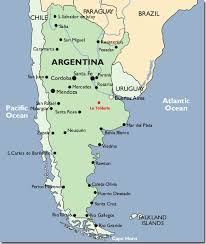
But as an example of my own faulty inferential system: I assumed that Buenos Aires was farther south than it really is. It's in the north of Argentina across the water from Montevideo. Because it was located in South America, and I knew Argentina was the southernmost country, I inferred in a faulty manner that its capital would be in the extreme south. Yet scientifically this makes little sense. Why put your capital in the coldest location in the country? This becomes clear once you reflect on the role of latitude, which applies as logically in the Southern Hemisphere as in the Northern. What else have I assumed? Have I jumped to the faulty inference that because Sanford's mistress appears to be a tamale caliente, that all women in BA are such? And if her boyfriend down there leaked Mark's emails to the press, should I infer that all their boyfriends are treacherous and hot-blooded, and that one's hotel room door must be kept securely locked?

An old friend of mine, who has seen the whole world in the course of his work, writes that I should go to Buenos Aires myself, forgetting about the prudish sermons from the likes of Keith Olbermann and Maureen Dowd, indeed, forgetting about the blog - maybe, tal vez, forgetting about everything. And returning a new man. Does the cause of science demand any less?

May 17, 2009

Let the Lone Star Republic Go in Peace


I was extremely disappointed by Keith Olbermann's uninformed, smarmy rant on his "Countdown" show the other night when he took Governor Rick Perry of Texas (maybe someday the "President" of Texas, or Generalissimo?) to task for mentioning again the possibility that Texas might secede from the Union.  His voice dripping with sarcasm, Olbermann "reminded" Perry of all the benefits of statehood his Republic would forfeit, and mentioned specifically such matters as federal aid, Social Security and the national defense.


Olbermann should have checked one key statistic before launching into his idiotic diatribe: according to the latest figures available (two years ago), Texas ranked 35th in the Union in return on investment (ROI) for federal taxes paid.  For every dollar that Texans send to Washington, they receive 94 cents in return.  (California's situation is much worse; there the figure is 78 cents).  This is a common misunderstanding about the "value" of statehood.  For most prosperous states, it's a net loss to be a member of the United States.  

I'm sure that Rick Perry is aware of this, even if Keith Ol'Blowhard is not.  Perry is simply doing the job he was elected to do: govern the people of Texas.  Their interests should be primary in his choice of policy, and it's become obvious to Perry (and to Sarah Palin's husband, to choose another loud and leading advocate for secession, this time for Alaska) that statehood simply comes at too high a price.  

For example, take a look at one of Olbermann's exhibits for the Union: loss of Social Security benefits.  In the first place, any prosperous state suddenly relieved of the duty of paying in FICA taxes to the federal government would free up enormous amounts of revenue for local use.  It has become a taxpaying fact of life that most Americans pay most of their federal taxes into this pay-as-you-go system; and since it's pay as you go, suddenly cutting off the federal payouts has no long-term effect other than allowing the citizens of a state (such as Texas) to escape the looming bankruptcy of the system and to replace it with something with a future.  The recent report from the Congressional Budget Office underscores how near-term that Social Security insolvency is.  Currently, the system produces only a $3 billion surplus above payouts, and while the forecast is that Social Security will not "go negative" until 2016, in fact this prediction is built on completely unrealistic economic guesswork.  Within a couple of years, at the present rate of unemployment, the system will be underwater.

So the "benefit" of the Social Security system is a mirage, the result of choices made by that vaunted federal legislative body (and Clown College), the U.S. Congress: they spent the 2.5+ trillion dollar surplus built up over a generation on high-tech toys for the military so we could fight unnecessary wars, replacing it with a file cabinet full of IOUs.  That's the sort of benefit you get from statehood: to see your tax payments go up in smoke.

Texas could field its own military - most of its citizens are armed to the teeth now.  With payroll taxes kept in Texas, Texas could easily devise its own solvent pension system and universal healthcare.  It's a big farming state so there will be no food shortages.

So as you're fond of saying to everyone else, Keith: STFU.  If Texas wants to leave the Union, let them.  It might, you know, start something.  Yugoslavia's breakup came about because Slovenia, a northern, European-style economy with close ties to neighboring Austria, wondered what the hell it was doing in a federation with a bunch of insane Southern Slavs and Muslims fighting endless religious pogroms and civil wars.  They announced they were leaving; essentially, the rest of Yugoslavia, too busy killing each other and never doing a damned day's work anyway, let them leave without firing a shot.

Texas: Don't Mess With It.  Perry is operating in the grand tradition of Stephen F. Austin, the Father of Texas, who lived just long enough to see the establishment of the First Republic in 1836, yet mercifully died before the tragedy of statehood in 1845.

May 11, 2009

Recycled Politics


I've been reading the last full book by David Halberstam, written before his recent, unfortunate death on the San Mateo Bridge in an auto accident.  A major loss to humanity and to the field of contemporary history.  This book is entitled The Coldest Winter, and it's about America during the earliest years of the Korean War, particularly 1950.  But one of the joys of reading Halberstam is that he believes in digressions and context, so that if he's discussing Douglas MacArthur he's sure to tell you the story of MacArthur's father, another general who not only fought in the Civil War but was the viceroy of the Phillipines following the Spanish-American War, in much the same way that Douglas MacArthur was viceroy of Japan following World War II.  Suffice it to say that Halberstam sides clearly with Harry Truman in the great controversy surrounding the decision to relieve MacArthur of his command of the Korean War, and that Halberstam agrees with the historians who believe MacArthur got a lot of American GIs unnecessarily killed in the north of Korea because of huge misjudgments about the intentions of the Chinese to intervene in the war.


Halberstam fills in context on the domestic front by describing the usual squabbling between Republicans and Democrats in the post-World War II years.  After the singular reign of FDR, the only president ever elected to four consecutive terms, the nation finally turned Rightward again in 1946.  The GOP picked up 50 seats in the House and 11 in the Senate.  It seems likely that the GOP would have won the presidency in 1948 if they had run Ike then instead of waiting four more years.  In that freshman class of 1946 the likes of Joseph McCarthy of Wisconsin came to town, and the Right wing criticism of Truman's liberalism reached a fever pitch, fueled by the long frustration of the GOP.  They had been kept out of power since 1932.

In those days the GOP was quite frankly the party of the well-to-do, the country club set, big business.  They believed in low taxation, hated all of FDR's social programs (which they called either "socialistic" or "Communistic" depending on mood and who was complaining), and favored big government spending only for defense.  Truman, on the other hand, worked hard to drastically reduce military spending in an effort to pay off the WW II debt.  The total national debt stood at $250 billion, a quaint number by today's humongous standards, but it was intolerable to the fiscally conservative Truman.

In other words, the political tango was danced much the same in 1950 as it is today.  The main difference is that the United States has lost most of its great middle class from the post-War era. The GOP, running out of fat cats to fill out their electorate, were forced during the Nixon years to employ the so-called Southern Strategy, in which they conned the Evangelicals and other non-pluocrats into voting Republican on the basis of "social issues" such as abortion, homosexuality and, most important of all, racism.  Prior to the "sell-out" of the Southern Democrats by Kennedy, Johnson and other turncoats who insisted on enforcing the 14th Amendment, even if it meant allowing black kids to go to school with white kids in Alabama, the Democrats could count on a solid South voting bloc.  Now the Deep South is actually the only remaining reliable stronghold of the quasi-theocratic Republican Party.  Even the uber-rich are probably evenly divided between Democrats and Republicans, since the wealthy own equal numbers of each in Congress.

One might call this "stability" through the generations, this pattern of recycled power traded back and forth between the Donkeys and the Elephants.  I'm more inclined to think of it as late-stage stagnation.  There is nothing in the Constitution, after all, which mandates or suggests that specific political parties must exist forever.  But they do in the U.S., and it's been these two parties for a long, long time, with no meaningful competition.  They never have any new ideas, and I think it's a direct result of this stagnation.  They have the same arguments, decade after decade, and they always use the same solutions.  Taxes go slightly up, then they go slightly down.  The defense budget goes slightly up, then slightly down.  We keep fighting wars of intervention, always on the same basic principle.  If we don't, whatever problem we're fighting will "spread."

The talk now is of the "death" of the Republican Party.  This won't happen.  The American people got tired of FDR's activism and internationalism and they voted in a bunch of isolationist, small government-big defense politicians.  The American people were appalled by the stupidity and incompetence of George W. Bush (they couldn't really believe they'd elected this clown) and they turned on the GOP with a vengeance.  But the American people will tire of the Democrats in turn, and then the other exhausted, ossified, no-idea party will be back running things again.

I think this is all a failure to adapt, of decadent processes which choke off real innovation and invention.  These parties limit their "initiative" and strategy to the preservation of power, which they pass back and forth on a fairly predictable schedule.  But it will take a generalized meltdown, not just an economic downturn, to get rid of them.  I think, however, they're quite capable of producing such an event, if not much else.


May 06, 2009

Land O' Prudes


Maureen Dowd in the New York Times wrote the political obituary of John Edwards today.  She didn't seem to regret it, really.  You might say she relished the opportunity, since scolding men for their wayward marital ways won her a Pulitzer Prize way back in the days when she was attacking Bill Clinton relentlessly for his shenanigans with Monica.  It's obviously a thing for Maureen, this all-too-common phenomenon of powerful men with a roving eye.  I suppose at some point she must have written about women who cheat, but if she has I missed the column.


Anyway, Maureen's elegy over John's political grave:  

John Edwards’s political career is over, and he’s being investigated by the feds about whether he used campaign funds to underwrite his affair. Nobody — except Rielle — has any interest in hearing from him again. Americans would have been relieved if the last we heard of him was that cringe-inducing “Nightline” interview last year, when he made the argument that he was a helpless narcissist and that he hit on Rielle when Elizabeth’s cancer was in remission.

Actually, Maureen should speak for herself and not all "Americans" and should not presume that "nobody" has any interest in hearing from John again.  I think that's a case of bluenose projection. Gary Hart survived his sexual escapades to become a kind of eminence grise of foreign policy matters, for example, so second acts are possible.  Bill Clinton is now widely revered as a political statesman by most Americans despite all the scolding he took from Maureen Dowd and the Republicans.

Still, there's no serious doubt that Dowd is right about Edwards's political career; as any kind of candidate for major office, he's through.  In that sense Maureen Dowd knows her America.

Recently, I was reading about Italy's Premier, the 72 year old Silvio Berlusconi,  and his marital difficulties.  Maria, his wife and 20 years his junior, has decided to seek a divorce in a very public way from Silvio because il cano antico has apparently become smitten with an 18 year old actress, on whom he dotes and lavishes gifts.  It's all like a cheesy Italian opera.  Maria might have known; after all, Silvio was 42 and she was 22 when he met Maria, an aspiring actress at the time.  And Silvio was married then, too, to the woman he left for Maria.  Silvio and Maria then carried on an affair for 10 years and had three children.  Then they got married.  And it was after all of that carrying on that Silvio was elected to Italy's highest office.

In recent memory we also have the case of Nicolaus Sarkozy of France, who was getting divorced so he could marry supermodel Carla Bruni virtually at the same time he was running for office.

So here's the question: why don't the Italians and French care?  Why are they able to make such a clear distinction between private "morality" (if that's even involved) and fitness for public office?  Asked another way, suppose it's all true about John Edwards.  Let's say that Rielle Hunter is the mother of John's baby and that they carried on an affair during his campaign, and that Rielle is a well-known party girl, as Maureen sniffs.  What is it about such a situation that would disqualify John Edwards as presidential timber?  And why is it only a disqualification in the United States but not in Western Europe?

I sometimes think that by imposing yet another artificial barrier to public office, the requirement that a person have a squeaky clean private life, that we're selecting for bloodless, epicene androids with dull personal histories and not much juice for life.  A complicated love life can be a pretty rich learning experience, after all; I would think that Silvio and Sarkozy probably know a helluva lot more about certain types of human motivation and passion than, say, Dick Cheney.  Just a guess.

Anyway, Maureen will be out of a job pretty soon, along with the rest of the print journalists, so maybe we shouldn't begrudge her the self-appointed role of Puritan Enforcer.  It's a gig, for now, and one of her reliable memes.  And no doubt her small-mindedness accurately reflects the attitude of her ever-dwindling readership.

May 27, 2008

Against a sea of troubles

Streams of consciousness...

It's from Hamlet's soliloquy, but you already knew that. The Bard of Avon certainly possessed a fine poetic gift. A "sea of troubles." No one could have topped Shakespeare's metaphor for a euphonious and evocative image of overwhelming adversity.

In his soliloquy, which was actually an early form of blogging when you think about it, the Prince was trying to figure out whether living was really worth all the trouble. He laid great weight on the fear of death, and the uncertainties of the "afterlife," if any, suggesting that the decision to live, and to act, was more a matter of compulsion than desire. Anyway, Hamlet was paralyzed by indecision, by the gnawing sense that action was futile in any case, an attitude presaging other great literary ditherers such as Dostoevsky's anti-hero in "Notes from the Underground" and Camus's Meursault in "L'Etranger."

Politicians aren't like that. They are congenital can-do types, which is good, because whoever becomes the next leader of this country will certainly encounter a sea of troubles. I suspect that American life will need a new paradigm in order to thrive, and for that I think Barack Obama is probably the best situated candidate in terms of his age, outlook and sense of the moment. Roger Cohen wrote another smart column yesterday in the New York Times about Obama's mastery of the Internet style of campaigning. Hillary Clinton is mired in older forms of connectivity, which is why she found herself outflanked by Obama in the early part of the primary season. By the time she realized what had happened to her, she had spent all the money she thought she was going to need to lock up the nomination and was playing catch-up. She was banking on her "inevitability," but in the computer age these images can change very quickly. Her habit of saying stupid and erroneous things (such as lying about her accomplishments) which can be easily refuted by Googling and YouTubing set her up for failure. Her gaffes go viral and her composite image takes another pounding. She's never figured that one out. Slowly but surely, she has Photoshopped herself into a grasping, desperate, unhinged harridan whom the hip crowd want nothing to do with. She's the first casualty of the new on-line style of campaigning.

In many forms of game-playing, such as politics, the person who knows the applicable rules better often wins, and the way you raise money nowadays is by small donations solicited through the Internet. I read that Obama now has 1.2 million individual donors, making small, repetitive donations. That's an astounding number. Money, that mother's milk of politics, is never going to be a problem for Barry, and it acts as a counterweight to lobbyist money. McCain and Clinton struggle along with the old school style of fund raisers and high-end cocktail parties, where they rub elbows with all the rich people they've met in their years of whoring out their souls. I have no doubt Obama has done much of the same thing, but he's allowed also this lofty superiority because of his direct connection with common folk. Very smart in these class-riven times.

If McCain is elected, I think the USA will go into a devolutionary phase. It will be disastrous. McCain is one of those guys who was programmed early to think of himself as a great leader with a great mission, but he's actually just a dumb old fart with no ideas who will not be able to implement any changes in the American way of life. He can't; he's not smart enough, flexible enough, informed enough. I'm surprised that people aren't more horrified by his ignorance about sectarian divides in Islam, for example, particularly when he's so casual about threatening to bomb Iran. When he claimed that Sunni al-Qaeda traveled to Shiite Iran for training and support, the press treated it as a "slip-up." If he had been talking about the American Civil War and had said that Robert E. Lee frequently traveled to Washington to consult with Abrahama Lincoln about men and materiel, we would have realized that McCain was a mouth-breathing idiot. His mistake was comparable, yet his error was attributed to some age-related malady like a transient ischemic attack or the stress of travel. Didn't I just see this movie?

McCain skims along the surface of issues and takes mildly "contrarian" positions (compared to Republican orthdoxy) which have earned him a "maverick" reputation without substance. Fundamentally, he thinks of the United States as on a fixed course determined by its World War II mission. His ideas are about 63 years out of date, in other words. If the U.S. continues to bankrupt itself by playing its Globo-Cop role, it's over. What Chalmers Johnson calls "Nemesis," our propensity for maintaining an empire without the means to do it, will finish us off. I doubt, however, that most people see that. If they had, we would not just have had eight years of George W. Bush.

April 17, 2008

Neo-Nihilism

In its essential elements, the American political scene has come to resemble professional wrestling. The Republicans, naturally, have assumed the role of the heavy, the guy wearing a black hood with eye- and mouth-holes, named something like The Masked Avenger or Darth Raider. Menacing, in other words. The Avenger is out of shape, with a big gut hanging over his long tight pants, but he stays in the match by always fighting dirty. No matter how many times the ref tells him to stop using a closed fist, he keeps rabbit punching away, knee-dropping on his opponent's Adam's apple, anything, so long as it does damage and heightens the drama.

The Democrats are the goody twoshoes, someone like Cowboy Bob Ellis, in fabulous condition and looking buff in a red, white and blue Speedo. Scrupulous about the rules, the good guy takes the Avenger's worst; and while Cowboy Bob's chances often look grim, he throws off a couple of last-minute pins to pull a dazzling reversal that wins the match.

The suckers in the audience are unaware that the Avenger and Bob, just before entering the ring, have met and worked out the elaborate choreography of their match in detail, so that no one gets hurt but the crowd gets a good show. In essence, that's where we are now in American politics, except for the part about no one getting hurt. The Avenger and Bob, through their Professional Wrestlers Union, have guaranteed health care, a well-paid sinecure and a bounteous pension. They're famous and taken care of. The rubes out in the crowd have to shift for themselves.

Books such as David Sirota's Inside Job or Greg Palast's The Best Congress Money Can Buy provide the fine-grained detail on the more or less complete corruption of Congress and the federal government in general. The two parties have worked out the division of labor so that the Republicans do the dirtier work in exchange for the more lucrative graft. For example, the awful bankruptcy bill passed a few years ago was, naturally, introduced by Republicans and written by credit card lobbyists. (This is how it works now; the blow-dried solons are of such low quality intellectually that they rely on lawyers for the industries in question to draft the bills, in this case the American Bankers Association.) No one even pretended that such legislation could possibly benefit the individual "consumer," or what we used to call "Americans." The bankers who wrote the bill were looking for a way to cut their losses on credit card debt which they encouraged in the first place, by mass-mailing solicitations to millions of cash-hungry Americans. The arguments in favor of the bill, from both sides of the aisle, were of course dressed up in the usual finery of homespun virtue, of thrift and "honesty" in paying one's debts. The Democrats voting for the bill, including Joe Biden of Delaware and Harry Reid of Nevada (of course), found ways to justify voting for the bill even after an amendment was killed that would have protected the residence of Americans filing bankruptcy because of medical bills. What the hell. They have insurance. Why didn't Reid use the "60-vote" rule to corral support among the Democratic caucus to prevent this corporate dreck from entering the Bankruptcy Code? Now that the Dems are in the majority, Reid always cites the rule as the reason he can't stop Iraq funding; how come it didn't stop the Republicans from passing this bill? (Hint: Reid liked the bill; it supported his true constituency.)

And why do hedge fund managers, such as John Paulson and George Soros, who make over $3 billion per year (the average among the top 25 hedge fund managers is $775 million per year), continue to pay capital gains rates on their income? Because of the principled advocacy of Democrats such as Chuck Schumer of New York, that's why; it would be tragic indeed if these visionary entrepreneurs were forced to pay the same marginal rate as the secretaries out in the typing pool.

The Iraq war voting, of course, is an old story. Carl Levin, Democrat from Michigan, subjected us to a nauseating analogy between his decision to continue "supporting the troops" by voting "yea" on funding for Iraq with comments Lincoln made about the Civil War. I wonder how much Googling his staff had to do to come up with that claptrap. And despite the open, indeed cocky, admission by the highest officials in the Bush Administration that they committed systematic war crimes, the Democrats will not lift a finger to exercise the Constitutionally mandated remedy of impeachment. You see, "impeachment" is what the Masked Avenger does; Cowboy Bob fights clean and wins the elections. These are required elements in the dramatic form; the handsome lead actor wins the girl in the final scene because he's such a good guy, not because he turned in his rival to the cops.

Gradually I think even the rubes of the American Booboisie have come to the realization they're being taken for a ride by the choreography of the two-party system. It seems to my somewhat acute ear that a rising clamor for an end to the monopoly of the Democrats and Republicans is gaining force. Right now it takes the form of Neo-Nihilism, the utter disgust and contempt of Americans for their elected representatives reflected in sub-20% approval ratings, but maybe it will transmogrify into something more positive in the coming years. Grass-roots movements in which new parties choose candidates from a "bottom up" process. Right now, through processes they don't completely understand, the electorate is presented with choices made by Big Media based on narrative potential. An African-American man; a woman; a war hero, in the present case. We are instructed to get excited about one of these, even if these candidates are completely constrained, by the rules of the Professional Wrestling Union, from ever talking about a problem in practical terms leading to a practical solution. That's not what the Avenger and Cowboy Bob do. They take money from Big Money to represent their interests, then put on a violent show in the center of the caged ring involving flips and body slams and clothesline shots to the throat, and a mesmerized populace votes for their favorite actor. While outside the arena, the world is going to hell in a handbasket.