Showing posts with label American economy. Show all posts

May 07, 2013

Krugman and Stockman Battle to a No-Decision

Thus endeth my informal education in modern economics.  The truth is, in terms of the epic slugfest between Paul Krugman, Champion Keynesian, and David Stockman, Champion Sourpuss, I have no particular favorite.  I don't think either one of them is actually talking about what is going on in modern American society, and in some ways I think they're both cockeyed optimists masquerading as Gloomsayers.  For example, David Stockman manages to write 700 pages without mentioning that thing we call the "environment," and which in older times we called the "natural world."  It goes without saying that Paul Krugman never mentions the effect of reality on his economic models.

David Stockman appears to be arguing that modern capitalism in America would work within our present framework of democracy if we would just stop using so much debt financing, both public and private.  Krugman argues, contra, that we should use public debt financing to fill in for lost consumer "demand" in our economy until the economy gains "traction" and becomes self-sustaining.

Yawn.  I feel for these guys.  It can't be much fun to construct all these charts and graphs on what is essentially a dry-lab basis that has nothing to do with anything.  They're a couple of old geezers (like me) who are remembering an America of their youth and pretending it can be restored if we pick the right nostrum.  And they're both so damn angry all the time.

It's okay, guys.  It's not your fault.  For my part, you might say I'm more of a classicist.  As I've written before, I think you can learn a lot by reading and studying the works of those deep thinkers who observed the "turn" in the organization of society and thus were acutely aware of the nature of the changes taking place.  Those who come along later are born and inured to the "normal" that already exists, and thus have a difficult time seeing that the way things are set up is not necessarily "ideal" or maximally conducive to human happiness. This is the "normality bias," or the "normative tendency of the factual."   So that our modern critics, for the most part, are forever jiggering, intellectually and politically, with a social system that will never deliver the results they desire.

One of my intellectual heroes is Emile Durkheim, the French social theorist often credited with the founding of modern sociology.  The scion of a long line of rabbis from the Lorraine area of France, Durkheim jettisoned religious thinking and embarked on an "empirical" study of society, in a less "conceptual" way than Karl Marx, who tended to go in for fanciful narratives about "scientific history" that foundered on a misunderstanding about the basic nature of human psychology.  Durkheim gave us the concept of the "organic society," the beehive where citizens surrender their individual autonomy and self-sufficiency in favor of mutual dependence in a highly specialized "division of labor."  (Thus the title of Durkheim's master work, The Division of Labor in Society.)


This division of labor is the foundation of modern capitalism, and no country is more capitalistic than the United States.  It is our essential religion, in a way that Durkheim would have appreciated (since he believed that religions arise out of social utility).  Capitalism tends to push toward ever greater efficiency and increasing profit margins.  Whether these drives are consistent with the welfare of the individual members of the society is a secondary concern.  You might say that capitalism has a mind of its own.  America has now arrived at the point where about 58% of the adult population (those 16 or older) have any kind of a job.  This is called the "employment rate of the general population" and is probably the key measurement of conditions inside the "organic society."

The great thing about the various "bubble years" that we passed through over the last couple of decades is that the accumulation of debt they made possible enabled our society to employ more of our people, in the Planning & Tanning Economy, than is now the case.  Mr. Krugman liked these arrangements and disapproves of the "cranky old man" criticisms of a moralist like David Stockman. I think that's how that dynamic works.

America always tends to lead the way in social innovation.  Our employment of only 58% of the adult population does not seem to adversely affect our "productivity" or the profit margins of the large corporations which own our society and political system.  In other words, brutal as it is to say, we don't need the other 42% to avoid shortages or to maintain our vital heat.  Indeed, we don't even need the 58%, as we all know.  We don't need me, for a specific example.  The work I do could easily be taken on by a couple of other lawyers as additions to their work and I would fade into total economic irrelevance (in other words, I'm already in a state of complete economic irrelvance in terms of "productivity" and "efficiency" within the Organic Society).

I think these trends are generally taking hold in advanced industrial societies.  The problems look like something else because we insist on believing that the "organic societies" of the modern world exist in order to provide livelihoods for their individual citizens.  This is a fundamental misconception about the sociopathic (literally) tendencies of capitalism.   It leads the esteemed Mr. Krugman to argue repetitively that the American economy is "under performing" or has "unutilized capacity."  Not really.  We have everything we need, although as Gail Tverberg points out, the prices of some of the absolute essentials, such as petroleum, have gone through the roof.  The marginal effect of this price surge (which finds its way into practically everything) is that the hard-pressed citizenry abstains from the frivolous activities and purchases of the Planning & Tanning Economy, and those activities were the difference between the Bubble Years and now.  As Gail notes in Our Finite World:

Economists base their models on the assumption that the economy only needs labor and capital; it doesn’t need specific resources such as fresh water and energy of the proper type. Unfortunately, substitutability among resources is not very good, and price is all-important. In the real world, growth slows as resources become more expensive to extract.

This is something of a major oversight. Ironically, this elision comes about in another way that My Man Durkheim would appreciate:  Paul Krugman and David Stockman are not ecologists, geologists or biologists.  They do desire prominence, however, and the easiest assumption to make in order to maintain their academic or business standing is to assume (falsely) that their fields are self-sufficient, and that the world can be explained without venturing outside their narrow disciplines.  Nonsensical, isn't it?    Yet that's how we form our "opinions" these days.

To wrap this up: with automation, assembly-lines, agri-business, online commerce, automatic toll booths on the Golden Gate Bridge, voicemail, computers, outsourcing of manual labor to poorer countries, and all of our other modern wonders, we produce, for the nonce, all that is necessary to maintain the population's vital heat.  Increasingly, what we don't produce are jobs so that the American commoner can afford to buy those essential things.  We're papering over the difference now with "transfer payments:" food stamps, Social Security Disability and early retirement, straining public pension systems, which keep the hoi polloi alive, for the most part, and keep the natives from becoming so restless they rise up against those who do so well within the current system.  Eventually, we will "means test" all of these "entitlements" as the next stage of devolution, then we'll host a "Debt Jubilee," and then we'll descend into anarchy, in the great historical tradition.  It should be interesting.


February 23, 2013

Saturday Morning Essay: The Hall of Mirrors Economy

Once upon a time in a blog post far, far away, I made a prediction which was stunning in both its scope and later accuracy. I wrote that the stock market would fall at least 35% from its 2007 Dow high of 14,000.  I made this prediction long before the stock market started falling.  As it turned out, the Dow "over-corrected" and kept heading south from 9,000 or so.

My prediction was based mostly on a single data point which I had gleaned from the writings of Kevin Phillips, in books he published in 2004 and 2005.  Perusing this very intelligent man's writings, I was struck by the essential role which the Housing Bubble played in the maintenance of the "consumer economy" which gave the United States its illusion of prosperity.  Mr. Phillips informed us that between about 2000 and 2005 about half the apparent "income" fueling the consumer jamboree was actually money derived from re-fi, house sales, and equity lines of credit (LOC); in other words, the house as piggy bank.  Since it seemed to me that the Bubble could not be sustained (because it depended on financing tricks such as "teaser rates" and variable interest loans which would reset and bring reality crashing down on the borrowers), when it popped about half the money apparently in circulation would vanish.  Since consumerism is 70% of the American economy, this implied a 35% drop in the economy.  To the extent that the Dow reflected underlying economic fundamentals, it would show up there as a massive sell-off.

My ideas were not based on "conspiracy theories;" indeed, I was trying to find, to the limits of my ability, the underlying Reality of the U.S. economy.  Meanwhile, the Grand Poo-Bahs of the intellectual elite in America were doing their best to confuse the issue.  This effort was led by the New York Times and its Gaggle of Morons in the Op-Ed department.  Maureen "I Hate Men" Dowd, Tom "Globalization" Friedman, Paul "Just Print Money & We'll Be Fine" Krugman, David "Even If In the Middle Is Over the Cliff, That's Where I Want to Be" Brooks, Gail "Here's Another Fatuous Column" Collins, and their ace staff of reporters who provided the echo chamber for the Bush Administration's sale of the Iraq War.  As Bob Somerby, he of the felicitous turn of phrase and nice fall-away jumper, put it in The Daily Howler, "We are where we are because of these people."  The moral of the story is straightforward:  Just listen to varsity basketball players from the Mid-Peninsula League of the mid-1960's and you'll be fine.

Paul Krugman and his academic chum in the Princeton Economics Department, Ben Bernanke, failed to see the housing bubble until it was much too late.  Since Kevin Phillips is not one of their Economic Mandarins, they thought he could be safely ignored, even if Phillips was much smarter than both of them put together.  As the housing bubble burst, Ben Bernanke was assuring Congress in live testimony that it was not bursting.  Few men have been so utterly wrong about something so fundamental in such a public way.  His chagrin at his stupendously wrong call must have produced a determination in Bernanke that history could be reversed, as in a sci-fi movie, and he could re-engineer the housing bubble, the stock market bubble, and, for that matter, the Bubbles of Lawrence Welk and the Champagne Orchestra.

Cheered on by Krugman & the Morons, Bernanke began printing money and becoming a one-man enabler of profligate federal spending by buying up every Treasury bond he could find and scarfing up all of the country's shitty loans smooshed together in mortgage-backed securities (MBS).  Goddammit, he muttered, I'll show them.  Krugman provided the intellectual cover for this insanity by insisting that the ultra-low rates paid by the federal government had nothing to do with the Federal Reserve's role as the ultimate buyer of 75% of the Treasury issuance, or as establisher of the nation's short-term interest rates.  Nothing to do with the Fed's position now as the world's single largest holder, by far, of Treasury bonds.  And as for printing money, the U.S. economy is exactly like a baby-sitting co-op in Washington, D.C., so there's no problem.  Go ahead: google "Krugman and baby-sitting co-op" and see what happens.  I dare you.

Thus, Tom Friedman, perhaps the stupidest influential writer in the history of the Republic, gave us globalization, that Royal Road to Perdition on which we have traveled since about 1980.  And Krugman has given us the The Return of the Bubbles.  Bob Somerby:  nuthin but net. 

Fortunately, we have Gail Tverberg, writing at Our Finite World, to provide much needed doses of clarity and common sense.  In one stunning post (her latest), entitled "Twelve Reasons Globalization Is A Huge Problem,"  she dispenses with the illusions of globalism and money-printing in two simple paragraphs:

 At this point, high oil prices together with globalization have led to huge US deficit spending since 2008. This has occurred partly because a smaller portion of the population is working (and thus paying taxes), and partly because US spending for unemployment benefits and stimulus has risen. The result is a mismatch between government income and spending (Figure 11, below)...

Thanks to the mismatch described in the last paragraph, the federal deficit in recent years has been far greater than the balance of payment deficit. As a result, some other source of funding for the additional US debt has been needed, in addition to what is provided by the reserve currency arrangement. The Federal Reserve has been using Quantitative Easing to buy up federal debt since late 2008. This has provided a buyer for additional debt and also keeps US interest rates low (hoping to attract some investment back to the US, and keeping US debt payments affordable). The current situation is unsustainable, however. Continued overspending and printing money to pay debt is not a long-term solution to huge imbalances among countries and lack of cheap oil–situations that do not “go away” by themselves.
Krugman and Bernanke will never admit that a plain-spoken insurance actuary from the Midwest can run circles around them analytically, and so we'll continue crashing into walls in our Hall of Mirrors Economy, which will stagger along for a while yet (as long as the U.S. has the reserve currency and the rationale for buying our scrip in order to participate in the global oil market persists).  But, as Gail says, "it's not a long-term solution."  We don't have any long-term solutions.  Take it from the two-guard.  I've got a clear look at the hoop, and this one's money.


February 17, 2013

Three Economic Theories in Search of the Facts

(I think the blog post works better if you're playing the Talking Heads while you read.)

I remind myself periodically that "Economy" was the first and longest chapter of Walden.  Thoreau used the term in the broadest possible sense: the nature of the transaction between humans and Earth by which we sustain our survival.

Thoreau was a generalist; indeed, you might say he was the generalist's generalist.  He did it all - farming, building, foraging and maintaining his vital heat under rudimentary conditions in Massachusetts around 1840.  Modern Americans are not so lucky.  As a rule we pick out some narrow specialty by which to earn a living, then use the money received to buy everything that Thoreau garnered through physical effort in a direct, hands-on way from the environment.  Our existences are "mediated."  In a way we're all like household pets: completely dependent on the functioning of our "masters" running huge agri-business, bringing oil from Saudi Arabia, drilling for natural gas deep under the floor of the Gulf of Mexico, then piping it thousands of miles to the furnaces in our basements.

In recent years something seems to have gone wrong with the "organic society," the gizmo made of wheels, springs, sprockets and gears that keeps us all warm and fed.  For many people living in modern Western societies, including denizens of the United States, the system does not appear to be working.  The "specialized" jobs just aren't there.  When you get right down to it, that's the most important function of a modern economy.  It has to give people something they can do through which they can earn money so they can buy all the stuff they need in order to maintain their vital heat, and, if that doesn't take up all their time (which it usually does), to create a little "margin" so they can enjoy the experience of being alive.  (Thoreau reckoned it took him a few hours out of the 168 available weekly to do everything he needed to do to survive.  I leave it to you to judge the wisdom of the modern bargain with Planet Earth.)

As I have noted numerous times in recent weeks, the actual number of jobs in the United States has been stuck at around 132 million for well over a decade.  The employment rate of the working age population (ages 15 to 64) in the U.S. is down around 62%.  Despite this, we're told that the U-3 unemployment rate is 7.9%.  Such a percentage is generated by playing games with the numerator and denominator used to calculate it.  In turn, the games are motivated by political considerations: the desire of the parties in power (always the same two) to look good.  Common sense tells you that the population of the United States has not been stagnant for over a decade.  It grows at a rate slightly over 1% per year, or three million, so while the number of jobs has remained fixed, at least 30 million people have moved into the job pool during the same decade, roughly speaking.

There appear to be three major theories about why America has hit the economic wall.  The first is that a medium-sized investment bank, Lehman Brothers, failed in 2008, and this sent a "financial shock" through the system from which we just can't seem to recover.  This is the favorite, I think, of the academic economists, who like historical perspectives and "cyclicality."  I call this theory the "whistling past the graveyard" approach, since it implies this will all be over soon if we just wait it out.

The second theory concerns environmental/resource depletion factors, and in particular the high cost of the "master resource," petroleum, which is up around $100 per barrel.  This high cost finds its way into virtually everything: food production (fertilizers, transporting food to market); driving cars to work; international shipping; pharmaceuticals; and airline travel.  It represents a huge and hidden tax on everything we do.

The third theory is that America and other Western countries have simply "matured out" of their prime years of affluence.  How many more baubles (expensive cars, McMansions, flat-screen TVs) and unnecessary services (massages, tanning sessions, party planning) are we really planning to buy to give meaning to our lives now that the Baby Boomers (the ones with all the money) have reached the age where all of these things are more annoying than sources of diversion and pleasure?

For my money, I would reject the first theory out of hand as a piece of academic gobbledegook, the kind of thing that professors with very little experience of the real world would argue about in the faculty lounge at Princeton.  The second and third theories together, however, might be combined into one Grand Unified Theory of Economic Senescence which explains the crisis of the affluent society.  And indeed, we've really got a helluva problem on our hands now.

Having severed the natural relationship between Homo sapiens and Earth, we are now dependent, as noted, on the economic gizmo in order to stay alive.  The gizmo, however, is broken and cannot provide, under our capitalist system, the employment necessary for a very large chunk of the population to get by.  The "demand side" liberal economists (Paul Krugman, Robert Reich, Dean Baker) claim that the problem is "inadequate demand" from the population for goods and services.  Yet let me ask you this:  can you think of a single thing, anything, that you need or would simply like to have that you could not find, right now, by driving a few minutes?  What would that thing be?  Food?  An electronic device? A pair of jeans?  A tank of gasoline?  We have all those things in fantastic surplus.  You're probably not producing them and neither am I.  They're just there.  Who is supplying them?  Large monopolistic companies are providing them, that's who.  Large monopolistic companies that are doing everything they can to eliminate the employment of actual people through robots and other automation, who seek to become more and more "efficient" by getting rid of people with their incessant need for 'health care" and benefits and "workers' rights." 

The demand for the products and services of a few large monopolies (Wal-Mart, Costco, Home Depot, General Motors, Toyota, Standard Oil, BP, Shell, Dupont, Cargill, Monsanto, Archer Daniels Midland, Merck, U.S. Airways/American, United/Continental, Apple, Microsoft) is currently enough to keep them in business. They supply everything we need.  The "demand" for the vanished services and products of the Bubble Economy which existed in various forms between about 1992 and 2007 is gone, along with the money.  The Bubble years (dot.com, then the housing bubble) provided cash sources for sustaining all of the "discretionary" economic activities which proliferated when (a) cash existed for the commoners and (b) the cost of energy was cheap so that "discretionary cash" remained relatively plentiful.

Those conditions aren't here anymore. They aren't likely to return.  They were conditions which existed once in a lifetime.  Into the blue again, after the money's gone.

November 28, 2012

Speed Blogging: 1/2 hour on the economy

I haven't tried to write much about the American economy in recent months.  Perhaps it's because the economic news has a "Groundhog Day" quality to it.  We are told the recovery is well underway, as we fight back from the worst economic slump "since the Great Depression," only to be told a few days later that we're slumping back into a recession.  The stock market goes up a little, then falls back down, so that after accounting for inflation in the intervening years, the Dow Jones is actually considerably below its levels in the last years of the Clinton Administration.  Technological breakthroughs these days seem limited to electronic gadgets you can carry around in your hands so that you can "Like" your "Friends" and "Comment" on somebody's picture of their favorite cat.

The Federal Reserve pumps money into the system through its current iteration of Quantitative Easing whereby it is buying up mortgage-backed securities (MBS) in the secondary market, primarily from the Primary Dealer "community" (the "Friends" of the Federal Reserve which the Reservists "Like.")  This is called "money printing" by the goldbug, libertarian community, which in a sense it is, but it is the only kind of money printing the Federal Reserve allows itself.  Ben Bernanke does not want to produce "runaway" inflation such as would occur if the Fed purchased not MBS but actual mortgages from actual Americans.  This latter approach has been suggested by many as a real goose to the economy: the Federal Reserve could simply buy up all underwater mortgages in the United States by printing the money necessary to refinance them at a value equal to the house's fair market value, while leaving the owner-occupants in place.  Suddenly, a giant cohort of house-rich Real Americans would stand proud in their front yards.

Nope, can't do that.  Bernanke is certain (and I'm certain he's right) that an economy stage-managed to that degree by the Central Planners would turn the American economic tragedy into a farce of hyperinflation.  So The Bernank comes at the problem from oblique angles: holding down interest rates through Operation Twist (whereby the Federal Reserve buys up the long end of the Treasury curve), providing a secondary market for distressed MBS, and maintaining its Zero Interest Rates Forever program... forever, which starves the savers and retirees who might otherwise earn some money on their bank nest eggs, but this is an economy with many problems, and trying to fix some of those problems entails making others worse.

Thus, the salient point is at last reached: why do we have an economy where only tweaks and gimmicks are available for dealing with its many deficiencies in providing a general, prosperous standard of living for its citizens?  Why do we have the general feeling that no matter what scheme we try next, we're going to remain mired down in this sluggish, sputtering contraption known as the American economy, in a fugue state similar to the conditions which have prevailed since 2007, when the wheels began to come off?  When the Bubble popped?  Choose your mechanical metaphor.

Sorry, that's all the time we have for today.  Tune in next time when we ask some more rhetorical questions.

September 29, 2012

Saturday Morning Essay: The Frail Economy

Brought to you by Trader Joe's French Roast (Strong & Dark)...

One of the difficulties in blogging regularly is that my favorite posture for typing is to place my feet on the table with the wireless keyboard in my lap.  However, this is also the posture my cat Jewel likes best, and it is her considered opinion that she ought to be where the keyboard is.  I don't know if you've noticed, but cats have a kind of shamanistic quality that makes it seem, well, unholy to move them once they're settled in.  It upsets some delicate balance in the space-time continuum.

Anyway, a word on the economy, which is again faltering.  Precisely at the point where the incumbent political system (where the Democrats hold the White House, have a bare majority in the Senate, and are underwater in the House) need the economy to show signs of strength, it's softening up again, with incomes stagnating or falling, prices of food and energy rising, and job "growth" failing to keep pace with population growth.  While any reasonably objective observer can see this, plain as day, the political class cannot admit reality because the world of politics exists in an Alternative Reality defined by the virtual dimensions of the TV/Internet Miasma.  In the Miasma, any admission of the obvious is a one-way ticket to Palookaville.  Thus, in August or whenever that was, we were treated to two conventions of the big political parties in which the governing themes were taken directly from 1964 because no one really wants to talk about 2012 in the national arena.

Considering the various schemes and strategems of our federal leaders over the last twenty years or so, we can descry various approaches to maintaining the illusion of overall economic health. There was the Internet or Dot.Com Bubble, followed by the Housing Bubble, giving way finally to the Money-Printing Bubble.   Throughout these exercises in Potemkin Village Building, the rhetoric from Washington, D.C. and from its house organs, the New York Times and Washington Post, never really varied much.

Nevertheless, Actual Reality is not fooled, and this shows up in the Actual Real employment statistics, which simply locked up around the year 2002 and never progressed.  The employment rate of the general population is stuck in the low 60% range, and the overall quality of the jobs which the economy produces continues to decline.  This is the real reason that the big entitlement programs, Social Security and Medicare, are in such big trouble, although the deterioration of the latter is accelerated by the "legacy" expectation of the medical/pharmaceutical industries that their fields should be highly lucrative even if no one can afford them anymore. 

Despite the relentless money printing, inflation remains low (where not explained away by drought effects on crops or on oil shortages).  Interest rates on savings and Treasury bonds remain absurdly anemic.  There is a reason for this other than the libertarian trope of "manipulation by the Fed."  It takes economic activity, broadly based, to generate much in the way of a return on money, which is what interest on a passbook savings account is.  Treasury bonds compete, as an investment, with other forms of passive return, and there is no passive return anywhere to provide competition.

By analogy or metaphor, you might think of the U.S. economy as a very old and frail human being, who, though racked by pneumonia, fails to generate much of an elevated temperature.  The normal temperature does not indicate the absence of infection in such a case; it indicates a general lack of life force.  To extend the metaphor, the money printing which the federal powers have seized on as a way of pushing up the stock market (and providing some means for the vastly underfunded pension and insurance systems to generate a return, however evanescent) is like a feeding tube, designed to extend the life of a terminal patient for as long as possible.

I think that's all we're doing with such shenanigans.  The problem with gimmicks is that they're not a substitute for actual strength.  Take, for example, the parlous predicament of the Social Security "Trust Fund."  By law the "fund" (the accumulation of excess FICA taxes paid in over the last 30 years, currently about $2.4 trillion) must be invested in Treasury bonds.  As the current inflows from FICA taxes are insufficient to pay the swelling rolls of recipients, the deficiency is "funded" by this phantom account.  Since the "account" is earning such a low rate of return, the Social Security "Trust Fund" is now calculated to be completely exhausted by the year 2023, a little over a decade from now and about 14 years sooner than the rosy scenarios that the Bush Administration used to talk about.  Again by law, at that point Social Security benefits must be cut by 25% across the board, and that's the minimum.  Whether the other 75% is payable or not depends on whether the one-and-a-half bartenders, baristas and cocktail waitresses for each Baby Boom retiree can actually keep the game going.

And by then I'm sure bartenders and baristas will have been replaced by robots.  As for cocktail waitresses - we'll have to wait and see, but I hope not.

September 28, 2011

Abra-cadabra, you're rich again

This flow-chart diagram of the Eurozone bailout plan is fun in the same way that plotting the flow of the Federal Reserve's conjuration of money is fun; to wit, it raises the question and riddle: at what precise point is the money created?

The European scheme is really a doozy in this regard, but that's the whole purpose of the complexity. When you're reaching into your silk top hat and pulling out a trillion or two, you want to make sure the audience is watching the pretty blonde in the leotard as you do so.

I've been giving a lot of thought to the whole business of "fiat money regimes" and sovereign indebtedness lately. In some ways, it seems that "money" is to economics what "energy" is to physics. It's the basic unit of everything, but it's not possible to define it precisely. "Money" has had this quality since the abandonment of the gold standard during World War II and the substitution of floating fiat currencies in its place. Pegging the amount and distribution of paper money according to how much gold was available was itself certainly arbitrary as well (what's so special about gold, other than Spanish explorers used to kill a lot of Native Americans, north and south, to get the stuff?), but at least there was an anchoring principle to the issuance of fiat. Bretton Woods (1944) changed all that, but the emerging dominance of the United States as the world's great military and economic power probably disguised the fundamental nature of the change. The dollar was as good as gold, in effect, and the issuer of the world's reserve currency had no great motivation to debase its own fiat; quite the contrary.

So a kind of "gentlemen's agreement" arose by which the world's central banks agreed that international monetary regimes would keep it down to a roar, as far as wild printing of money was concerned. Unbridled issuance leads to hyperinflation and debasement, and pretty soon it's 1922 in Germany again, and people are burning their marks for fuel because it's cheaper than trying to buy firewood with the stuff.

But now, but now...one point made forcefully in Richard Heinberg's The End of Growth was that the great spawning and proliferation of debt, both public and private, over the last fifty years, which have brought the modern industrial world to the brink of bankruptcy, were enabled by the belief that economic growth would always allow these nations to catch up to the exponential functions of interest-bearing debt. So it didn't matter if we went in the hole now; these debts were an "investment" in future growth of national GDP, and it would all even out. Countries running at a big deficit, the United States chief among them, would simply borrow now and grow our way back to prosperity. And underlying this belief was that cheap and abundant fossil fuel energy, which finds it way into practically every aspect of a modern economy, would remain cheap and abundant.

It isn't going to work out that way. The demand for petroleum and its distillate liquid fuels keeps going up at a rate exceeding the ability of the oil industry to keep pace, driving the price higher (despite the Depression we're mired in) and stymieing all efforts to emerge from the Depression. The United States, as the most oil-dependent nation on Earth, feels the effects most acutely. 90% of our passenger-miles, our just-in-time delivery systems for food outlets and Big Box stores, our international import dependency, our massive, inorganic agri-business practices, the airline industry, the military-industrial complex, all depend for profitability on cheap, abundant oil. Which increasingly doesn't exist. But if growth isn't possible, how can the locked-in costs of the entitlements and the exploding future burdens be paid for?

Thus, whatever that gentlemen's agreement may have been, the Federal Reserve (which is a fine institution, founded in 1913 and dedicated to the prosperity and well-being of all Americans - h/t: Dan - maybe that will throw the Fed's new spy program off the scent, depending on the algorithm) was faced, after 2007, with cratering housing, jobs and stock markets. Such things do not play well in America. One way we could have dealt with such problems would have been a frank and honest assessment of the actual standard of living of the American middle class. If you have borrowed massive amounts of money in the past in order to pay for your "requirements," and it turns out you're going to have to pay all that money back in the future, with interest, and you can't do that because you don't have the money, then it's somewhat unrealistic to say that you were as rich in the past as you said you were. The same thing can be said about the federal government, which has a $3.8 trillion lifestyle based on $2.2 trillion in income.

This is America, however, and whether these are the Days of Awe or not, we don't go in for that kind of truth-telling. It doesn't fit our narcissistic style. My back-of-the-envelope calculations usually arrive at a figure of about 60%; that is, America, across the board, is about 60% as wealthy as it claims to be. This number (like some sort of totemic pi of the national economy) has a way of showing up everywhere; for example, tax receipts furnish about 60% of the federal government's revenue. When the stock market fell in 2007-2008, it fell about 40%. When all the water has been wrung out of the housing market, prices will have fallen to about 60% of their peak level. This symmetry is not accidental, in my opinion. It's reflective of an underlying reality.

Be that as it may, Ben Bernanke's first order of business was to see if he could not re-inflate the housing bubble, the source of imaginary wealth for the American commoner. No go there. Ben was so desperate to do so, however, that he kind of dropped his top hat as the rabbit jumped out of his pants. There was very little artifice in how he went about money conjuration in that case. He declared the existence of about $1.3 trillion and used it to buy mortgage-backed securities from Fannie, Freddie and banking institutions, placing all that dodgy stuff on the balance sheet of the Hallowed Federal Reserve. Blatant, you could say, but unavailing. The next time around, Bernanke was more indirect; in order to goose the stock market, Ben launched QE II, the bond-buying program where he used the Primary Dealers as fronts to purchase Treasury bonds, then relieved the PDs of their temporary burden through the "POMO" routine. All in all, Bernanke has conjured more money out of thin air in the last 3 or 4 years than the Federal Reserve had in its previous almost 100-year history.

Somewhere in that Rube Goldberg contraption up above, the Europeans are planning to do something similar. I haven't found the Sweet Spot yet, but it's there. I commend them on their Old World, Baroque complexity. I'm disappointed they would copy the Americans so obviously, but they got the idea from Tim Geithner, so what do you expect? McDonald's, Disneyland, and now this. Soon there will be no point in going over there at all.

September 23, 2011

As the world twists


Today, September 23, 2011, at 9:04 am, Greenwich Mean Time, Earth's axis of rotation was perpendicular to the line connecting the center of the Sun to the center of the Earth; thus, autumn began at that moment.

Meanwhile, down here on the surface of Spaceship Earth, that marvelous blue and white orb which has been infested with a particularly maladapted and hugely destructive species for a tiny fraction of its total existence (and the Earth still has about 5 billion years to go before the Sun begins its fatal expansion to a red giant and incinerates this place once and for all, thus assuring that for probably the last 99.99% of its existence, the Earth will be blessedly human-free), the arguments currently are about how various forms of paper counters of wealth are in conflict with each other, and the various games that can be played to make a given country's money seem as if it is worth more than the paper it is written on. The United States, which long ago gave up productive enterprise in favor of devoting itself to just such paper-manipulating games as the exclusive means of not only maintaining one's vital heat, but of expanding the mansion out in the Hamptons and stocking the garage with several high-number-model Mercedes Benzes, has decided, this time around, to use its central bank, the Federal Reserve, as a means of controlling "long term interest rates."

It will accomplish this ruse by Operation Twist. In this game of make-believe, the Federal Reserve will use part of its stock of Treasury debt by which the Treasury "owes" money to the Federal Reserve, to the tune of about $400 billion, to purchase longer-dated Treasury "debt" in the 6 to 30 year range. The Fed owns about $1.2 trillion of Treasury "debt" (it is the largest "creditor" of the Treasury in the world, and it "purchased" all of these bills and bonds by conjuring the money out of thin air, or, if you prefer, by pulling the money out of its ass). The Fed will "sell" $400 billion of shorter-duration bonds to "raise the money" to "purchase" the longer-dated stuff. The Fed will then pretend to "receive" coupon payments from the Treasury (by making data entries on its computers noting the creation of money representing the payments) and then will use part of this "money" to pay the Fed's operating expenses (this is one of the Fed's sources of "revenue"), and promptly remit the "balance" of the money to the Treasury which it just received from the Treasury.

Once the Fed's big decision was announced, the Dow Jones immediately fell 400 points. A reasonable person might opine that all of this talk about the hallucinatory essence of the American money system might cause rational people to believe that the whole economic situation is too ludicrous to be part of, that one must flee it in favor of something more substantial and real, like a cave and an acre of tomato plants. In such thinking one would be incorrect. Wall Street was freaked out because the Federal Reserve was not hallucinatory enough. Operation Twist simply takes previously hallucinated money and transforms it into long-dated Treasury bonds. The "Quantitative Easing" episodes, by contrast, conjured substantial amounts of new "money" on the Fed's computer, over $2 trillion worth, and most of this money found its way into the rarefied atmosphere of the Titans of Wall Street, to speculate and play dumb big money games with.

However, this time around the Federal Reserve, intimidated by certain know-nothing governors who threatened, in essence, vigilante justice if the Chairman should venture into "money printing" again, kept things on the down-low. Well, hell, that's not going to work. You can't actually expect the American economy to prosper on its own merits. That's not how we do things around here. It's why we liked that magical period between about 1998 and 2006. Money just sort of happened. People got rich while watching "The Weakest Link," chugging a Budweiser and filling out a re-fi form. That's more like it!

How we gonna stay rich if Chairman Ben starts bogarting the punch bowl? This is unnatural. It's damn near unAmerican, as I have come to understand the term.

May 28, 2011

The Mirage of Economic Recovery, Revisited


One of the pleasures of keeping a thought diary (h/t: George Orwell) is that you can observe your own ideational evolution. You can see where your grasp of things has been, where you went wrong, where you overstated the case, where you had it about right, even where you were correct to maintain a particular position in the face of conventional wisdom to the contrary.

I was reading, for example, a post I wrote in July, 2009, on the "the mirage of economic recovery." One of the subjects I tried to describe was the notion, popular at the time, that the Federal Reserve was funding banks on Wall Street in order to allow them to play the stock market so that at least one economic parameter (the American stock exchanges) would appear positive in the face of consistently downbeat econ stats from other quarters, such as high unemployment, declining house prices, exploding federal deficits, increasing use of food stamps, and rising gasoline prices. In this one narrow sphere, the Federal Reserve appeared to succeed, although my description of how it was being done was vague and uninformed. I still don't know exactly how the secretive Fed funnels money to its cabal of Primary Dealers, domestic and foreign, but it's become more apparent that the Fed is also desperately determined to create money through variously numbered Quantitative Easing episodes so that Treasury auctions proceed smoothly and give the government the patina of solvency. In the process, the Fed has increased its balance sheet from about $800 billion in 2008 to the $2.8 trillion we see today.

So what has been accomplished through this massive increase in the monetary base? And if the national debt has gone from about $9 trillion to $14.3 trillion (actually in excess of the statutory debt ceiling) since November, 2008, as it has, do we have a lot to show for that either? As someone whose natural instincts are more along the lines of social satire, what interests me most is the mindset that produces these anomalies. I'm not surprised that no national politician of prominence ever comes out and says that America simply lived on borrowed money for too long and attempted to sustain a standard of living incongruent with the underlying economic reality. The political classes are just incapable of that kind of realism; it doesn't "play." It doesn't sound "exceptional" enough. Unicorns and rainbows work better on the public airwaves, such as the "wealth effect" of bubbling house prices from 1998 to 2008. These provided the mirage of general prosperity, and since 2/3rds of Americans claim their house as the most important financial asset, it's obvious that the illusion was maintained for as long as it was because of debt-fueled unreality. The estimates of lost wealth in the residential real estate market, so far, run to about $6 trillion, and if Deutsche Bank is right about its forecast (made about two years ago) that housing prices will continue to slump until 50% of homeowners have no equity at all, then this downward trajectory is far from over.

The re-fi, line-of-credit game of fueling consumer spending has ended, replaced for a while by the Squatter's Rent game, where people spend into the general economy with money "saved" by not paying their mortgages as they await foreclosure. That game has a certain end point, and then what? I think the federal government is nearing the end of its borrowing capacity, no matter what Paul Krugman says, and then how do we keep the game going?

If you measure this decline from the summer of 2007, when George W. Bush emerged from his emergency meeting with Hank Paulson and Bernanke and other tribal chiefs of High Finance with W's unadulterated look of sheer panic on his face, having been presented with the inevitable result of his indifference and neglect, then we're coming up on four full years of getting nowhere. There's still no talk of anything fundamentally different, no recognition of a paradigm shift. Everything is still directed toward restoring the status quo ante. Water up those camels at the next oasis; we've still got a long caravan ahead of us.

February 01, 2011

Welcome to the Midway


Something in a comment on a Zerohedge post rocked my thinking: the United States government is now in a position where it needs to borrow one-half trillion dollars every three months just to stay in business. One arrives at this conclusion by considering that the official deficit is $1.5 trillion, which is the difference between tax revenues and federal outlays, and then noting that the national debt grows by $2 trillion per year, reflecting that the Treasury must also borrow money in order to pay maturing (rollover) obligations coming due, with Niagara-like relentlessness, on an ongoing basis.


When you think about things like that, you begin asking yourself: Does America even have an economy? We may, in fact, have entered a period which one could call the Postmodern Economy, one in which almost all income-producing activity is accomplished by illusion and sleight-of-hand. The fiscal position of the U.S. government, in this sense, is simply illustrative of the underlying reality, or lack thereof. America has become completely dependent on its status as the printer of the world's reserve currency. That is not only our ace in the hole, it is our entire hand at this point.

Consider that the Federal Reserve Bank is now the single largest holder of Treasury debt in the world, bigger than China, bigger than Japan. This fact alone must cause a thoughtful person to wonder just what the hell is going on. How can the Federal Reserve Bank, which is the bank where the Treasury Department maintains the U.S. checking account, and is in some ways the alter ego of the Treasury Department, also be a creditor of the U.S. government, especially when the Federal Reserve Bank is also the entity responsible for creating U.S. money in the first place? How can an entity which creates money at will for the debtor become a creditor of the entity which it creates the money for?

Add to this observation that the "debt" which the Federal Reserve Bank holds is "purchased" by the Bank with money which it creates out of thin air. The Permanent Open Market Operations (POMO) of the Federal Reserve are illustrative of the shell game methods by which this is accomplished. The Treasury auctions off bonds of a certain duration. Among the participants in such auctions are the Primary Dealers (PDs), a group of 18 banks and broker-dealers which are required, in order to avail themselves of the many benefits of being in the In Crowd, to participate in such auctions. Let us say that the PDs take down about 50% of the total auction, and let's say the total auction equals $15 billion. Thus, Goldman Sachs, JPMorgan, Bank of America, et al, pay in $7.5 billion. A short time later, often the next week, the Fed conducts a POMO in which it goes into the "open market" and offers to buy back the same Treasuries which were just auctioned off. The PDs then regurgitate a significant fraction of the bonds which they just bought back at the Fed, often selling at a premium, functioning, I guess, as some sort of reward for their cooperation in keeping the shell game going.

Where does the Fed get the "money" to "buy" these Treasuries from the (very) recent purchasers? It creates the money out of thin air. Now ask yourself a simple question: is there a material difference between what just happened and the Treasury simply buying its own debt? One might point out that the Fed has only purchased a "fraction" of the just-sold bonds. True, but that's for each POMO operation, and the Fed just keeps buying, with at least $600 billion planned for the latest go-round of Quantitative Easing. Another question is equally obvious: would the PDs, the Kool Kids on Wall Street, even bother with these ultra low yield instruments if they did not know the Fed was planning to buy them all back, plus a kicker, in the next week or so?

The Treasury's ability to raise money through bond auctions, in other words, is heavily subsidized by the actions of its own bank in creating an immediate secondary market for the stuff it sells, and that bank, the Fed, creates the money for the secondary market by hallucinating it into existence.

We do not need to be detained by shell games, since we are innocent bystanders not directly involved in this conspiracy. We can collapse the process and simplify terms, using Occam's Razor to avoid the multiplicity of entities involved. If we simply equate the Fed to the Treasury and call it the TRED, for example, then we can see that what is really happening is that the TRED, or the Treasury itself, is creating the money to buy its own "debt" to a significant fraction of the total debt issued, probably at least on the order of 50%, and this fraction is increasing. Thus, while Ben Bernanke has sworn under oath that the Federal Reserve would not monetize debt, this, in fact, is exactly what the Fed is doing: it is monetizing America's huge, gaping deficits by printing money and running it through a complicated shell game to conceal just how close we are to the abyss, and to hide the very scary truth that no natural, realistic market for American debt exists at any interest rate which the country could afford to pay for the amounts of trash we need to issue to keep the game going.

An organic, actual economy, of the kind the United States once had, where Americans had real jobs and made real money, and sold actual stuff to foreign markets, and where large percentages of the American populace were engaged in productive activities such as agriculture and building cars and fabricating steel, produces a tax base which allows the federal government to function more or less in balance with the underlying activity. That American economy is gone, hollowed out by globalization and the impoverishment of the populace. About 47% of the American working age population actually has a real, full-time job. All kinds of games can be played with metrics such as U-3 and U-6, with its many categories of part-time, marginally attached, discouraged, etc., but those figures are strictly for the election cycle and for the economics departments of universities with close government connections. They do not reflect the underlying reality in the country. Close to 50 million Americans receive food stamps so they can eat. That is about 16% of the entire population.

Anyway, I think I answered my own question.

January 02, 2011

The Historical Arc of American Real Estate Fantasies


One curious feature from the late 1970's, as I recall among the hominid subgroup technically known as Yuppus Californicus (the thirty something, sub/urban professional milieu in which, always somewhat uncomfortably, I found myself immersed), was the real estate conversation. These discussions followed a predictable course. Someone mentioned they had bought their house for $140,000; however, they believed they could now sell it for $180,000. After only 3 years! Well, that was nothing, someone else would say; a friend bought their house in Mill Valley for $160,000, and now it was worth well over $200,000, and that was after one year!


And so these dreary, boring, vaguely sickening conversations went, all the time, everywhere. Californians of that period were absolutely obsessed with real estate, home ownership, and the rapid, accelerating appreciation thereof. It's what life was about. You might be thinking of the fugue movement from Bach's Lute Suite in E Minor you were learning on classical guitar. Didn't matter, that's nothing to talk about; shut up and listen to how much cash I just pulled out of this killer re-fi I'm about to close!

Yet another curious feature of the same historical epoch was this: it was generally conceded that the actual income of most people was insufficient to explain this meteoric rise in real estate prices. Which is another way of saying that the general economy did not seem to have anything to do with what was going on with property values. Meanwhile, one could see the deleterious effects of this phantasmal wealth. Well-to-do enclaves (the East Bay hills, the west side of the Peninsula, southern Marin County) were becoming ghettos infested by only two types of (white) people: "legacy" owners, ordinary people who had been in their houses a long time and were aging along with the house; and the YUPs who were invading these enclaves with their high salaries (doctors, lawyers, investment bankers). The ad valorem basis of real property taxes in these pre-Prop 13 days meant that the escalating prices were hammering the older, fixed-income people, which led to the "1% rule" of Prop 13, which led to the death of California's once-proud public education system. To a large extent, "ordinary life" disappeared from the Bay Area's upscale suburban areas in favor of real estate speculation and the devotion of ever-increasing amounts of one's income to keeping a roof over your head. The artists, the Bohemian or "genteel" poor, the people who just didn't want to focus their lives on working for a huge mortgage payment, were first marginalized and then driven from the scene altogether, along with all the mom-'n-pop stores and the other charming features of what we used to think of as real life.

The past is prologue. It was interesting to me to read a recent analysis by the brilliant, always useful Robert Shiller of Yale University (an economist who can see, unlike the confused and erratic Paul Krugman, the big picture and see it whole) about the actual historical trends in American real estate prices, from 1900 to the present. What he found was that real estate, except in aberrational periods, has tended to appreciate about 3.5% per year, year in and year out. It obviously declined heavily during the (first) Depression, and grew at ridiculous rates (about 19% per year) during the period 1998 to 2007 (although, as I said, the absurd was happening much sooner in California, as is often the case - The Golden Canary in the Coal Mine of American Life). 3.5% is essentially savings passbook return, or used to be, before we became so wealthy our banks could no longer afford to pay us interest. That's normal life. A house is actually a shelter from the elements, when you get right down to it. It's Vital Heat Maintenance Factor #1, in Thoreauvian terms, food being #2. Houses should appreciate along with general rates of low inflation, not substitute for a hot stock tip or a Ponzi scheme you've dreamed up.

So what is really going on in the "real estate crash?" A reversion to the trend line, as the water in housing prices is inexorably squeezed and wrung out. Peter Schiff, another brilliant Cal man (I don't mean me, I was thinking of Michael Milken), who never met a dismal economic fact he didn't like, has taken Shiller's analysis and run with it (into the ground). If housing prices have lost about 30% so far (and this is already a Depression-level number), they need to drop another 23% from present levels in order to fall back in line with the gently sloping upward line of Shiller's graph. In so doing, the slope would rejoin the essentially flat trend line of American earnings among the hoi polloi, that is to say, everyone outside about a ten square block area in Lower Manhattan. Americans have gotten essentially nowhere in their earning capacity since about 1973, which is why we substituted house appreciation for saved earnings as a way of building wealth.

So how far back will this regression need to go in order to regain congruence with Reality? You might think of prices in the late 1980's, early 1990's as your guide. Schiff, who has a kind of genius for making the blood redder in the water, predicts that the move downward will "overshoot" the trend line because of the general dislocation caused by Americans realizing they're dirt poor instead of real estate magnates. Thus, the move away from discretionary spending will be given another impetus once this reality sets in. The more general category of U.S.A. hominid, Americanus Consumerus, will pull in their horns.

I find this all intensely interesting, reflecting as it does the economic reality of my time on Earth, as an American. I think I'll write some more about it, especially the futile, insane attempts of Washington, D.C. and The Ben Bernank to fight these essential Laws of Economic Gravity by madly injecting trillions of dollars of notional "money" into the system in an effort to re-levitate the housing market. All because it has become a form of political suicide ever to admit that the last forty years of American economic history have, in essence, been a complete hoax.

December 16, 2010

Half of what I say is meaningless


Wow, an actual person validating my own preconception:


"The whole country is now seeing the story that Michigan has been living with for a long time," said Diane Swonk, chief economist at Mesirow Financial. "We have kicked the can so far down the road that now all we have is a cliff to fall off."

"The recession merely revealed a reality that has been with us for a long time. We faced a growing gap in education and skills that we tried to fill with debt and credit, which gave us the illusion of growth."

I have long thought that the Official Story, that the "financial crisis" was itself alone responsible for our current economic disaster, was a case of whistling past the graveyard. The quote above was from a recent Reuters article which delved deeply into U.S. economic history from the 1960's to the present in a more comprehensive treatment of the origins of the American dilemma than one ordinarily encounters. http://www.reuters.com/article/idUSTRE6BF28720101216 ("Is America the Sick Man of the Globe?") [Note to TJR: a witty play on the old line about Turkey, huh?]

(Those are Diane's pictures, by the way, posted in her honor. Help me out on this, but I think the ring on Diane's left hand is on the middle finger, right? Just checking.)

Reuters goes into a lot of detail about the decline in American manufacturing in the decades since our economic heyday 40 to 50 years ago. At one time, for example, manufacturing accounted for 28% of our GDP; today that number is 11%. In the 1950's about 15 million Americans were employed in manufacturing, a number that has never been surpassed although the population has nearly doubled.

During Reagan's benighted reign, the graph lines representing "financialization" and "manufacturing" crossed paths, with the fast money boyz in the ascendant and the blue collar guys, the backbone of the economy, on the way out. About 40% of corporate profits now are attributable to the FIRE section (finance, insurance, real estate). It used to be that an American worker with only a high school education could nevertheless achieve a middle class standard of living for his family through the engine of American manufacturing prosperity, but those days are long gone. To keep the game going, we substituted debt in all its myriad forms - mortgages, lines of credit, credit cards, the national debt, until we reached the point that total societal debt reached 130% of total GDP. And then the entire house of cards began to teeter and, finally, to collapse.

Diane Ms. Swonk, who graduated from the University of Michigan, a fine public institution just like my own alma mater, no doubt has seen first hand the ravages of the hollowing out of the once mighty United States, the epicenter of which is in Detroit and its environs. (Ms. Swonk: if you're Googling yourself and come across this post, that's a fairly recent photograph of me taken in the subway in New York City, although I now sport a rather dapper [if I say so myself ((hey, I guess I just did!))] mustache. So try to picture...) Where was I? Okay, so the point being that...

The point being that in the face of this huge catastrophe, at last brought to full fruition, our political and media institutions are so bereft of new ideas, and so fundamentally dishonest, that they just won't face these awful truths. The weekly pep talks from Tom Friedman are a case in point. He calls for a "reset" et cetera blah blah blah, or whatever computer-tech-derived term he thinks is cool at the moment. The timeline for our recovery is always ludicrously short, as if decades of neglecting education and technological innovation (and training workers to participate in such new fields, such as alternative energy) can be remedied between his Wednesday column and his Sunday cerebro-spasm. Congress and the White House are the same way; it's all tax breaks all the time, or an extension of unemployment benefits, or a crash program to fix as many potholes in the roads as we can immediately fund. Beyond these largely empty gestures, both political parties appear to believe that solutions to real world problems can be fixed by adherence to a particular "ideology." This is so fundamentally nuts.

Without the infusion of trillions of dollars in borrowed and printed money from the federal government, the American economy would, right now, reflect the real further deterioration in our circumstances which has occurred since September of 2008. The elected leaders act as if they are doing us a favor by perpetuating the illusions of "recovery" through goosing the Dow Jones via Federal Reserve injections of fake money or dumping trillions of hallucinated largesse on the vast legions of the unemployed. Anything, anything, to avoid facing the truth. Simply keep denying the basic econo-thermodynamic laws. Never admit that those old jobs, the ones that supported the middle class of my youth (and Di-Di'sMs. Swonk's) are gone and are not coming back, and that the huge cohort of blue collar unemployed workers have no employment prospects for the future. Congress (with notable exceptions, such as Bernie Sanders) cannot admit that without admitting that in essence that economic policy in this country, for a very long time, has fundamentally betrayed the American commoner, the real worker, the foundation of our once-great economic edifice.

When you think about what is really going on, and how we got here, you can see how pathetic the "Keynesian stimulus" ideas of pundits such as Paul Krugman really are. The federal government cannot run yearly budgets of $3.6 trillion against income of about $2.2 trillion and survive forever, and anyway, returning to an economy built on an illusion will not last. I don't understand why Krugman and his ilk can't see that. They imagine that early 2007 or so was some halcyon period in American history, and if we could just get back there... Instead of seeing it for what it really was, the end of the line for a failed economic theory (the empire of debt). Even if we could re-employ all those disenfranchised folks by getting their Best Buy "sales representatives" or Wal-Mart "greeter" jobs back, it could not last, because the actual earnings of Americans (on which we are now going to have to rely) will not support the level of consumption that temporarily made such jobs possible.

These stimulus advocates propose making the situation worse as a way of making it better. Flooding the system with borrowed and printed cash is not going to lift America's educational standards from 15th in the developed world to its former competence. That would require a re-recognition that public education is a positive good, a necessity, of a functioning economy, and such a realization is nowhere to be found. Instead, the American economy will be the victim of our decades of cultural and educational neglect for years and years to come, as the ranks of the hiring pool are filled with victims of our lousy schools. You don't clear out such problems with a short-term "stimulus" jolt, no matter how many "reset" columns Tom Friedman writes. News cycles are one thing, the cycles of Reality quite another.

Sometimes I feel very alone, except for, well you know...I'm not trying to come off like Winston Smith to her Julia, and anyway, I'm not sure the Eurasian authorities will even let me talk to her at this point, but

December 01, 2010

Merry Christmas, California!


California always leads the way. We all know that. Trend-setters, daredevils, iconoclasts - it's what we're about. If you want to see what's going to happen next in the country as a whole, pay attention to California. Of course, with 36 million people officially (and another 5 million currently driving on Highway 57 between Pasadena and Fontana), over 10% of the American population is already here. So there is something of a tautological feel to declaring that California leads the way.


For example, California has an official 12.8% unemployment rate. We all know this is nonsense, of course; if the BLS U-3 for the whole country is 9.6%, whereas the more "comprehensive" (that is, a number that actually counts people out of work) U-6 is 17%, then we must assume (with good reason, let me tell you) that the same differential applies here in the Golden State, and that the real UE rate for California is 12.8 + 7.4 = 20.2%. That seems reasonable. A good, round Depression Era feel to that number, doncha think?

Where it gets interesting, right here on the threshold of the Restoration of the Brown Monarchy in California, is that this month, due to the utter paralysis of the U.S. Congress, extended unemployment benefits are going to run out. Congress is understandably otherwise engaged; for example, they're trying to figure out how to spare the defense budget by raising the Social Security retirement age to the outer reaches of the human life span. The only actual "money" available is that printed by the Federal Reserve (by the cargo container lot) to distribute to the Primary Dealers to reimburse them for the Treasury bonds the PD's just bought the previous week (no joke there: literal truth). This is all in furtherance of the Fed's "dual mandate:" (1) to enrich Wall Street and (2) bankrupt the country.

All effects are bigger in California; thus, when UE shuts down, 410,000 (the official number) Californians will suddenly have no income of any kind. As the winter begins. This number is equal to the combined totals of 27 other states plus the District of Columbia. This number also exceeds the 2010 population of Oakland, California (where, no doubt, a significant fraction of the unemployed-with-no-income will be found). Not to put too fine a racist point on things, but one shudders to imagine what might happen in places like East Oakland and South Central Los Angeles when the money suddenly dries up completely.

Situations like this expose the essential vacuousness of the "trickle down" philosophy, the smug idea that the ultra-rich, the One Percenters, can enjoy their Fed Reserve largesse, their privileged, Congress-maintained assurance of bonuses, low tax rates and offshore fortresses, while the hoi polloi are left to their own devices, while the rich bastards bellow on about "creeping Socialism" (such as the kind that has perpetuated the existence of the zombie banks in the first place). Sad to say, fellas, but it isn't going to work, and if you actually think that an orderly, governable society can be maintained while half a million people are suddenly turned out into the streets, in one state alone (the national figure is two million), with no income of any kind, then I say: good luck with all that.

If Congress goes through with its Marie Antoinette routine, a very poorly controlled experiment, a form of dangerous Street Theater, will commence. People without any money do not simply roll over and die. They will seek shelter, food and money by any means necessary. As with so many of these social currents, the effects may be subtle and confused with background noise at first. A rise in violent crime, particularly mugging, armed robbery and burglary. Gangs will get bigger. Violent stand-offs between the police and criminals will become more frequent. But it will get increasingly obvious that a sea change has occurred, and only the thoroughly intellectually dishonest (i.e., the Mainstream Media) will deny what is really going on.

Who knows? Maybe this is the sort of "social development" necessary to demonstrate to the Elites that solely taking care of their own and affording benign neglect to the rest is not going to work. Congress may even realize, after consultation with their lobbyist-benefactors, that some of the federal swag may have to be diverted to paying tribute to the rebels. If so, California might again lead the way. Mitch McConnell might want to watch some old footage of Watts, 1965, to see how this can play out.

September 23, 2010

Magic Water


In a sub-Saharan African country, wrecked by decades of endless drought, ravaged by disease and malnutrition, the tribal elders felt helpless to lift the populace out of their misery. There had been a great deal of poor planning for decades, truth be told, it was obvious that adherence to tribal ritual and folkways and a general failure to adapt had led to massive overpopulation and poverty, yet the members of the tribe still looked to the elders for leadership and hope.

A few miles north of the village, in the general direction of the trackless Sahara, one of the elders found a Magic Oasis. Life there was cool and easy, with lush vegetation, ample water and plenty of shade. Well, the "water" wasn't real, but it could be made to flow at will, and the tribal elder was reluctant at first to say much about it. He wasn't sure, really, how it even worked, but eventually he told the other 18 elders about it and pretty soon they were all making regular trips up to the Magic Oasis where they splashed around in the Magic Water, drinking to their hearts' content, lolling in the shade and in general living the good life. What was obvious was that they couldn't really share the water, magic though it might have been. "There's not enough for everyone," the elder who found the Oasis said.

This was a problem, they agreed. Maybe, they thought, some of the Magic Water could trickle down to the general tribesmen, they could get just enough to keep them happy, and that would ease the consciences of the 19 Elders who were up to their necks in the stuff. "Nope, won't work," said one of the elders. "It won't be Magic anymore if they all get some of this water."

The natives, however, were getting increasingly restless. "This sucker could go down," said one of the elders, a Bushman. They then hit on an idea that was beautiful in its simplicity and effectiveness. One of the elders ventured down into the moiling tribe, among the filth and disease, and found Hopama, a particularly gifted and articulate tribesman. They brought him up to the Magic Oasis. He was impressed. "We have an idea for you, Hopama," they said. "We think you ought to run for Chief on the idea that this stuff belongs to everyone. After you become chief, you can make sure that the Magic Water stays with us, but you can tell them anything you want. After you've been Chief, you can be an elder too, and splash around in this stuff all you want. What do you think?"

It sounded good to Hopama, because, although he didn't say this to the Elders, he didn't really give a shit one way or the other. He was elected Chief pretty easily, because he really could talk. Some of the Elders even went to work for him, sort of, although their hearts were always back at the Oasis. After a couple of years, the tribespeople noticed that the Magic Water (yeah, they'd heard about it by now, you can't hide Magic Water forever) was still up North at the Oasis and wasn't doing them a hell of a lot of good. "What gives with the soft touch with the Elders?" they began asking him. "How come they're not down here with the flies and the malaria like the rest of us? They got it better than ever."

Hopama had to bob and weave for a couple of years, but just as the Elders promised, he eventually became an elder too and hung out at the Magic Oasis with the rest of them. That lasted for a couple of years until the Chinese bought the land and put an airport there.

August 15, 2010

Sunday Funnies


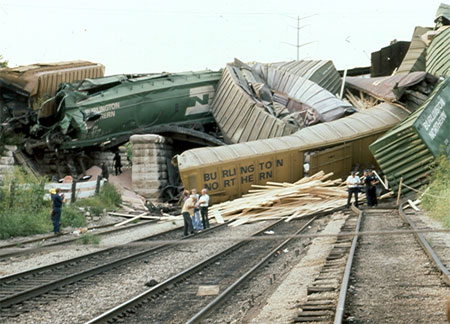
The question thus arises, what is to be done with the train wreck that is the American economy?


One approach that has become popular is to write about it. There is a land office business these days in gloom and doom. Its practitioners are now so numerous it's pointless to list them all. Those who become prominent have made a business out of bad news. That is, after all, the American way - maybe the economy is coming apart at the seams, but how can I, personally, make some money out of this deal? There are hundreds of books on the subject, many websites, thousands of blogs. Not all are venally motivated; some, after all, are exercises in pure Schadenfreude, others are the psychological working-through of chronic depressives.

Here at the pond, I must say that I'm clearly not in it for the money. Nor do I consider myself a chronic depressive, and it's bad form to revel too much in misfortune. It's not even in good taste, in fact. I do find it interesting, that's all. It's interesting to understand the reality of a given society and polity. That's what Thoreau was into - how does this whole situation work? Why do people behave the way they do?

One thing I think we can say without being gainsaid (successfully) is that for something around forty years, American society has been on a downward trajectory. That's old news at this point, but certain parameters bear the judgment out. As one example, the breathless analysts at outlets like CNBC and Bloomberg, whose relevance depends on the relevance of the thing they're selling, the ups and downs of the stock market, don't often point out that the S&P 500 and the Dow are at virtually the same level now that they were in 1998; however, there has been at least 25% inflation during that period, so to adjust for constant dollars, one would have to put the S&P in the 750-800 range instead of its nominal 1,100 or so, and the Dow at 7,500, instead of just north of 10,000. So why don't the stock pundits talk about this? It's obviously the reason that Wall Street got into the casino business. Churning the market and creating exotic betting vehicles were the only way to make money once the traditional retail trade dried up and "buy and hold" took its place among our durable illusions.

And then, of course, the illusion-bordering-on-delusion of the globalization movement. Americans are so gullible and so poorly educated about what is in their own best interest that they listened to functional idiots like Tom Friedman of the New York Times, whose only expertise, so far as I can discern, is in clumsy writing. Or Paul Krugman, another Times-sponsored propagandist, who doesn't talk a lot about the fact his Nobel was won for work he did on "patterns of international trade," back in the go-go 1990's, when NAFTA was signed and Perot heard that giant sucking sound of American jobs heading South O' the Border and to Asia. Look, how obvious can something be? If you're the top economic dog, paying high salaries for value added work such as manufacturing complex products like automobiles and electronics, how is it going to benefit the mass populace if you ship all those jobs overseas where the work is performed for pennies on the dollar, and relegate yourselves to retailing and importing the stuff you used to make? Won't water seek its own level? You might ask, well isn't such a process inevitable? No, of course it isn't. Someone not in the thrall of American-based multinational corporations increasing their profit margins by using cheap labor (completely free of environmental considerations) would see what was going on and bring home the reality that the economy needed to be restructured, less on consumerism, more on essential value-added manufacturing, small-scale farming and ecological balance. Essentially, a post-growth economy. The United States has the resources to accomplish this. The crisis in the United States was an act of slow-motion economic suicide.

Well, we don't have central planning, in any rational sense. The current takeover by the federal government of what's left of American industry and finance is simply a salvage operation to keep the game afloat for a little while longer. Bernanke & Co. are attempting to maneuver the American economy into a glide path leading to the softest possible crash landing. There is wisdom in this, as Dmitry Orlov has written. If you ease your way down, then when the final collapse comes it will be more like falling out of a ground floor window than from 85 stories up.

August 12, 2010

Return of the native


Admittedly, I was a little spooked when I read about Project Vigilant, a "private sector" outfit that snoops all over the internet looking for signs of un-American activities, assembles such data into "actionable" form and then peddles it to "three initial" federal agencies, which surely include the FBI, CIA and NSA. You can imagine the kind of fine, discriminating, First-Amendment-protecting approach which would be used by such a company. Apparently, Project Vigilant comes up with something like 250 million bits of useful nuggets per day, from emails, websites, comment sections, et cetera.


Still, evil flourishes when good men do nothing, and one tries to be a good man, despite everything. But as insurance, I've begun perusing right wing websites such as Red State, Powerline and even Fox News. I just log on and let them run in background. Then when PV takes a look at the Ol' Swimmer, they have to admit I also spend hours a day figuring out what Sean Hannity thinks about the issues of the day. I like balance, see.

Since I last wrote regularly, nothing much has happened. Maybe that's just the nature of a Depression. Money was the energy behind many developments, and the money's all gone, and the folks back home don't wanna talk on the phone. My guess is that President Barack Obama did not realize he was signing on to govern a country mired in an actual Depression. Like many of the propagandists around him, he participated in the groupthink idea that this was simply another in a long series of cyclical recessions, deeper than most, but nevertheless a species of the same thing. This was the wrong read of the situation. What we're in now is the historically inevitable result of the destruction of the middle class, from many causes, and the usual quick fixes such as tinkering with interest rates are not going to work. I don't think Obama, at the personal level, has any idea what to do about it, because nothing in his background, work experience or education prepared him at all to lead a country out of such a morass. I mean, all that he would have been able to do, at best, would be to begin the process, which is going to take a long time. His easygoing, golf-playing, back-patting, hoops-with-LeBron style would have worked fine if the economy, as with Clinton, was taking care of itself, or at least appeared to be doing so. But when radical (note to Project Vigilant: radical as in "radish," to the root of the matter) changes are needed, and not just Change as a campaign slogan, then it becomes something altogether different. Obama, with his escalation of the Afghanistan...whatever it is we're doing, and his general approach of pretending he was elected in 1992 instead of 2008, is not getting the job done.

We're just drifting. Since the Administration cannot create jobs, they've decided to work with the statistics instead. To keep from going "over budget," the Obama Administration has become the first in living memory to forgo the whole budgetary process. We don't have a budget. Tax revenues this year, including Social Security, will hit about $2.1 trillion. The total outlays (can't call it a budget, since there isn't one) will reach about $3.6 trillion. Nevertheless, Paul Krugman says the federal government is not "cash strapped," because it can borrow money at astonishingly cheap rates. This is true. And the reason the Treasury can issue ten-year notes paying 2% is because the economy is so moribund this is considered a good return.

I remember the phrase my father used to use: the "depths of the Depression." In other words, you don't get there overnight. The crash occurred in 1929, but things steadily worsened during the Thirties. 1935 was worse than 1930. It takes a while for the accumulated savings and forward momentum of the good years to play out, and that's what is happening now, three years after the beginning of the downturn in the summer of 2007, when W warned us "this sucker could go down." Facing the music would be a start, but the political system, addicted as it is to magical thinking and the election cycle, cannot do that. So we pretend things will get better if we wait and just keep doing the same things. House prices will go up because that's what they do. Jobs will appear because America is "innovative." Don't think so. This sucker's not going back up until we do something different.

May 14, 2010

My very own Nobel Prize


A Friday joke for the cognoscenti (pronounced "cone yo shentee"):


Descartes walks into a bar and the bartender asks "The usual, Descartes?"

Descartes replies "I don't think.." and disappears.

I salute Paul Krugman for fighting the good liberal fight. He styles his blog, somewhat sententiously, "Conscience of a Liberal." I'm sure he often regrets that; there are many days when I wonder whether "Waldenswimmer" has much to do with what I'm writing about, but at least I'm not rather ostentatiously advertising the precious quality of my "conscience."

Anyway, the noted Princeton economics professor, Nobel Prize winner and New York Times columnist weighs in today with his insistence that the United States is not Greece. Good to know. Personally, I didn't think we were. Krugman means it in a good way, of course. He gives some passing recognition to the key difference: Greece is locked into the euro, which it can't print on its own, whereas the United States is the paper-hanger of the world's reserve currency, the almighty dollar. Thus, no one really has to worry about U.S. default on its sovereign obligations - if we hold an auction and no one shows up, the Federal Reserve will create the "money" to buy our own debt. It can do this in a variety of ways, such as lending a few trillion more to the so-called "Primary Dealers" of the Federal Reserve cartel, who can then bid this virtually free money into Treasuries and earn money on the spread. If you're wondering how Goldman Sachs, the BofA, JP Morgan Chase and others managed to achieve absolutely perfect trading (no day with a proprietary trading loss) for every day of the last quarter, look no farther than that factoid. You could do it, too, if someone offered to lend you money at 1/2 percent and gave you privileged access to an auction where the instruments pay you 2-3% on your trades. This has been going on for a very long time now, as Bernanke continues to insist that despite the robust recovery underway that "extraordinarily low" interest rates are justified by the "subdued inflation" and tentative nature of our recovery. Something along those lines. He seems to fall asleep as he says it over and over again to Congressional committees, and I can't blame him.

So here's Krugman on another reason we're not Greece, aside from the lack of a Parthenon:

The U.S. economy has been growing since last summer, thanks to fiscal stimulus and expansionary policies by the Federal Reserve. I wish that growth were faster; still, it’s finally producing job gains — and it’s also showing up in revenues. Right now we’re on track to match Congressional Budget Office projections of a substantial rise in tax receipts.

It's naturally predictable that the good professor would salute the fiscal stimulus, since Krugman has staked his professional reputation (and the validity of his Stockholm award) on Keynesian economics. Personally (and it's the basis for my own self-nomination for a Nobel), I think that Krugman's favorite student, Barack Obama, has made a serious mistake. Obama bought into the idea of a huge ($700 billion) stimulus, exacerbating our deficit problems, and then, realizing that he wasn't being bipartisan enough, followed this move immediately with a call for austerity in spending. No, you can't do that. If you're going all in, you need to play your bluff all the way through. You don't shove all your chips into the center of the table and then fold. That's what Prez O has done. As for Krugman's claim, we can look at the Treasury's own recently published spreadsheet for the month of April. April, of course, has a particular, shall we say, significance for tax receipts - I mean, if we're going to rake it in, that's the month you'd expect to do so. So how did we do?

Well, we hauled in $245 billion, of which $68 billion was FICA taxes. FICA taxes tend to be higher in April because it is then that Schedule C filers (self-employed) pony up the rest of what they owe for the prior year. Year to date (since October 1, 2009, beginning of the last fiscal year) we have received $1.199 billion in taxes. In the prior year (deep in the Great Recession, in other words) the tax receipts were $1.255 billion. So what does the Nobelist mean when he says that our prosperity is showing up in tax revenues? It must be in the sense of that key word "projections" of the Congressional Budget Office, and also in the recent job growth figures.

Those job growth figures are interesting, actually. Of those 290,000 new jobs, 60,000 were Census hires. 188,000 are attributable to the "Birth/Death" estimate by the Ministry of Truth (Bureau of Labor Statistics), which refers not to human beings, but to the notional increase in new businesses (Births) versus closing businesses (Deaths). One might reasonably ask, during a Recession, is it actually reasonable to suppose that new businesses are being formed at such a prodigious rate, and if so, why is the commercial real estate market cratering? But never mind. If we subtract the Census and B/D numbers from the 290,000 number (in other words, if we eliminate the numbers the Federal Government itself actually controls), we are left with 42,000 jobs. Since 120,000 new employees enter the job world each month because of population growth, we can begin to see why the actual U-3 unemployment rate went from 9.7 to 9.9% despite the "job growth."

Still, I appreciate the Good Professor's chauvinist cheerleading. Someone needs to be optimistic, even if there is no statistical evidence whatsoever for such optimism. The growth in GDP is not "thanks to" stimulus spending; the GDP growth is government spending, but since it was done on a one-time, save-government-jobs basis, we've probably already seen its zenith of effectiveness. If I'm right, then the "jobs saved" by the Stimulus will begin to disappear, because the conceptual fallacy of spending money the way Congress did (the politically expedient method of supporting employment only for the existing way of doing things) means that the "investment" is short-lived.

In truth, there is no political will to undertake steps which would actually transform the American economy, which depends on a massive reworking of our energy regime. Tepid tinkering with the economy while we await some magical process to "restore" the consumerist Shangri-la built upon borrowing from houses is what the Nobelist actually thinks will happen. I am staking my own Stockholm Dreams on my theory that it will not.