March 19, 2010

My soft spot for Israel


How can a liberal be for Israel? one might ask. Israel has better weapons, their country was created by imperialist oppressors, their opponents, in general, have darker skin. It's the perfect set-up for a knee-jerk support of all things Palestinian. And, in general, America's "Left" lines up, always the uneasy (and pampered) supporters of the "little guy."

But in truth, I've never followed the leftist desertion of Israel. I can recall, back in 1967 when I was a student at Cal, that things were not so one-sided. Then it was felt that Israel had the right to defend itself. Was that because we had a Democratic President at the time? I think there's something to that: the more closely Israel's fortunes have become connected to American Neoconservatism, the more alienated Israel has become from the (to me, tiresome) doctrinaire Leftists in this country. You can read their diatribes anywhere you look. Some of the more virulent are themselves Jews (Noam Chomsky, Norman Finkelstein.) A very complicated situation.

I always try to simplify the analysis (and identify who it is I'm talking to) by asking the preliminary question: Does Israel have the right to exist at all? I also think this is the final question on the subject, for more complex reasons. But the first question greatly simplifies all that follows. For one thing, it tells you whether your interlocutor is a student of history. Are they aware of the centuries of anti-Semitism and the Holocaust? This at least establishes a framework. Do they favor the ceding of all American land back to its Native Americans? (Sometimes when I drive through Fremont in the East Bay, or even along the Bayshore on the Peninsula south of San Francisco, I think this would be a very good idea, by the way.)

I operate on this fairly simple analysis: had there been no Suez Crisis of 1956, or wars in 1967 or 1973, or the Lebanese problem of 1982, nor any Palestinian intifadas nor terrorist attacks against Israel (which became routine prior to erection of the security walls), then the amount of sectarian, Israeli-Arab violence in the region would have been approximately 1% of what it has actually been. Virtually all of the violence has been of one of two kinds: Arab violence designed to destroy the Israeli state (the wars), terrorism by Arabs against targets in Israel (cafes, discos, weddings, buses, the streets) or delegitimize Israel; or Israeli response to one of the above.

I think that's the big picture. The success of Palestinian propaganda has been to isolate, in the public mind, the response of Israelis to Arab violence as if it existed free of any provocation. I don't quite understand how that has worked. I would concede, of course, that in any long history of more or less constant violence there are going to be a fair number of instances (on both sides) of overreaction, excessiveness and needless killing. Such are the coarsening effects of war and retaliation. It's why violence and terrorism are bad ideas in the first place.

Which takes us to the current "rupture" in U.S. - Israel relations. Netanyahu's brother called Obama an anti-Semite because Obama apparently became upset that Israel took the occasion of Joe Biden's visit to announce the granting of 1,600 building permits for Jewish settlements in East Jerusalem. So it would have been better to wait till he left? I'm not sure what significance the timing has. But it does bring up the question of the West Bank and the "1967 borders." I've done a fair amount of reading about the border issue and about the question of whether Israel's continued presence in (and development of) the West Bank constitutes an illegal occupation. The arguments get very, very involved, and sometimes turn on the construction of little words ("all" "of","the" etc.) in accords and agreements signed at the conclusion of the 1967 war and the United Nations resolutions on the subject. Well, it's kind of interesting actually, so take a look at Resolution 242 yourself:

(i) Withdrawal of Israel armed forces from territories occupied in the recent conflict;
(ii) Termination of all claims or states of belligerency and respect for and acknowledgment of the sovereignty, territorial integrity and political independence of every State in the area and their right to live in peace within secure and recognized boundaries free from threats or acts of force." [3]

Clear, huh? Well, not if you're in my line of work. It doesn't say, in the English version, "all of the territories occupied" in the 1967 war. It says withdrawal from "territories occupied." Surprisingly, there are Jewish lawyers also, and they noticed the same thing. It was a deliberate ambiguity, because the law of war ordinarily imposes a penalty on the aggressor, and there can't be any serious question that Jordan (which controlled the West Bank prior to the war) was practically begged by Israel to stay out of Nasser's Pan-Arabic troublemaking (Nasser killed far, far more fellow Arabs in his various wars around the region than were ever killed by Israel from 1948 to the present).

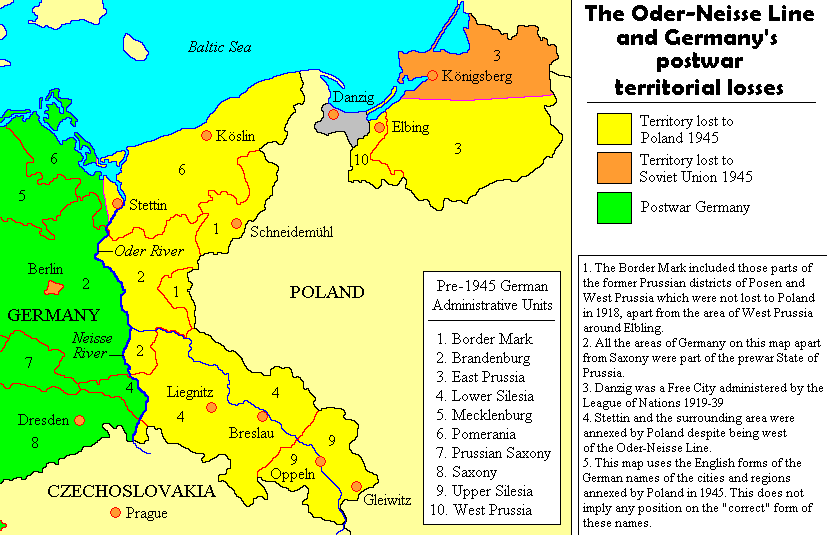
That's why, instead of the usual map of the West Bank, I present the post-Potsdam Conference map of Germany. Germany gave up 25% of its total land area as the result of its aggression in World War II. No one I've ever heard (except maybe the German high command) ever said this was unfair or inappropriate. Yet returning to Jordan, or Palestine or whatever we want to call the area, the same land which was used to launch an attack 17 kilometers from the Mediterranean (about an 11 mile stretch, which if conquered, cuts Israel in half) is considered Israel's minimal obligation.

I guess my point is that ordinary ways of thinking just never seem to apply to Israel, and I suppose that has to do with the hidden agenda that most people, consciously or not, bring to the discussion. They don't really want to go back to 1948, but that's where they go without saying so. They don't like the idea of a state based on theocratic ideas, whether it's a democracy or not, and they particularly don't like the idea of a Jewish state.

Yet we've done everything we can to establish a state based on Sharia principles in Iraq, where Article II of its constitution specifically prevents any law from being passed which is not consistent with Islamic principles. But it's still full of good things, such as the rights of its citizenry to regain citizenship lost under the Saddamist regime, and the right to dual citizenship. For everyone except Israelis, of course.







March 18, 2010

The wonderful world of Tom Friedman


Matt Taiibi, on his Taibblog, throws this challenge out today (the post in its entirety):


Underlying the latest U.S.-Israel spat over settlements is the deeper — real — problem: There are five key actors in the Israeli-Palestinian equation today. Two of them — the Palestinian Prime Minister Salam Fayyad and the alliance of Iran, Hamas and Hezbollah — have clear strategies. These two are actually opposed, but one of them will shape Israeli-Palestinian relations in the coming years; indeed, their showdown is nearing. I hope Fayyad wins. It would be good for Israel, America and the moderate Arabs. But those three need their own strategy to make it happen.

via Op-Ed Columnist – Let’s Fight Over a Big Plan – NYTimes.com.

I needed to take a Clonazepam by the second sentence of this opening graf of Friedman’s. God bless this guy. Can anyone else out there recall a more opaque opening paragraph?

I need something to get the wheels turning today anyway, so I'll take a shot at deconstructing Mr. Friedman's lede. Not that Matt Taiibi really needs any help; he's just using Friedman's awful writing as an excuse to make fun of poor Tom, who really is an atrocious writer. It's difficult to imagine, in fact, that anyone would assume Friedman ever has the faintest idea what he's writing about, given the tangled verbiage his "thoughts" always get hung up in.

Anyway, Friedman has divided the Israel-Palestine actors into three distinct groups. Group 1 is the Palestinian Prime Minister, Salam Fayyad. The second group is the alliance of Iran, Hamas and Hezbollah. The third group is comprised of Israel, the USA and moderate Arabs. The confusion which has led to a pharmaceutical time-out for Matt Taiibi was caused by Friedman's use of the term "actors," which he quantifies as "five" in number. This is where things got a little dicey.

To arrive at "five actors," you have to treat Iran, Hamas and Hezbollah as one entity; however, Israel, America and the moderate Arabs, although they must develop a single, joint strategy and are thus presumed to be acting in a coordinated fashion, much as the Iranian, Hamas and Hezbollah actors are acting, are counted as three actors. Thus, to recap:

Actor 1: Prime Minister Fayyad of Palestine.

Actor 2: the group of Iran, Hezbollah and Hamas.

Actor 3: the United States.

Actor 4: Israel.

Actor 5: moderate Arabs.

Actor 1 has a clear strategy, as does Actor 2 (the Troika of I, H&H). These strategies are opposed, but one will win and "shape" the Middle East for years to come. Tom hopes that Fayyad wins. However, Actors 3, 4, & 5 need their own strategy to make "it" happen. I think the antecedent of "it" in this case is Fayyad's victory.

There you have it. Admittedly, it was a somewhat opaque introduction to the column. Friedman might have used the word "group" or "faction" and described three separate positions: Fayyad and the moderate Palestinians; I, H&H; and Israel, the USA and moderate Arabs, by which I think (but I can't be certain) that Friedman is referring to Arabs other than those who live in Palestine, such as Tom's friends in Saudi Arabia.

Other than that, I think Tom might have written this column in 1976, 1985, 1990, 1992, 2000, 2002, 2004 and yesterday, just to throw out a bunch of random dates. When he's out of topics, he flies to Israel, has lunch in Jerusalem and writes a Mideast column. This may account for the additional sloppiness of what he wrote: even Friedman recognizes the essential meaninglessness of his "prescriptions" for a "solution." Golda Meir found the solution in 1973, when she gave the go-code and loaded nuclear bombs onto Israeli bombers. Netanyahu fought in that war, and there is no way that Bibi is going to cede any land to Palestine, now or in the future. I guess he's in "Group 3" and is part of "Actor #4," and he's the one currently calling the shots, so I would say that "strategy" is set.

So, Tom: you already know what Strategies Nos. 1, 2 & 3 are. How does it turn out?

March 17, 2010

A perfect miasma of chaos


I haven't written this thing much lately, mostly because I've lost the thread. I do notice what's going on, or at least what I think is going on. The country has become so absurdly ideological that discerning facts (or the signal through all the noise) has become almost impossible.


For example, one great debate raging among economists is whether the Keynesian approach, typified by Paul Krugman, or the Austrian approach, epitomized in the writing of Friedrich Hayek, is correct as it applies to a monetarist approach to the Great Recession. Krugman wants to go all in, and his ideas, for a while, carried the day: the government must stimulate the economy back to a sensate state, by heavy deficit spending. Hayek and his ilk, on the other hand, believe this is folly. All that we are setting up is a hyperinflationary binge by increasing the Federal Reserve Bank's balance sheet from $800 billion (held mostly as Treasury securities) to its present $2.3 trillion, with most of that increase coming in the form of mortgage-backed bonds the Fed has found lying in the street or in overflowing dumpsters around the nation. In truth, Bernanke's experiment is unprecedented. Should the central bank actually own the American mortgage business, lock, stock & barrel?

Krugman may have found it easy to recommend a huge stimulus bill, on top of what was almost certainly a completely unnecessary $700 TARP bill to bail out close personal friends of Hank Paulson, because this venerable Nobel Prize recipient does not actually understand the problem with the national debt. Or if he does, he's amazingly cavalier. The problem that I see is that so much of ARRA (linked to the right) went to propping up state budgets and state payrolls. As I've said, the humanitarian instincts were good, but the Hayek people might have the last laugh. Because after that money is spent, and all those teachers, firemen and cops are kept on the payroll for one more year, what then? Not very much of the money actually represented a capital investment in activities that might "create" new jobs. The money will run out, if not this year then next, and the truth is that the stimulus bill simply anticipates that the Great Recession is simply cyclical, like all others. It will go away because recessions always do.

I'm not sure of that at all. The current stabilization and moderate stock market performance are probably the result of a "melt-up." The American economy has been flooded with fiat paper from the central bank and it has to go somewhere, although the actual stock activity on the exchanges is anemically small. Treasuries pay next to nothing, unless you want to hold them for a dangerously long period (that is, long enough for their paltry returns to be swamped by the coming inflation). Banks and money markets effectively pay zero interest; some of them simply are safer than mattresses (Simmons Beauty-Rest and Sealy Posturepedic pay almost as much in interest, however). Employment has not really gone down appreciably, although the Obama people are convinced that the payroll situation will begin to improve this spring.

And if it doesn't? I've thought for some time that what's really going on is that the housing boom permitted a postponement of the real effects of America's collective decision to hollow out its industrial base, ship it offshore and allow its working class to go bust. The postponement was accomplished by debt, something else that never occurs to the Nobelist. The collateral for all that debt has deflated, and now the country is awash in red ink. The banks (which we absolutely, positively had to save!) don't lend money to anyone, and the reason for that is that no one really wants to borrow. And if they did, against what? The 2005 appraisal of their house?

I really hope I'm wrong and that the magical thinking which apparently comprises the sum and substance of our economic approach is....right. Because if it's not, then the U.S. government will have taken on about $1.4 trillion in additional debt, above and beyond its usual gargantuan budget, at a time when its actual revenues (taxes) are falling through the floor, its Social Security and Medicare entitlements are underwater and 17% of the country is unemployed. So that if prosperity is not around the corner, it might be something more ominous.


March 11, 2010

The Greek crisis as an exercise in psychological projection


I'm a little tired of the Greek bashing which seems to dominate the financial news these days. The subtext seems to be that the Greeks want to retire too early, have lost control of their budget, and in general are a bunch of screw-ups. Of course, the Greeks do want to retire early, but so do a lot of other people. In Germany, for example, about 60% of the population is retired by the age of 55, which is why the official language surrounding places like the Trevi Fountain in Rome is German. They quit while they're still young enough to get around, and since we live one life, what's wrong with that?


Anyway, my socio-ethnic background is Greco-Redneck, so I tend to take umbrage at all this criticism of my ancestral heritage. My maternal grandfather came to this country in the first decade of the 20th century and did what many Greek immigrants did, he ran cafes. He worked twelve hours a day, six days a week, and made a success of his businesses. I won't tell you the name he usually used for his cafes because I still harbor a secret ambition to start one of my own with the same name. Of course, there's that 12/6 problem.

So as I was saying, we're pretty dismissive and snarky about the Greek inability to manage their finances. Meanwhile, inconveniently for the pundits on CNBC and other provincial opinion-makers who love clobbering the Old Country, the U.S. Treasury publishes its Monthly Statement right about this time every month. To put matters gently, any nation with a P&L that pathetic should really think long and hard about criticizing any other country, up to and including Zimbabwe. What a bloodbath this thing is turning into.

You can see for yourself at http://www.fms.treas.gov/mts/index.html. We have entered an era which might most accurately and piquantly be called Absurdist Economics. It's a bad joke. All you survivalists out there, with your .50 cal emplacements and food storage bunkers: okay, you were right. Feel better? I think we've arrived at the place now where the government is going to lose the ability to keep kidding even itself.

Against total revenues in February, 2010, of $107 billion, the United States government spent $328 billion. There are no typos in that sentence. The government ran a $221 billion deficit in a single month. We spent $46 billion on defense, which uses up 42% of the apparent income, but then remember that Social Security and Medicare are financed with their own independent taxes (all of which, and then some, are consumed by the programs themselves), and those FICA and Medicare taxes are included in that $107 billion number. Social Security paid out $61 billion (here come the Baby Boomers!) against actual FICA revenue of $49 billion (nearly half of the $107 billion total income). The FICA figure of $49 billion is supplemented by that mysterious "On Budget" entry of $13 billion, which brings the total FICA "income" figure to $62 billion, or just enough to cover the outgoes. My guess is that this "On Budget" addition is phantom interest from the Social Security "Trust Fund," and of course, as such, is not actual "money" transferred from this fiscal Black Hole but is simply a "subtraction" from the "Fund" (another instance of the Treasury's ongoing Zen practice of subtracting zero from nothing). Thus, in realistic terms, the Social Security program is running a $13 billion monthly deficit, and if you're playing along at home you'll recall that the program wasn't supposed to go negative until 2017 back in those halcyon days when the Kongressional Klown Kollege was blithely stealing the surplus and using it to fund the latest War of Choice.

So lay off Athens, guys. The Greeks gave us Socrates, Plato, Aristotle, Pythagoras, Archimedes, Euclid, Aristophanes, and other founders of Western Civilization. The United States, at this rate, is going to be remembered for the smoking crater Washington, D.C. 1980-present made of the place. The Greeks called it hubris. We might want to think about propitiating some of the Bigwigs up on Mount Olympus ourselves.

March 06, 2010

Michael Moore stoops to assist


I watched with amusement last night as Michael Moore, in a satellite interview with Bill Maher on "Real Time," offered to replace Rahm Emanuel as Barack Obama's Chief of Staff. Moore was standing in front of Goldman Sachs in New York as he spoke, and the failure to enact any regulatory reform whatsoever in the last year was one of Michael's talking points. It's one of the things he's going to help Obama with when Moore becomes Chief of Staff, at a salary of $1 per year, sleeping on a cot in the White House basement.


This seems to be one of the recurring myths among liberals - that Barack just needs the right person whispering in his ear, and then all those dynamic changes we heard about during the campaign will begin to blossom like a host of golden daffodils in spring. I realize that Moore (who is represented by Rahm's brother Ari Emanuel, the flesh-eating super agent in Los Angeles) was simply looking for a little publicity. All in good fun.

His last movie, "Capitalism: A Love Story," didn't do all that well, and for good reason. It really wasn't a very good movie. If you want to understand the financial crisis better, try reading "The Quants" by Scott Patterson . That's what I'm doing. If you've ever wondered why the securities industry in the United States continues to exist, despite the fact that the major indices (Dow, S&P 500, Nasdaq) have been essentially flat (at best) over the last eleven years, the book will explain it for you. I mean, think about it: in real dollars, the markets have probably lost 40% of their value since they reached their high point during the Clinton years. So what are all those people doing? You can't buy long and hold and hope to get anywhere, the way the "stock brokers" of our fathers' generation recommended. The answer is that "Wall Street" (which is also headquartered in the richer areas of Connecticut and Southern California) was taken over by mathematicians, physicists, statisticians and game theorists. Although the overall motion of the markets is stagnant (because the United States itself is not really getting anywhere, and hasn't for a long time), within this stagnant pond are many opportunities to take advantage of the misery (mortgage-backed securities, for example, and credit default swaps, and front-running and various other forms of arbitrage), and all of this is enhanced by the use of High Frequency Trading, computerized algorithms and dark pools. Indeed, the whole system depends on such automation. Wall Street is simply a hi-tech casino gamed by very bright people who nevertheless periodically (1987, Long-Term Capital Management in 1999, 2008) create stupendous catastrophes because of the inherent instability and excessive complexity of the financial system. It's driven by greed, but greed isn't exactly the problem. The problem is that the United States has allowed its financial stability and prosperity to become completely dependent on such a sick arrangement, to the point that even "change agent" Presidents like Barack Obama kowtow to the powers that be and throw as much public money as possible at this Geek-infested Monte Carlo because we now think our survival depends upon it. And now the federal government is broke-ass, having taken on the fantastic debts associated with this dysfunctional system (and all the poverty and lost productivity the system caused) and well on its way to complete fiscal unsustainability.

But back to the main point. I wonder if Michael Moore realizes how utterly patronizing his idea is (I won't say "arrogant," because Mr. Moore doesn't strike me as arrogant, just a little naive and clueless, which is probably where Ari helps him so much. Moore doesn't understand how the system really works and so his "populist" ranting just sounds dumb.) It's a common meme, however; Barack is misguided, that's all, and I could straighten him out. Can you imagine saying something like that about Bill Clinton as he moved farther and farther to the "center" of the political spectrum? Neither can I. Moore is saying that Barack Obama is a somewhat lost, overwhelmed little African-American boy who needs guidance.

I really doubt that. I think the O Man is simply a lot more conservative and Establishment than "progressives" thought he would be. He's good on "progressive" issues like global warming and stem cell research (and science funding in general), but those are issues where he can find common ground with Joe Lieberman and Orrin Hatch. They're "safely" progressive ideas. For the rest of it, he's pretty much where George W. Bush was. Ol' W probably knew that, and I'm certain that Bush voted for Obama (he's come close to saying it). The older members of the Baby Boom generation who consider themselve old line Liberals (like your humble Blooger) grew up at a different time and under different influences. We make the mistake of believing that all "liberals" are alike, of whatever age or generation, and whatever their disparate influences. In truth, someone like Bill Moyers has a lot more in common with Dr. Martin Luther King, Jr. than Barack Obama does. Obama has a "pragmatic" and politically-determined view of civil liberties, for example, which would have completely appalled Dr. King.

Different strokes for different folks. If you want, you can see these developments as progress in a post-racist society. Increasingly, that's how I'm looking at it. As Woody Allen might lead in, people of all races, creeds and colors can disappoint the hell out of you in our free and equal opportunity society.

March 05, 2010

The sound of one cricket chirping


Glenn Greenwald, who has an annoying habit of being overwhelmingly right about practically everything, today takes on the apparent decision by the "Obama Administration" to reverse course and try Khalid Sheikh Mohammed in a military tribunal, presumably in a court room built just for such marsupial proceedings in Cooobah. While the volte-face is not a great surprise at this point, Mr. Greenwald criticizes President Zero in rather unsparing language:


If, in the face of "GOP demands" that Mohamed be denied a civilian trial, he again reverses himself -- this time on the highest-profile civil liberties decision of his administration -- he will unmistakably reveal himself, even to his most enamored admirers, as someone so utterly devoid not only of principle but also of resolve: you just blow on him a little and he falls down and shatters into little pieces.

Harsh, Dude. You're talking about an international rock star here. But I should rise to the challenge Greenwald poses, to Mr. Obama's "most enamored admirers," and not just dance around the actual, specific criticism by being all coy and snarky and everything. But first a little mood sound while I think:


Okay, I admit I got nothing. Mr. Greenwald also wants us to remember that the Democrats were totally up in arms when Karl Rove "interfered" with the august and sacred processes of the Department of Justice when Bush was in office, and yet here the reversal of Eric Holder's initial decision to try KSM in New York City is clearly a political calculation also coming from the White House, and more specifically from that cynical macher Rahm Emanuel, who just does not want to do anything, anything at all, that will disrupt his ongoing courtship of the Mighty Lindsey Graham for purposes of getting the "funding" for closing Guantanamo.

To that I say...well, cue the cricket again if you like.

It might be easier just to engage in a little ad hominem response to Mr. Greenwald himself. For example, he lives in Brazil now. He's an American citizen, but he lives down there somewhere, maybe in Rio. It's pretty easy to mount these broadsides from down there, I bet, but if I travel 150 miles north, south, or east, I will be in the heart of Tea Party country. (150 miles west puts me in the heart of the Great Pacific Garbage Patch, and that's a nonstarter.) So I'm judicious in my criticisms. Circumspect, objective. Frankly, I'm getting used to the idea that the Bill of Rights, such as it was, was kind of a pinko-semi-Commie list of narcissistic self-indulgences. There is no way the American people would ever approve such a list now, by popular vote, if only because there's a very slight abridgement of the right to carry fully-automatic weapons into the local bar & grill. I mean, you could read the 2nd Amendment that way, if you were so inclined (if you were "Far Left," in other words).

So rail on, Mr. Greenwald, from the safety of Ipanema. Here in the trenches, we know better than to give fair trials, or whatever, to terrorists. No telling what might happen, but one thing for sure that will happen is that Liz Cheney will say nasty things about whoever it is that permits such a thing. How would you like to deal with that, Glenn? Who needs the tsuras? So slurp your mojito and watch the thongs sway by. We'll handle Ol' Mastermind alright.

March 04, 2010

Hitting the wall


It happens sometimes, you just reach the end of your glycogen stores and crash. I can't think of much to say about the things I usually write about that really interests me at this point. The federal government has become functionally irrelevant to the American Commoner except as the one entity available which can leverage its dwindling credit to borrow money on the open market and ship it to the states. Think it through and you may agree with me. The states are mostly on the verge of, or actually in, bankruptcy, and (except for North Dakota) do not have a means of running budgets at long-term deficits. So it's up to Big Brother to operate its Big Payday Loan Company at the End of the Universe to scrape up money as fast as it can and send it out to the states. Otherwise, as bad as things are, they will get a great deal worse.


The Political Controversy Industry, meanwhile, must carry on with its usual function, which is to watch Washington, D.C. and comment on it. Those who say, with me, that D.C.'s function has dwindled to the governmental equivalent of Pledge Night on PBS must nevertheless say something every day about Congress, Obama, et cetera. This goes for the New York Times, the Washington Post, MSNBC, Fox, CNN, the Huffington Post, and all of the big-name bloggers (who write almost exclusively about national politics and finance). Everybody keeps their focus on the Big Picture only, the national scene, because that's the part that's "interesting" and newsworthy, although, to repeat, the federal government has absolutely nothing to do, at this point, other than to act as a line of credit. Thus, the Stimulus, Social Security and Medicare. The function of the feds in all three areas is exactly the same, collect money and ship it out.

The focus in Washington D.C. concerns mostly international conflict, Wall Street, health care "reform," and a few other fetishes, but these do not concern the American Commoner anymore. They are all conversations inside a bell jar of irrelevance. Millions and millions of Americans are out of work, many of them permanently, people are being turned out of their houses in droves, more and more people are unable to afford doctors, local public services are being eviscerated -- the list goes on and on in this Depression, which shows no signs of abating whatsoever (and indeed, cannot abate), and thus Washington's usual preoccupation with whether the elections in Iraq will be "fair," and whether some Afghan town called Marja or something has been "cleared, held and built" seems something of a cruel joke at this point, as if Washington is ignoring what is going on for the sake of being obtuse.

Whether the person being surveyed is a disgusted Democrat, a repelled Republican, a teed-off Tea Party member, or an indifferent Independent, the American people seem united (to the 79% level) with one thing and one thing only: they've had it with Washington, D.C. This seems like an entirely reasonable reaction. The federal government costs a lot of damn money and produces nothing whatsoever except the enrichment and aggrandizement of a group of insiders (Congress), and assorted fellow travelers in the defense and banking industries, who use the federal government's ability to tax (and to borrow) to ensure themselves of steady, opulent funding, whether or not the industries in question actually produce anything of value (which they do not). The American Commoner is not in any danger, at all, from any "foreign" power, and the terrorist threat pales in comparison to the domestic threat posed by increasing numbers of disenfranchised, destitute, desperate youth (or older, and well-armed as well). As everyone in the world knows, including all ordinary Americans, all foreign heads of state, Iran, everyone except a narrow band of war-game planners in the Situation Room at the White House, the United States can deal with any credible threat from any principality with one ICBM-carried hydrogen bomb. You know, like boom. This is so logical that everyone, everywhere acknowledges it except those currently requisitioning the Armed Services Committee for the newest generation of aircraft carriers.

Anyway, we're heading for sovereign default, along with many other fiat money-funded modern industrial countries, so the current insanity will have to transmute to some other, probably more decentralized form of insanity in the not-so-distant future, and then the swarm of opinion-peddlers, like a cloud of bluebottles smelling a fresher carcass up the dusty road, will fly away to that.

February 26, 2010

The Health Care Summit


I watched a little, in the morning, for about an hour. I had awakened at 5 am anyway (one of those developments in the aging process, I presume), I was caffeinated on Peet's 91 Octane, and it was on TV. What the heck.


Prez O is getting better and better at whatever it is he's doing in all these meetings with Republicans. Is it strategic? It must be, at some level. I guess the idea is to show the Republicans up for the no-idea obstructionists they are. Although, in truth, once the idea was reached by the O Admin that the fix would consist of maintaining the present system of an unholy marriage between private, for-profit medicine and insurance with government involvement as regulator and partial reimbursor, the game was over anyway. It's just not going to work, because the fundamental premise is wrong. We're really the only modern, industrialized democracy that tries to do things this way, and it's a failure. If you read Paul Krugman's column today, you'll see he has contracted his hopes to a single point: no more "preexisting condition" exclusions. That's it. That's why he supports this bill, because it has that provision.

So while it looks like a lively argument between humane Democrats, and cold, callous Republicans, it's really an argument about which irrelevant approach ought to be passed or not passed, so that, respectively, the Democrats can claim they passed Health Care Reform, or the Republicans can claim that President Obama Has Met His Waterloo. I think the O Man was attempting to demonstrate, on TV, that his ideas are up against irrational obstruction, but that does not come through very clearly because he's championing a tepid, sell-out program in the first place.

I actually thought Tom Coburn had some interesting comments about "defensive medicine" and its contribution to cost overruns. Doctors perform most of their tests so they won't get sued for not performing them. He went on to estimate the cost for such an approach as "$850 billion per year." ?? If health care costs 17% of GDP (the usual number), then medicine in its various forms comes in at about $2.4 trillion. Coburn is saying that 1/3rd of all costs are waste because of the tort system. It's possible there's something to that. If you add wasteful spending to the condition in which the American patient presents himself to the doc in the first place (obese, diabetic, eating a regular diet of toxin-laced processed food), maybe we could begin to get a realistic picture of what's going on, and discover that socialized medicine would not be so terribly expensive after all, if coupled with tort reform and public health proactivism.

For my part, I've always thought that the whole system of private recovery for medical malpractice should cease. This is not to say that medical malpractice does not occur, because it occurs regularly. The question is whether our system of redress does more harm than good for society as a whole. Whether Coburn (who is a doctor) realizes it or not, his argument backs into the regulation of medicine as a public and social utility. Medicine should be regulated, with peer-group review of doctors as the enforcing agents, instead of trials by jury. The various boards of medical quality assurance should take over, and the tremendous savings to doctors allowed by never buying medical malpractice insurance again should in part form a compensation fund for victims of medical malpractice as determined by such panels or other administrative boards (similar to worker's comp). Then doctors could focus on competence and realism instead of looking over their shoulders, and leave it up to medical quality assurance to determine whether a doctor should retain his license.

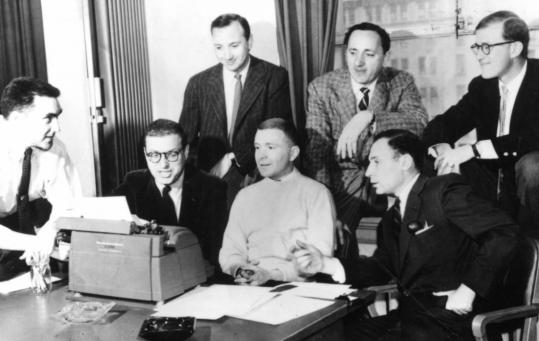
But as I say, I don't think yesterday's meeting will lead to any paradigm shift, and that's the kind of transformation we need. A colloquy of pontificators is not a method for devising intricate or creative work. Maybe when Woody Allen, Mel Brooks, Carl Reiner, Neil Simon, Larry Gelbart and Sid Caesar sat around a table coming up with ideas for "Your Show of Shows," this sort of collaboration provided a creative synergy where the whole was greater than the sum of the parts. When it's Lamar Alexander and John Boehner on one side, and Nancy Pelosi and Harry Reid on the other, not so much.

February 25, 2010

The patient is still in Recovery


There's a new gadget over there on the right you can use to see what's going on with the Recovery Act, or ARRA, right in your home town. My area has saved (or created) 62 jobs and received $34 million in various loans, grants and contracts. Go ahead, plug in your ZIP code and feel the surge of hope - it's happening!


ARRA is still in its early stages. So far, with about 35% of the money (in the three categories of tax breaks, grants/loans/contracts, and entitlements) out the door, we've saved (or "created") about 600,000 jobs. The total price of ARRA was $787 billion, as you'll recall, so we've accounted for about $275 billion so far. I know that the American Recovery & Reinvestment Act was more than just about job creation. It was also about satisfying the Republican mania for reducing taxes, and, fair-minded as always, President Obama saw to it that ARRA's single largest category concerns tax breaks. This might seem odd in a country where the federal budget is $3.5 trillion and the net haul from taxation is around $2.2 trillion, especially when you consider that whatever ARRA cost, the amount was going to be "borrowed" by the Treasury Department. That one might have stopped John Maynard Keynes, not to mention a Zen Master, in his tracks. ("How do we fill the void of nothing? By giving the nothing away.")

Okay, given the caveat above (it's not just about jobs), we can still do some simple long division (or "Calculator" on my tool bar can) and figure that each of the 600,000 jobs cost about $458,000. My first reaction is selfish: I really want one of those jobs. But it's all so much more complicated than that, of course.

Still, you kind of wonder. Is that really bang for the buck? My guess is this: the problem with ARRA, as with most things the Federal government in now trying to do, is that (as always) the attempted remedy came so late in the game that there simply wasn't time (or the money) to do anything other than leverage the federal government's (waning) ability to borrow money (or print it) in order to ship it out to cities and states to keep the police, firefighters and teachers on the job, and to use whatever was left to extend the already extended unemployment checks of the nation's out-of-work millions.

For my part, I don't begrudge the recipients any of that. It's a little hard to follow where all the money went, but a ton must have gone as unemployment subsidies, COBRA assistance and other not-very-exciting but very essential stuff. Besides, Paul Krugman thought it was the answer to life itself (although he was disappointed that it wasn't "bigger." How much bigger should it have been? He doesn't say, but he knows this was too small.). Maybe when fully deployed ARRA will create or save 1.8 million jobs, which is pretty good (although nowhere near the number of jobs lost in the last two years), and then certain longer-range facets of the funding, such as renewable energy and energy efficiency (about $16.8 billion), may spark more employment down the road. One can hope. It's a shame the USA is not in a position simply to devote the whole $700 billion to visionary transformation, especially of energy and transportation; if you look at another link on the right, you'll see we have spent about this amount, so far, in Iraq.

Not where our priorities are, I'm afraid. So it's all crisis management, throwing money at disasters and hoping against hope the economy simply goes into spontaneous remission, because we probably can't do this again. And when all this money is gone, and we've still got these problems of underfunded states and municipalities?

I guess we'll think of something.

February 22, 2010

Whether ir can happen here or not, I don't want it to


I've been reading Germany 1945 by Richard Bessel, a professor of Modern History at York University. Bessel, like Richard Evans (who wrote the amazing trilogy on the Third Reich), is a tirelessly thorough historiographer who zeroes in on one discrete point in time, the year the war ended in Germany, and tells you everything that happened in that awful place. It's not too much to say that blood ran in the streets. Germany was a slaughterhouse of its own making, and if it was the intent of the Allies, as Churchill said, to bring the war home to the German people, they succeeded beyond their wildest imagination. What's remarkable is that the German Wehrmacht suffered about 1/4th of its total deaths in the period between January 1, 1945 (when the last German offensive, the Battle of the Bulge, failed) and the cease-fire in early May. The Germans lost more than one million men during these 4-1/2 months, most of them on the Eastern Front as the Soviets brought the full force of their armies to bear in a rush toward Berlin. The Germans lost more men in January, 1945 (450,000) than did the United States during the entire course of the war (the same statistic is true for the British).

It was the crazed fanaticism of Hitler and his High Command, sealed up in their bunker, that caused all this senseless, horrible slaughter, as German civilians rushed West in an attempt to escape the wrath of the feared Russians, as bombs from the British and Americans rained down from above (in skies no longer protected by the Luftwaffe or anti-aircraft guns), and as the destroyed German infrastructure took its toll in starvation and disease during a very cold winter. The SS and Gestapo enforced the Fuhrer's dictates, hanging and shooting German deserters and stragglers, and also pressing old men and young boys into the Volkssturm to defend German cities in a completely lost cause.

While all this was going on, the German SS was about its usual murder and mayhem, forcing concentration camp survivors on long death marches away from the front, in the bitter cold without food or shelter, killing many or most of them in pointless relocations. The roads were jammed throughout the country with desperate refugees, starving prisoners, panicked soldiers, and as communications were destroyed and the leadership disappeared, Germany descended into complete anarchy. It was utter hell on Earth.

I think about things like that when I read the slightly giddy anticipation of "civil war" in columns such as that written by James Howard Kunstler Monday on his Clusterf**k Nation website. He thinks that dispossessed Americans, accustomed to their suburban comforts, easy access to gasoline, cable TV, et cetera, will engage in open rebellion and violence when it becomes apparent these things are going away and will not be coming back. All I can say is: I sure hope not. I think that's one of the values of reading history - if we think, for one minute, that a Germany 1945 scenario is something devoutly to be wished, that it would "shake things up" in some sort of good way, then we really have lost our minds. I don't think it's a good thing to romanticize, and it's irresponsible even to egg on. I realize that such over-the-top predictions draw hits to the website, but...you know, do your realize what we're actually talking about here?

One thing that might save us, in a paradoxical way, is the innate passivity of the general populace. We'll always have isolated incidents of acting-out, and occasionally (as with the Rodney King riots and the Watts riots of the Civil Rights era) even full-fledged conflagrations based upon perceived injustice and long-nurtured resentment. But why would the general populace resort to violence in a coordinated or even factional way, when the populace will not even use the electoral powers it already possesses to change anything it wants? A recent Rasmussen poll demonstrated that 79% of the American citizenry does not believe that Congress does its work with the interests of the American people as its foremost priority. To begin with, that's pretty astute, I think. But what's remarkable is that Americans will not take the next logical step and simply vote out everybody in office, and break, once and for all, the connections between incumbents and their corporate paymasters (the "535 Plan"). Vote for anyone, your sister-in-law, the guy behind the deli counter, your favorite barista, but just put in all new people, of whatever party, and start the hell over. Never happens, never going to happen, and probably the main reason is the fundamental atomization of the American Volk. There is no means of general organization, other than the central government itself, and everyone watches this government we supposedly despise for cues on what to do next.

So Americans are mired in disgust, and some people (the Austin suicide pilot, e.g.) take it to the next level. But mostly we just complain, watch TV and surf the Net. About 20% of the work force is underemployed. That's a huge cohort of dissatisfied people. Yet nothing much happens.

Maybe we're too civilized, maybe we're too apathetic, maybe we just don't know what to do. Kunstler and the Apocalypto-Freaks revel in the fantasy we can have our very own Third Reich. Sure hope not. Sure hope we come through all this intact.

February 20, 2010

Seeking that perfect niche practice


Let me assure you, practicing law can be hard work. If I were to delve into the legal complexities of a case I handled recently concerning title insurance law, you would see what I mean. Hours and hours in the county law library. There's a reason the law is called "a jealous mistress" (sexist, I know, but the point is still the same - it's time consuming).


It's why I envy Gloria Allred. She didn't become a lawyer until she was about 34, by my calculation, but she really made up for lost time. If there is a high profile celebrity case (and there always is), and if the high profile celebrity case involves a woman who is tangentially involved, usually in some way where she has been publicly "dissed" or treated shabbily as the "other woman," by some guy who is trying to finagle his way out of the usual situation that guys so often find themselves in (namely, pretending to a kind of saintly aura of monogamy bordering on monasticism, when in fact they're carrying on like randy old goats), there's Gloria, the Righteous Avenger, to speak for the woman who cannot articulate her own anger in exactly the right way (that is, for maximum PR impact), and who senses, however inchoately (usually because she is somewhat inchoate, not to say incoherent, herself), there is Gloria, to level the playing field and to open the doors to that most valued of all American sinecures, The World of Celebrity.

What a client list! Paula Jones, in the Clinton BJ case, Nicole Brown Simpson's family in the O.J. murder trial, Amber Frey, in the Scott Peterson case. And now --fff

Gloria Allred, the prominent lawyer who has represented a range of high-profile clients, calledTiger Woods' Friday apology a "staged public relations stunt."

Allred has worked for at least two alleged Tiger Woods mistresses, including Rachel Uchitel (PHOTOS) and porn star Joslyn James (PHOTOS). She said today that Woods needs "lying rehab" and "betrayal rehab" in addition to sex addiction therapy.

Is there anyone in the country who would be more attuned to exactly what a "staged public relations stunt" is? Actually, aren't "staged," "public relations" and "stunt" actually all the same thing? And here's the thing about "betrayal rehab:" where would such a program be conducted for the men of America? In the Astrodome? In the new Yankee Stadium? (As for "lying rehab:" oh yeah, we're going to clean that up.)

It seems to me that Gloria will just not let a man grovel in peace. But more to the point, is she certain that she does not have a conflict of interest in simultaneously representing two of Tiger's dissed women? Are their interests possibly adverse? Suppose Rachel says, "Tiger promised me that he would leave Elin for me." What, then, if Joslyn James, the porn star, then says, "No, Tiger promised me that he would leave Elin for me" ? What if Tiger goes to Lying Rehab and clears up any ambiguity. ("It was the porn star all along," Tiger tearfully admitted. "In front of God, my country and Nike's Executive VP for Advertising, Joslyn's the one. The rest were just to cover my tracks.")

Or suppose both Rachel and Joslyn turn to Gloria and ask, as Amber Frey or Nicole Brown Simpson's Family might have asked, why the hell do we actually need a lawyer to represent us as peripheral actors on the stage of a major national drama in the first place? Do we actually have a legal problem? For that matter, does Tiger? Wasn't he just screwing around with women of adult age in consensual trysts? Why does he need "rehab" for anything, and what the hell are lawyers doing mixed up in this non-event?

Still, the envy remains. See, Gloria represented Nicole Brown Simpson's Family in the OJ murder trial. Remember how they were put on trial for the murder...okay, wait, I'm confused. I guess they weren't actually parties to the case. And in the civil case against OJ in which they were parties, Daniel Petrocelli was the lead counsel, a very able attorney who won the case whereas the DA in Los Angeles had lost the criminal case. Imagine all the work involved in that. Betcha he had his hours in the library. I must have been thinking of Amber Frey. No, that's not it. She wasn't a party either, just a witness.

Those are the cases I want. No jeopardy for my clients, they're not even parties, yet I represent them for...something. I guide them through the...process. I could have thought of that if I had had Gloria's intuitive sense for just how profoundly dumb a circus American public life has become. If your name is in the news, in some way connected to some tawdry episode where real lawyering is needed (or even where it isn't, as in Tiger's "case"), the spotlight itself means you need a lawyer, because becoming famous as a person who has become famous, can, in the right, skillful, cynical hands, become your new career.

February 18, 2010

On reading Matt Taiibi's latest RS piece on Wall Street and the Texas suicide note in the same day


At one level, we can reassure ourselves that Joe Stack, the pilot who crashed his small plane into the Austin IRS offices, was a whack-job who overreacted to a series of business and personal reversals, generalized these personal problems into "societal issues" (sort of the way bloggers do, come to think of it), and went over the edge.

Then you read Matt Taiibi's latest essay in Rolling Stone (reproduced by Zerohedge at this link,
http://www.zerohedge.com/article/taibbi-goldman-raped-taxpayer-and-raped-their-clients, and you're not so sure anymore. Taiibi likens Wall Street's record "bonuses" and banner profit years to the take of con artists, and details the different grifter techniques which Goldman Sachs, JP Morgan Chase, BofA, et al. have used to make boatloads of money in America's eviscerated economy. The essential point he makes is pretty simple, and it's the one that Eliot Spitzer and William Black have made elsewhere with greater legal precision: it is not a coincidence that these "Too Big to Fail" counting houses are about the only successful companies in America's shitty business environment. In effect, GS, JPMorgan and the rest have profited because they are the direct beneficiaries of most of the "money" the Federal Reserve has conjured out of thin air to "deal" with the financial crisis. This notional money (part of Quantitative Easing, or the money printing operation) has found its way into the hands of the Too Big to Fails. The enormous sums made available to the Big Banks, coupled with the super-low interest rates charged to the banks to borrow it, mean that GS & the Boyz can print money with almost the same alacrity as the Federal Reserve.

It is highly telling, as Taiibi points out, that outfits like Goldman and JPMorgan are making most of their money in "prop trading:" that is, proprietary trading or trading for their own account. They're not making money for "clients," as in the bygone days when there used to be "stock brokers." No, Goldman Sachs is now a freshly-chartered "bank holding company" (its membership application fast-tracked by its friends in Washington), and it exists to make money for itself. All of which is enabled and potentiated by Washington, because if GS Failed, well...well, we're never going to find out what would happen if it failed, because Obama assures us that the financial system has been brought back from "the Brink," and it's because of Washington's intervention in favor of Wall Street that we avoided another Great Depression, when even the greatest banks crashed. No, this time it's different: the American people have again been sacrificed, but the banks were saved with the dwindling resources of the federal government.

As Taiibi lucidly explains, the easiest, virtually guaranteed way to make a gigaton of money is by playing a simple spread game, borrowing cheap from the Federal Reserve through such windows as the Primary Dealer Lending Facility and buying something as basic as a 10-year Treasury yielding 3%, in effect recycling the money the Fed just gave you and forcing the Treasury to pay the vig. If the spread is 2%, and the amount borrowed (or raised by selling the Fed your crap portfolios of shitty mortgage-backed securities at par value when they might actually be worth 22% of that), is large enough (and we're talking about huge amounts), it is enough to make enough money to fund all those obscene bonuses. Add to this the infamous back-door bailouts paid through AIG by the New York Fed (facilitated by Tim Geithner) which added another $14 billion or so to Goldman's bottom line (on claims that were essentially worthless), and you start to wonder: when President Zero says that Lloyd Blankfein (of GS) and Jamie Dimon (of JPMorgan) are "savvy businessmen" and just like Alex Rodriguez or someone, is it that Obama is just kind of clueless or just kind of corrupt? I mean, how do you miss something like this? Who can't make money borrowing $1 billion at 1/2 percent and investing it in guaranteed returns of 3%? How would you not make $25 million? How savvy do you have to be? And why are we helping them do it? Don't they own enough islands in the Bahamas already?

These things take some time to understand, but they are not that arcane or abstruse. In an economic environment where the common man can derive virtually no yield from stock market investments, or money market or savings accounts, or from investments in housing, how is that the Fat Cats of Wall Street are making an absolute killing? Record profits? I mean, come on. This isn't savvy business; this is playing a rigged and corrupt game, a con, as Taiibi says. And the con is on the American people. These "banks" (or casino operators who play their own craps table with loaded dice) aren't lending to the American people. Commercial and residential lending is way down. Yes, it's true this is also because of a dearth of qualified borrowers, because the economy sucks. But then what is the point of making all this money available to the Too Big to Fails? Why are their prosperity, and their obscene profits, such a matter of import to the Obama Administration and the Democratic leadership of the Banking Committees, et al?

So Joe Stack blew his stack, finally, and voiced many resentments about all of these things, echoing many of the complaints one hears from Tea Party people, and from Americans in general. I couldn't follow Stack's argument, really, about his specific grievances concerning the tax code and certain amendments affecting his work as a software engineer. The Mainstream Media have been quick not to label him a terrorist because that's a term that is applied to Muslims with grievances against the United States, not to Americans with grievances against the United States. An American flying a plane into a building for "political" reasons is a nut; a Muslim doing so is an "enemy combatant." If the two major parties start calling all the Tea Party people "terrorists," their monopolistic hold on national politics might become more tenuous than it already is. So official hypocrisy will be maintained, even though Stack sounds more or less like the manifesto of every Tea Party rally I've read about, an amalgam of Left, Right, Libertarian, Aryan Nation, NASCAR, Toby Keith ideas all mooshed into an incoherent rant -- yet taken as a whole, as coherent as the Obama Administration's fawning admiration for Lloyd Blankfein and Jamie Dimon.

Yet the MSM must be careful not to treat Stack with kid gloves too soft for the occasion. They can't let him become a modern-day John Brown, because his resentments are really too pervasive. So he will be gradually isolated, personalized, differentiated, and "background checks" will reveal his fundamental instability, and the MSM may, in time, even reach for the Terrorist label to deal with him. It's a lot easier, and more profitable, than calling Lloyd Blankfein and Jamie Dimon con men.


February 17, 2010

Zero - Palin in Oh Twelve


Valentine's Day has come and gone, and my guess is that the Republican leadership in Congress did not send President Zero a heart-shaped box of chocolates. (I'm thinking that Zero might be the sobriquet to use for a while; "Prez O," "O Man," etc., are not bad, but Zero seems to nail our current President's incredible lightness of being, his amazing freedom from any sense of principle or passionate conviction. Truly, he is our first post-ideological President, one to whom even the Constitution and the Bill of Rights are relevant only if there is a "bipartisan consensus" on the issue in question.)


The Republicans are doing the nation a major disservice by withholding their love, for it is their love which Zero most craves. Republicans are the Daddy Party; George Lakoff, the Berkeley "framing" guru, has so pronounced. Democrats are Mommy, the party which loves you even when you screw up. Republicans, by contrast, do not offer unconditional love: you have to earn it, preferably by having the good judgment to be born into economically advantaged circumstances.

If Republicans would simply tell Obama that they love him, would applaud his speeches at joint sessions, stop rebuffing his endless overtures, and desist from voting against absolutely everything he proposes with 100% bloc solidarity, we might begin to get somewhere. But they won't. Dads can be so rigid sometimes. Mommy never behaves like that; she's too soft inside, too compassionate, which is why the Democrats do not interest Obama. He has them wrapped around his little finger.

What does Zero have to do, for crying out loud? Yesterday he extolled the virtues of building nuclear power plants. I saw him behind a lectern framed by a couple of guys in hard hats at the new site in Maryland where the first nuclear plant in the USA in 30 years will be built. Obama introduced his Secretary of Energy, Steven Chu, and said something to the effect that Chu could have saved all that PhD tuition by simply taking tutorials from the electrical engineers at the plant. You know, because they're so smart, unlike Chu, who won a Nobel Prize for his work in physics. Someone should probably tell Zero that Chu is not in the electricians' union, actually, and that he might be capable of instructing the techs at the Maryland facility in the finer points of nuclear fission. I note, with dismay, that Obama is gradually moving toward a pronunciation of nuclear along the lines of "nukular." It must be something in the cuisine at the White House, I think, unless this is yet another subtle cry for love from the Republicans, as was Obama's list of "clean energy" alternatives in his speech yesterday, which included offshore drilling for oil and gas, and coal-fired power plants.

Anyway, one nuke plant is not going to do it, so if we're going all in, let's go France about it and build a hundred. France, by the way, doesn't know what to do with all the spent reactor fuel either, or the tons of plutonium that get produced. I guess we can either stash it in Yucca Mountain (what else does Nevada want to do with all that desert?) or sell the Pu to Iran, which will save them a lot of trouble.

Zero has moved ahead with his deficit reduction commission, in the face of opposition from both Mom & Dad. Obstinately (and with great determination), he has named Alan Simpson, the most tiresome of cornball retreads from Republican glory days, as the head of the commission, which will have no actual power, authority or relevance. To ensure bipartisanship, Erskine Bowles, or Erskine Caldwell, or whoever will serve as co-chair. Simpson's appointment should toll an ominous bell for the vast legions of trailer-dwelling retirees in Bullhead City and Riverside, CA. He served on a Senate subcommittee concerned with Social Security "reform" during his chuckleheaded reign as a solon from Wyoming. It's no secret that Zero does not like Social Security, and the Prez has a lot of company in Dad's party. What a tremendous waste of tax money it is. All that off-the-top FICA swag spiraling down the drain of Big Government, when it could be used on Wall Street or by the Defense Department. And Medicare! Don't get them started. They hate the "Entitlements," and Zero is seeking bipartisan cover for getting rid of them.

In truth, Zero likes all of W's good ideas. Waterboarding, detention-forever-without-trial, no-habeas Bagram, the surge in Afghanistan, warrantless wiretapping, "reform" of Social Security by sending all the dough to the Banker Boyz, forbidding Medicare from volume discounts, hiding torture photos, you name it. Then why oh why won't the Republicans love him? It can't be his ethnicity. Michael Steele is the Chairman of the Republican National Committee. Is it Obama's name? Are they that shallow? What else could O do to prove that he shares every last one of their values, and none of the so-called Democratic "values?" (I know, I know - I can't think of one, either.)

It's bound to happen, so I hope Obama does it soon: appear at a Tea Party rally. Just go for it, man. Pull out all the stops. A guy with your persistence will always win Dad's heart. I mean, really: how can he resist?

February 15, 2010

In my life


A few years ago I gave away my 1990 BMW 325i 4-door sedan to a young Irish fellow from County Cork. I hated to see the car go. I had owned it for 12 years and put 160,000 miles on it. It never needed major mechanical work, I had babied it with oil changes and my own tendency toward conservative driving. Still, it had 230,000 miles (I was its second owner) and I was loath to drop another $1600 on a timing belt change-out, and young Sean, handy fellow that he is, could do that sort of thing himself. So I gave him the car, which for all that did not change his itinerant lifestyle all that much (car mechanic, carpenter, inventor, guitar player, Shabbos goy [that last I leave for the cognoscenti]).


And in return he gave me a book, about the size of a trade paperback, that has all the chords and lyrics to every Beatles tune.

I think I may have gotten the better end of the deal. The car eventually died. The complete works of the Beatles never will.

I am of the mind that it takes time, decades at least, for musicians, composers, performers to take their rightful place in the hierarchy of the all-time greats. You can't tell right away what will hold up as the years pass. I would say, without question, that Johann Sebastian Bach belongs there near the top, but he died in 1750. Just the Brandenburg Concertos alone ought to qualify him, but I'm partial (as a string man) to his lute suites, minor masterpieces of contrapuntal art. But what I was thinking, as I thumbed through that Beatles book, something that I had never tumbled to before: the Beatles, and specifically John Lennon & Paul McCartney, were the greatest song writing duo in the history of the Western world.

That one had sort of slipped past me. Now I'm the kind of cornball enthusiast who regularly extols the virtues of such contributors to the Great American Songbook as George & Ira Gershwin, and Richard Rodgers and Lorenz Hart, and Hoagy Carmichael and Duke Ellington, Cole Porter and of course those two guys who wrote all the songs when you can't remember who wrote those songs: Irving Berlin and Harry Warren. But for sheer range, diversity, lyricism, beauty, inventiveness, tunefulness and just simply overwhelming output and consistency of excellence - those two British kids, neither of them formally trained in music theory (or even musical notation), who just heard sounds in their heads, beautiful poetry and unforgettable melodies, over and over again. They were the best.

Why should it not be so? Just because they came of age at the same time I did? Well, so be it. It's my birthday and I shall indulge myself in such subjectivity. Besides: it's true.


February 08, 2010

Wile E. Updates His Dow Projections


Yes, yes, I know. It was my finest hour, when I predicted a Dow fall to 9,100 when the NYSE was cooking along at about 14,000. Yet Krugman got the Nobel for Economics. Go figure. What's he ever been right about? Well, I won the Nobel Prize of My Mind, which, unfortunately, does not come with a large honorarium and a trip to Stockholm.


Those were the halcyon days, when equipped solely with the back of an envelope (which had once enclosed a late notice from PG&E) and a dull pencil, and unable to find the novel I was reading and yet still needing to...well, never mind. Such details are extraneous. The Swimmer Theorem is simplicity itself, exemplifying the elegant Occamesque eschewal of all frivolous detail. The American "economy" was based on 70% consumer spending, as in, I will mow your lawn if you will wash my car. Or we can all do each other's laundry. The beauty of a "service" economy is that it doesn't really matter what pointless activities we occupy ourselves with. We're not building wealth. That's what the countries do who have the jobs all the multinational corporations in America sent to them so that what wealth remained could be concentrated in fewer and fewer hands, which swag could be used to buy Congress to keep the tax code and "free trade" agreements amenable, and the Out-of-Work Artists Formerly Known as the Middle Class could go straight to Hell, do not pass Go, do not collect your $200 Social Security payment, because the system is bust-o. A moment's reflection will also tell you that the "subprime" crisis (which can now be characterized more generally as the Debt Depression) really was the real estate and credit card (and auto loan & student loan) equivalent of the same offshoring principle; that is, by securitizing everyone's debt, the same cabal of the super wealthy could control this remaining American "industry" (i.e., going in hock up to your eyeballs). This is why, of course, no one on Wall Street pays any price whatsoever for the greatest swindle in history; it's what Washington wanted them to do (gee, let's think - why again are the Chinese and Japanese getting testy? Couldn't be those mountains of fraudulent Fannie & Freddie debt instruments they bought, could it? That can't be it. That would be our fault. So it must be Barack palling around with the Dalai Lama.)

Mondays - I just love 'em. Anyway, back to the Theorem. The Federal Reserve is obviously tiring of manipulating the stock market, so the Dow, obedient to the laws of gravity, is settling back to a more sustainable level below 10,000. Washington couldn't run that con forever, and they never planned to do so. Touching in their naivete, and perhaps motivated by a bad conscience secondary to their enabling of our destruction out here in the land of strip malls and multiplexes, far, far from the Caffe Milano in Georgetown, Congress, the Fed & the Treasury operated on the idea that this Recession was just another cyclical blip, instead of a structural turning point in American economic history. To wit, we're not coming out of this for a very long time. Nevertheless, the Fed and the White House bought up the entire mortgage industry in the United States by taking all of the Fannie & Freddie guarantees onto the Fed's balance sheet or by making the Congressional sponsorship of the GSE's explicit (on Christmas Eve, so no one would notice), to the tune of $6 trillion (which amount, however, is not carried as part of the current deficit, although it is a moral certainty that some significant fraction of this load will go bad over the next few years). Who's got time for reality anymore?

But where was I. Okay, so the Dow is sinking like an anvil in deep water once again. The downward pressure must be considerable to overcome the Fed's habitual trading of stock market futures through its New York prop desk. When you consider that the Fed can, through its prestidigitalization (ah, why do I give this stuff away?) make money up at will, financial g-forces must be Jupiter-like to overcome the levitation. Maybe they're starting to realize that we're just going to have to face it: the equity's gone, everywhere in this country.

So if you'll recall, the original Theorem held that the American peasantry were really only capable of fueling their 70% share of consumer economy to about half the level suggested by the GDP. The rest was borrowing, and a lot of that from mortgage re-fi and lines of credit. Well, we can't do that anymore, now can we? So simple math told you that we should see a fall of 35% from 14,000 to 9,100, at which point the Fed went to work. But as suggested by analysts here at the Walden think tank, there would also be a knock-on effect caused by the results of the general fall-off in economic activity. Rather than measuring this effect through the use of the GDP (another gimmicked number), it probably makes more sense to use the delta in the U-6 unemployment figure, which since the fall began has soared about10 percentage points to its current 17%. That would suggest about 900 points or so, down to 8,000.

Nice and round. Such a number perhaps represents the residual wealth of the American populace. It is about a 43% drop from peak to trough, and perhaps it will apply across the board: houses, commercial real estate, equity stocks. This will assure that the big banks will eventually go broke despite all the efforts to shield them from the effects of realistic accounting, such as actually marking to market all the worthless mortgage-backed securities still on their books.

If Greece (and the other members of the PIIGS) can teach us anything, besides the calculations of force necessary to move something up an inclined plane, or figuring the square on the hypotenuse, it might be that all this additional sovereign debt, in the not-very-long run, is simply going to make a terrible problem disastrous.