March 23, 2009

The Financial Crisis, A Pathological Report


Anyone deeply interested in the nuts and bolts of the financial crisis, including a pretty lucid explanation of the ways in which we have gotten ourselves into one helluva jam, would be well-advised to read the always entertaining Matt Taiibi's takedown of the Wall Street bailouts in Rolling Stone, the URL for which is: http://www.rollingstone.com/politics/story/26793903/the_big_takeover.

It's utterly hilarious to the extent that it's not absolutely infuriating.  Matt does what the dilettantes of the Brainfart Brigade at the New York Times never do, get on the phone and talk to people who can describe in detail how mortgage-backed securities were devised; how they were sold; why they were created; and how they were insured by AIG at the Casino Division of the (formerly) world's largest insurance compnay  And then, after this indispensable research, Taiibi actually thinks through how the system works and why it has come to the awful pass it has.

I recall that narrow escape we managed a few decades ago when we discovered that CFCs in the atmosphere were destroying ozone.  We reversed that folly just in time to avoid utter catastrophe.  What made it all the more chilling was the subsequent revelation that had the makers of refrigerants decided to use bromine (in molecules termed halons) instead of chlorine, discovering the source of ozone depletion at the point we did would have been too late.  The greater ozone destroying capacity of bromine would have made attempts to ameliorate the situation futile.  And the difference in choice between the two elements had to do with a slight marginal advantage in cost in using chlorine instead of bromine; the fate of the planet hung on this trivial choice.

It seems to me that the United States has probably come to something like such a pass with the current financial crisis.  It's a one-time fix that we may be allowed to implement with the world held in a state of co-dependent pretending along with us as we hallucinate the necessary money to fix the system.  I appreciate the comment of my highly intelligent fellow alum and Erstwhile bandmate of a few days ago about the Treasury/Fed's plan to create money out of thin air by (a) running the printing presses to create currency to (b) purchasing our own T-bills, which I have likened before to an ability to cure a bounced check by depositing a check from the same overdrawn account into the account and claiming "solvency."  The United States is "borrowing" money, in other words, from itself, akin to reaching the roof three feet away by lifting the ladder on which you're standing with your own two hands.

We're the only country in the world, for the time being, who might be allowed to get away with this conjurer's trick, simply because we run the printing press for the world's reserve currency. And now China and Russia are making noises about changing that, which is very, very dangerous and scary, and probably the reason that Nouriel Roubini thinks that gold may go to $2,000 an ounce by this summer.

Chief Wizard of the Brainfart Brigade, Paul Krugman, thinks the whole problem with the banks can be cured by nationalization.  Krugman has never much liked Obama, and takes potshots at him whenever he can.  Krugman, in his once-over-lightly research way, cites the Swedish example as the way to go.  Of course, Sweden has a population of about 9 million, or about the size of the metropolitan area of New York.  By an order of magnitude, its problems in the 1990's are not comparable to what's going on with B of A, Citigroup, AIG, Wells Fargo and the rest of them.  Nationalization, in effect, is what the FDIC does when it takes over an insolvent bank. Krugman is proposing that the U.S. take on banks with deposits literally thousands of times larger than the biggest bank failure the FDIC has ever handled in order to "clean up their balance sheets."  After all, it's what they did in Stockholm; should work here too.

The addiction to conspiracy theories of all branches of the media at this point, mainstream press (while it lasts) and all the hip blogs, leads everyone writing about this situation to assume, automatically and a priori, that the only reason Ben Bernanke and Tim Geithner favor of an outsider's approach to clearing the balance sheets is because they're in bed with the big Wall Street banks.  I doubt this.  Nouriel Roubini (a guy who does not share the conspiracy compulsion of these others, probably because he does a little homework) notes that probably $1.8 trillion in toxic assets infects the books of the big banks.  That's what I like about Nouriel; he uses actual, comprehensible numbers, instead of the qualitative junk Krugman uses habitually. So the question becomes, do you actually have to take ownership of the banks in order to get rid of these debits on the books, or is there a way to leverage federal money to clear the debt? That's what Geithner is trying to do.

Interesting that the Dow jumped 500 points when Geithner and Bernanke announced their plan. Almost as if there are people in finance who don't take all their cues from the Op-Ed pages of the New York Times.

March 22, 2009

I don't know what to say either


I've been perplexed (and bored) by the torrent of uninformed commentary concerning the "financial crisis" in the United States, so much so that I've been unable to formulate any sort of coherent comments of my own. I was finally moved today to say something by the truly dazzling display of stupidity offered up by Maureen Dowd in her New York Times column of even date.  In effect, Dowd accuses the Obama Administration of allowing AIG, that nefarious financial craps table, to shovel money out the 'back door" to Goldman Sachs, other Wall Street "counterparties" and even (gasp!) European banks, such as the Deutsche Bank. Thus, bailout money "intended" for AIG winds up in the hands of outfits with "insider connections" to the Obama Administration or with foreigners.


Well, look: when you were learning to read in school, especially if you had decent teachers, you were taught to "read critically," weren't you?  So let's do that with Dowd.

First, the only intelligent thing I have heard anyone say recently about the state of the U.S. financial system is what Prez O himself said: we got into this mess, mostly, through people doing legal things.  And when you think about it, that's the most frightening aspect of all.  What it means is that the natural, intended consequences of our financial system, for about the last ten years at least (say, from the repeal of the Glass-Steagall Act) have been what we're seeing now. The sorry state of collapse was simply waiting for a big downturn in the value of underlying assets (in this case, the housing market) in order to blow up. And now it has. 

It was legal to bundle up mortgages into bond securities which could be sold here and abroad.  What was not necessarily foreseen was that the underlying "rationale" for this practice was the presupposition that the housing market could only go up; this supported the practice of dubious loans, since the houses could "always be sold" or "refinanced" when the market was better. Was it fraudulent to sell MBS on the theory that the housing market would continue to go up?  It was probably not clear enough to support a 10b-5 action under the Securities & Exchange Act, although many lawyers will try it anyway.

Plus, only the savviest of the insiders saw that minor perturbations within a MBS would sink the whole instrument.  Smart guys like John Paulson, who saw that about a 5-6% decline in the value of a MBS would make the whole thing worthless and unmarketable.  In retrospect, elementary logic supports his analysis.  Say that a group of bundled mortgages of the subprime variety pay on average 8%.  With front-end fees and servicing costs, it makes sense that the pass-through to investors (such as big pension funds and foreign banks) would equal about 6% net.  If the face value of the bond is premised on a 6% return, then one can see that a fairly small failure rate among the mortgages supporting the bond will result in a return less than this notional rate.  When that happens, the bond quickly degrades in value.  If, in addition to this factor, the "tranching" and intermixing of MBS has so obscured which bonds are good and which contain many failing mortgages, then the whole class of security becomes suspect, leading to a dodgy market for the things in general.

Which is where we are.  Because the buyers of these MBS realized they were entering, to a certain degree, terra incognita, they insured the bonds they purchased.  These are the so-called credit default swaps.  AIG ran the biggest business in CDS notes.  The difficulty here was that the federal government (led by such free marketeers as Ayn Greenspan) did not require that purchasers of CDS notes have an "insurable interest" in the underlying MBS.  By analogy, to buy life insurance on a person, one must have some sort of relationship, at the point of purchase, which makes the insured life a matter of personal importance.  A spouse, for example.  If members of the general public were allowed to place bets on the death or survival of anonymous people to whom they had no direct relationship, we would, among other things, encourage the practice of killing-for-hire in order to improve the "odds."  No such requirement existed for CDS instruments. Anyone could bet "pass or not pass" on a MBS bought by someone else.  And AIG wanted all the action it could get, since it considered the premiums free money. It certainly did not retain sufficient reserves, you know, in the quadrillion range.

Thus, the "counterparties" that AIG is paying off, such as those suspicious foreigners, include Goldman Sachs, Bank of America, hedge funds, and the Deutsche Bank either as insureds holding MBS or people placing side bets at the CDS craps table.  This latter category, while legal, was a yawning loophole which has brought the world's financial system to the brink of disaster.

But it has nothing to do with Maureen Dowd's moronic take on the situation. If you want to declare all the CDS contracts null and void, then a plenary conference of all the world's industrial countries must be convened to sort out all the debits and credits of these "financial weapons of mass destruction," the notional value of which has been pegged at $1.4 quadrillion, which is probably even more money than Timothy Geithner wants to commit.


March 10, 2009

General Motors, To You We Bid Adieu


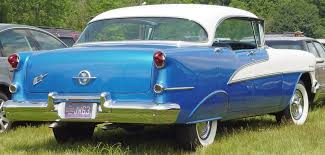
As much as it's become a pariah in recent decades because of its infamous failure to adapt, which is to say, to understand that the introduction of the Toyota Corolla and Datsun way back in the 1970s into the American market represented the wave of the future - still, someone my age can't help but be nostalgic about General Motors.  GM built the cars that symbolized American affluence at the height of its dominance, in the 1950s and 1960s.  Who can forget those eyebrow fins on the 1959 Chevy Impala?  The inverted Nike Whoosh on the side of the 1955 Oldsmobile (nothing new under the sun, including Phil Knight's ideas).  Those bullet holes along the fenders of the late Fifties Buicks. The most ostentatious and ridiculous gewgaw of them all, those tail lights on the Cadillac hung like two alien eyes atop a vertical fin.


And the engines: massively overpowered, yet very inefficient.  300 horsepower capable of propelling the tank-like mass of a Buick Century maybe 120 miles per hour.  No safety features, either. No seatbelts, steel dashboards (to dash your brains out on), hood ornaments to impale pedestrians with.  Death traps, as the yearly statistics on traffic fatalities demonstrated.  Well, that's what America was like - big, muscular, powerful, and we left the wounded behind on the highways to fend for themselves.

'Tis said you can now buy a house in Detroit for a buck.  Full retail price is maybe 18 grand, but you can take one off the hands of a bank, relieving it of the tax burden and "maintenance," for much less.  Just put the sucker in your name, please.  We'll pay you a buck if you'll accept this deed.  Then the city of Detroit can foreclose a tax lien on a squatter, put the house up for auction, receive a buck against the accrued back taxes, and start the whole rigmarole over again.  Such data points surely spell the end of GM.  The workers are all leaving.  Well, car sales are down 50% anyway, and not just for General Motors.  No company can survive that kind of contraction for long.

The Congressional Clown Troupe will hold more hearings on GM, no doubt.  We can put these proceedings in the same category as their occasional meddling in major league baseball.  The steroid hearings are held periodically so these dweebs can finally sit in the same room with their boyhood idols, albeit abusing the privilege by browbeating the players, all to no good purpose other than the vindication of their own nostalgia.  Back when baseball was pure and unsullied! Other than the drinking, whoring and Black Sox scandal, sure -- as the driven snow.  But the aging solons also remember the General Motors of their youths, and they need to appear in public to blame the current executives for the passing of an age.  It can't really be gone!  What about that turquoise and cream '57 Chevy with three on a tree?  With the slick bench seats and AM radio?  All gone, just like GM.  GM's golden age didn't really last that long.  It's odd when the parentheses of your own years surround an entire epoch, but so it was with General Motors.

Kind of sad.  See the USA in your Chevrolet.  How do you like your Buick?  I think it's wonderful.

March 04, 2009

All the news that's hard to take


697,000 jobs were lost during February, according to the Department of Labor's preliminary estimate.  This will be revised upward later, of course; you can see the propaganda effect pretty easily in the number.  Ju-u-u-s-t shy of 700,000.  Odd how often that seems to happen with the first number that comes out early in the month: 595,000, et cetera.  Does anyone even have a job at this point, aside from (a) TV news people and (b) government employees, such as the President?In a few months will the Dept. of Labor simply announce, "The rest of the American people lost their jobs last month," and that will be it?


Here's a wiseass from Russia weighing in: 

"MOSCOW — If you're inclined to believe Igor Panarin, and the Kremlin wouldn't mind if you did, then President Barack Obama will order martial law this year, the U.S. will split into six rump-states before 2011, and Russia and China will become the backbones of a new world order."  

Sheila Bair, the head of the FDIC and the remaining federal employee in the financial sector with any credibility left, says the FDIC may become insolvent by the end of the year.  I don't see how that can happen.  Wouldn't the Treasury Department simply "replenish" its capital by "injecting" a few trillion to keep it going?  I think that's our operative principle for everything these days.  A bulkhead buckles, the water starts pouring in, and we patch the hole with more federal "money."  That's why I'm concerned about this guy Panarin; it isn't so much that I see him as some kind of spot-on Cassandra for the West's misery.  It's simply that he's saying it at all.  Like G.K. Chesterton's horse who could play chess: it isn't so much that he plays well, said the wit; it's that he plays at all.  Sort of like that.  Russia, while floundering itself, still has a lot of stuff to sell, namely, oil and natural gas, so they can raise cash.  And we're counting on that cash, and a few trillions like it from China and Saudi Arabia, to keep the party going at the Casino at the End of the Universe.  So we don't want these guys drooling over the prospect of our collapse.  We need the money.

So this outbreak of Schadenfreude is disconcerting, to say the least.  These other... people, as Daniel Plainview says in "There Will Be Blood:"  what are we to do with them? Or without them? Are they going to drink our milkshake?  They are well aware, because they are educated at least as well as we are (okay, better, but I'm looking for a silver lining here), that the immediately precipitating cause, that which gave impetus to a long process of decline in the U.S., was the last great Casino game we could come up with: mortgage laundering.  Mortgages were sold to anyone who could pass the mirror-fogging test, then lumped together into gargantuan pools of "diversified risk," then sold as jigsaw-puzzle bonds.  It's important to remember that what looks like the actual and efficient cause of our problem is really only a symptom of something far more dire.  We had run out of ways to make money in any productive way, in any way that the plutocratic class could use to maintain an extravagant lifestyle, and so the final resort was made to the hocking of the very land of America.

And we've come up snake-eyes.  The Grim Croupier is raking in all the chips and looking askance at our furtive effort to pass off crude chips made of particle board as the real thing.

What's the guy mean by "rump state," anyway?  That sounds like some sort of Commie-speak. They're forever using such terminology in their dialectical analyses.  Bourgeois, proletariat, stooge, apparatchik, rump state.  I think he means some kind of regional federation thrown together in a state of panic.  Not to worry: one of George W. Bush's "secret memos" covers that, the memos containing what Bush/Cheney considered the Real Constitution.  The one without the Bill of Rights, and that allowed the U.S. military to operate within the country to "quell insurrections," even citing the Civil War as an example or a provocation.

Could be Dick & George were on the same page as Igor.  What may be hard for us to accept is that there are situations too dire to get out of.  They happen regularly in world history, often as the result of imperial overreach.  Everything seems okay, manageable, just a rough patch. But it just keeps getting worse, and it gradually dawns on you that you're running out of options. There's no money, no credit, and too many people are beginning to operate independently to save themselves for a cohesive center to hold.

Barack running a regime under martial law?  I was kidding about that Sheriff Bart thing, you know.

March 02, 2009

America's Sheriff Bart Gambit


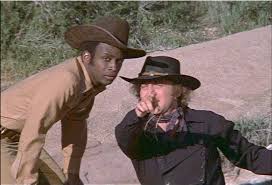
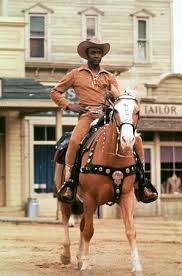
In Mel Brooks's immortal "Blazing Saddles," the gentle townfolk of Rockridge get their first glimpse of the new sheriff, a hip freed slave foisted upon them by Governor Lepetomane ("the leading asshole in the state"), and decide to string him up.  In the late, great Cleavon Little's achingly funny rendition of Sheriff Bart, the new law man pulls his own gun on himself and begins dragging himself toward the safety of the jail.  "One move and the n___r gets it," Sheriff Bart tells the stunned crowd.  One of the morons watching announces that they'd better do as they're told, because "he's not bluffing."


For reasons that probably say more about my peculiar thought processes than they do about reality, I was thinking of Sheriff Bart while contemplating President Obama's (our hip, sharp, first African-American President) budget of $3.5 trillion.  With a $1.75 trillion deficit.  This makes for pretty easy mathematics: half of the money the federal government needs in fiscal 2010 (beginning Oct. 1 of this year) will be borrowed.  50%.  

The budget was announced after last Tuesday night's speech, where Prez O was as sharp, masterful and on top of his game as Sheriff Bart.  ("Baby, you are so talented," Bart says to himself after he sits down in the sheriff's office.  "And they are so dumb.")  More than to a little extent, the budget verges on the unbelievable (even though, as I've admitted, I love it).  While it's presented as business as usual, I think we can admit one thing.  If any other country in the world presented a budget where it proposed to spend $3.5 trillion while borrowing half of it, we would realize that country had gone fully belly up.  It would be seen as the last gasp of a hyperinflationary, completely out-of-control banana republic on the verge of complete collapse. No one would go near the place with a loan.  Foreign countries doing business with the nation would pull up stakes and head for the exits one step ahead of expropriation.  Terrified visitors would clog the airports, as in "The Year of Living Dangerously."  The government would fall, to be replaced by a military junta run by guys in green fatigues.

But not here.  Borrowing half the federal budget from...well, whom?  Or from what?  Where do you come up with that kind of dough?  No matter.  We remain serene.  The Sheriff Bart gambit works, or has worked so far, because the rest of the world stands in for the Rockridgers that Gene Wilder's Waco Kid called the "simple people of the land...you know, morons."  We're holding the gun to own heads and the world doesn't want to take the chance that we're bluffing.  Everyone is suspending belief, and credulity, in order to wish along with us that the United States escapes this self-inflicted hostage crisis.

"Do what he say-ay, do what he say-ay," the terrified Bart yells to the town folk as Bart drags himself off to the safety of the jail.  That's right, World.  Do what we say-ay.  Otherwise, we gets it.  And we're not bluffing.

March 01, 2009

Echoes in the Left-O-Sphere


Bill Maher had a lively crowd at his table Friday night on "Real Time," including Gavin Newsom and Alan Cumming, the Irish comic actor.  At one point in the discussion, Bill Maher made a point which has occurred to me over and over again, that the entire case against Afghanistan and its role in the attacks of 9/11 seems to be built on the complex of dreaded jungle gyms (which Maher may have called monkey bars) which show up in the standard stock footage every time we hear about bin Laden's training camps.  Maher had ealier inteviewed Robin Wright (the journalist, not Mrs. Penn), and she had confidently assured us that we cannot allow Afghanistan to become a "failed state," or it will become a breeding ground for terrorists.  Thus, we have no choice: we have to remain in Afghanistan indefinitely to nation-build even though, as with Iraq, this was not part of the original mission statement or war authorization.


Maher wondered to his panel (which also included P.J. O'Rourke) whether the world actually needs a whole "failed state" in order to breed terrorists, or in order for them to plot an attack against the United States.  I think a fair reading of the Report of the 9/11 Commission, which gave full credence to the testimony of Khallid Sheikh Mohammed at a point before we knew he had been systematically tortured, leads one to the conclusion that the actual plotters of the attack were in no need of Kandahar, Afghanistan or even a children's playground in order to put together a successful conspiracy.  Atta & the other ringleaders were apparently radicalized by contact with the West while attending school in Hamburg, Germany, and held their meetings at the local mosque and in their apartments.  If bin Laden was a funding source, and if Khallid Sheikh was actually the mastermind, it nevertheless does not follow that they needed a whole "harboring country" in order to proceed with their plans to enter the United States, train in American flight schools and hijack the aircraft.  It seems also doubtful whether the prior attack on the World Trade Center in 1993 in any way relied on the existence of a "safe haven" for terrorists; similarly, the attacks on American embassies in Africa in the 1990's did not require the Taliban or a whole country full of radical Muslims as preconditions.

In his speech on Tuesday night, President Obama emphasized, to deafening applause, that Afghanistan would not be used to "launch" attacks against the United States again.  This is more or less the standard formulation of the thesis, but it points to an almost superstitious approach to anti-terrorism in this country.    If Osama bin Laden was in Afghanistan when the attacks of 9/11 occurred, then the U.S. military must fight, for seven plus years and counting, in that country so that bin Laden can't use that country again.  I'm sure this plan, as formulated, will probably succeed.  There are, however, two billion Muslims in the world; the largest Muslim population anywhere is Indonesia, where we are not fighting any battles at all.  And what is it about fighting a land war in Afghanistan that would prevent another group of 15 Saudi "muscle" hijackers from going to work for another Egyptian (probably radicalized originally in the Muslim Brotherhood, not al-Qaeda) and UAE national (Mawran al-Sheihi)?  What would have worked in 2001 was to act on the good work of American intelligence agencies which discovered clear evidence of the plot, and all without (a) a "war on terror," or (b) an invasion of Afghanistan.  The clearest rationale I can think of for the war on Afghanistan in the first place was that it distracted the American people from thinking about these fundamental, obvious facts.

The problem of "bad conditions" in Muslim countries is simply far too diffuse to approach the problem by pacifying every trouble spot with the U.S. military. Added to this difficulty is the widely acknowledged problem that "collateral damage" in the form of civilian casualties in Afghanistan probably results in greater risk to American security.  

I think it's unfortunate that President O, who is beginning to find his stride in very positive ways in other areas, feels the need to double down on this original American mistake. I can understand the political exigencies; it's more important to appear tough on terror than it is to make any sense.  But Maher's simple question reflects what I think is a lucid perspective on Afghanistan. One looks at the war and can find no rationale, no matter how far your gaze. Alice in Wonderland looked down the road and said she could see nothing.  The King complimented her on her vision; one must have astonishing eyesight, he said, to see nothing at such a great distance.

February 27, 2009

Loving Barack's Budget


Everyone loves President O's budget, so I've decided to love it too.  From the Left (Paul Krugman) and from the Right (Charles Krauthammer, David Brooks), hosannas ring out.  Its clarity is admired, its willingness to count that which must be counted (the costs of the wars, for example), its visionary embrace of health care reform and energy research -- all good.


Why should I be special?  Why don't I just love it too?  Well, I do love it.  That's what I'm saying. I love it because it is a quintessentially American budget, and I'm a quintessential American. Indeed, I've been an American my entire life, even during the Bush 43 years.

You're waiting for the other shoe to drop.  The other shoe will not drop.  Prez O, after all, inherited this steaming pile of economic doo-doo from his truly, monumentally incompetent predecessor, the aforementioned W.  The $1.75 trillion deficit is Bush's fault; at least $1 trillion of it was inevitable after Bush, and that's without regard to the stimulus bill, which is also Bush's fault because he drove the economy into a ditch. 

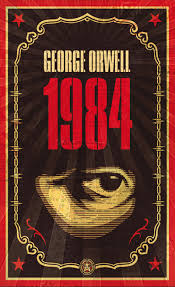
In fact, everything is Bush's fault.  Let's just stipulate that and move on.  Anything which can be blamed on Bush, should be blamed on Bush, because he was just awful.  Maybe what we need in America are periodic "Hate Sessions," as in Nineteen Eight-Four.  Remember? The government (Big Brother) would display a picture of the armies of Eurasia or Emanuel Goldstein on TV screens, and workers in Oceania would get up from their desks and scream "Hate! Hate!" for a few minutes.  Could we put Bush's stupid visage up on a few thousand Jumbo-Trons around the country and try that?  I know, I know -- not very bipartisan.  The gentle Barack would never go for it, and he's right.  There's no telling where that kind of energy might lead, you know?  I sense there's a great deal of pent-up rage in this country.

But the budget, the budget.  It's just great.  Bear in mind that we start with a basic template that already allocates 64% of the discretionary budget to the military, homeland security, the nuclear program at the Department of Energy, all the spy agenices, and interest on that part of the national debt attributable to past military spending.  So we have only 36% of the discretionary budget (outside of the entitlement programs) to fool around with in the first place.  And Barack moves this around in nice ways.

That's what being a progressive President is, these days.  Moving the 36% around so some goes to good stuff like energy research and forming committees to see if we can try and get our for-profit medical system to cooperate a little and maybe bring down their premiums a little so we have fewer than 50 million people without health insurance, like maybe just 10 or 20 million, like a civilized country.  Okay, not exactly like a civilized country, but like the old United States.

Let's face it, being the world's mightiest military power is what we do.  We're not going to change that.  President Obama's budget increases military spending a little, because, you know, the world just keeps getting more dangerous all the time.  Ann Coulter, noted defense analyst, is right.  Anyone who doesn't want to spend as much as we do is an unrealistic, unpatriotic Liberal.  We should spend more, really, because the world is counting on us to do all of the military work on a global basis, and we pretty much do that all the time.  In point of fact, other than a few lapses, such as overthrowing liberal, democratically elected presidents in Third World countries because they posed a threat to the United Fruit Co., Standard Oil or ITT, we operate with pretty good restraint.  Noam Chomsky can rave on, but the fact is that probably no other country, with this much power, would use it as responsibly as we do.

I'm not sure what that proves, either, but it looks and sounds kind of nice.  Ann Coulter might be after my phone number after that line.  If she calls, I will just tell her to give O a break for once.  He's surging the troops in Afghanistan, he's going to negotiate for a long-term garrison in Iraq, he's increasing military spending.  So what if he believes in global warming?  That doesn't make him a bad person.  And this health care reform no doubt will stagger out of the committee room stiff-legged, arms thrust forward at shoulder level, its head all stitched up, like the Frankenstein monster it will no doubt be.  Ann and Rush and Bill O'Reilly can take heart in the certainty that medical care will remain out of reach for America's losers, the way it should.

Anyway, Prez O, count me in.  I'm back on the bus.  Or the high speed train, zipping down to the free medical clinic located just across the New Urban plaza from the solar panel farm.

February 26, 2009

Can Obama escalate the war in Afghanistan without Congressional approval?


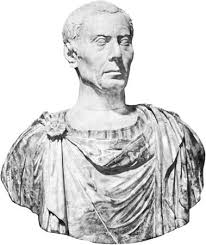
Sandy Levinon, a professor of law at the University of Texas who writes very interesting stuff on the legal blog Balkinization, poses a provocative question which I have not seen elsewhere asked: does our most recently installed Constitutional Dictator, Barack Obama, actually have the power to escalate the war in Afghanistan without seeking some further auhorization from Congress?  By "Dictator" I mean no disrespect; Caesar, after all, was a dictator yet much beloved by his Roman subjects.  The "Fifth Republic" style of governance which has taken hold in the United States yields up most of its power to the Executive.  Thus, most people don't even notice anymore that the War Power, strictly speaking, is vested in the Congress, not the President.

It is fitting that the question was asked by an academic because the question, and answer, if there is one, are also academic.  No one in the Congress is going to challenge the planned increase of 17,000 troops in Afghanistan, there will be no Congressional debate, any request for money to fund the escalation will be hurriedly and gladly given -- in short, it's a done deal.  But just for the sake of tracking where we've been and where we're going, it's at least intellectually interesting to see how it all happened.

So that original Authorization, passed in a heated rush on September 18, 2001 stated as follows: 

Section 2 - Authorization For Use of United States Armed Forces

(a) IN GENERAL- That the President is authorized to use all necessary and appropriate force against those nations, organizations, or persons he determines planned, authorized, committed, or aided the terrorist attacks that occurred on September 11, 2001, or harbored such organizations or persons, in order to prevent any future acts of international terrorism against the United States by such nations, organizations or persons.


Rather vague and amorphous, of course, but try to remember that we didn't know much, one week after the 9/11 attacks, about what had happened, other than the basic facts.  19 young Arab men had boarded American planes, hijacked them, flew three of them into buildings and one into the ground.  Not one of them was from Afghanistan; Afghanistan, indeed, is not Arab, but it is Muslim.  Be that as it may, and returning to our foundational document: the President is authorized to use force against "those nations, organizations, or persons" involved in the 9/11 attacks. The disjunctive phrase states "or harbored such organizations or persons."  What is the subject or antecedent of this phrase?  It must be "nations" in order to avoid what is somethimes called the "Russian doll" fallacy in legal construction; otherwise we're talking about "organizations or persons" harboring organizations or persons, which while technically possible, is probably not what Congress had in mind.  If there are two possible interpretations of Congressional action, and one involves simple stupidity, that's where to put your money.

But let's just say that the President was authorized to use military force against any nation, organization or person involved in 9/11 or involved in harboring people who were involved in carrying out the attacks.  That's broad enough, I think, and it gives the President and Congress the benefit of every doubt.  How does this relate to what's going on in Afghanistan right now?

The original idea was that the government of Mullah Omar and his Taliban gang provided a sanctuary for Osama bin Laden near Kandahar; bin Laden was the brains and money behind 9/11, and his fearsome array of jungle gyms and Gymboree tunnels were critical in training the hijackers to overpower the unarmed flight crews and gain access to the unlocked cockpits that fateful day.  Everyone now concedes that (a) the Taliban are no longer in power, (b) Mullah Omar was dethroned, and in fact may have been killed by an October, 2008, drone missile attack, and (c) bin Laden fled Afghanistan.

So Afghanistan still technically exists, of course, but now under the government of the Mayor of Kabul, Hamid Karzai, former Unocal consultant and dapper headpiece wearer.  Afghanistan was the "nation," but as presently constituted, it had nothing to do with 9/11, nor in harboring those who attacked or planned.  Are there any "organizations or persons" in Afghanistan in Column A (active planning or execution of 9/11) or Column B (harboring)? That would presumably be al Qaeda.  They don't wear badges or uniforms, so how will we know when we get to the end of al Qaeda in Afghanistan?  And are the al Qaeda in Afghanistan "persons" who were actually involved in 9/11, or involved in "harboring" those who were?  How do we know that?  And what is the technical or operative distinction between al Qaeda that we might find in Afghanistan and al Qaeda we might find in, say, Saudi Arabia?  Why war in one place but not in the other?

As I say, an interesting academic question Professor Levinson has posed.  Congress won't touch it because the whole idea of the "war on terror" is to keep it as vague and amorphous as possible, the better to use it as a funding mechanism for the Pentagon and as a means of concentrating power in the Presidency.  The one thing we can know for certain is that it certainly doesn't have to make any sense.  That's now how they do things on Capitol Hill.


February 25, 2009

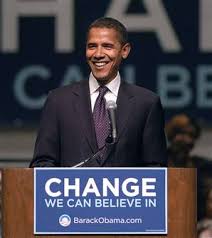
Obama - Change I'm Trying to Figure Out!


A tip o' the hat to Prez O for his speech last night.  His performance reminded me of his very best efforts on the campaign trail: the soaring rhetoric, the carefully planned moments when he continued speaking over the applause (a nuance learned from his true teacher, Martin Luther King), the natural aura of leadership.  What was also fun was the way he boxed the Republicans in; at first they sat on their hands in angry defiance, but Barack forced them to cheer along.  What were the Repubs going to do, act as if they were for bank executives buying up private jets and $85,000 area rugs? And once he had them cheering against the plutocrats, it was natural that the Republicans found themselves in favor of restoring the top marginal tax rate of 39% when Bush's tax plan expires.  But if the Republicans desert the fat cats, who the hell do they represent?  Everyone knows that their pretended advocacy for the Evangelicals is only a gag to give them a slightly broader base than the foursomes about to tee off at Burning Tree.


The First Dude is a master politician, a preternatural talent, no doubt about it. He threw in some red meat for the mouth-breathers, too.  His non-withdrawal withdrawal from Iraq, for example.  Will all the troops in Iraq really be home by the summer of 2010? "We are now carefully reviewing our policies in both wars, and I will soon announce a way forward that leaves Iraq to its people and responsibly ends this war."  If all the troops were coming home next summer, wouldn't that be the "way forward" announced now?  What the speech "announces" now is that we will "end this war," and that's what people hear, and are meant to hear.  Meanwhile, one learns from the New York Times that the "end" of the war means that a garrison of 50,000 troops will still be in Iraq for "training" and to "guard American institutions."  Those institutions, of course, would include the American embassy, permanent bases and the Iraqi oil industry, which we will not give up without a fight.

If you're scratching your head and wondering how this is different from what Bush would have done, do not distress yourself unduly.  Bush, because of the obnoxiousness of his own personality, so exasperated Nouri al-Maliki that the Iraqis pushed for our expulsion.  President Smooth, on the other hand, knows how to play people to get what he wants, and now Nouri doesn't want to lose his own access to Obamania.  Pretty cool, huh?

Of course, that does mean that Americans will continue to get picked off over in Diyala, Anbar, Mosul, etc., but hell -- enlistment is way up because the economy sucks.  It's a win-win! And meanwhile, the Afghanistan war is entering a growth phase because we need to make sure that no one can "use" that land "halfway" around the world to stage attacks against America; we want them to have to use Saudi Arabia or Yemen or Germany instead.

So, what do we got here?  A "better" health care system is promised.  Universal, free, like France?!  Don't get hysterical. He didn't say that.  Just tweak it to get rid of "waste."  

We will double our supply of renewable energy in the next three years.  That's better than nothing, especially if Obama is not counting his oxymoronic inclusion of "clean coal" in the mix.  But current renewable use supplies only 10% of our energy, and reality-based hysterics, such as those at RealClimate.org (to the right), argue along with Al Gore that if we're going to avoid the worst effects of global warming (as opposed to those which are now inevitable), we really need to use goals like 100% by the year 2020.  Obama proposes to invest $150 billion in renewable research over the next 10 years, or approximately the amount the United States was spending on Iraq on an annual basis during the height of the insurgency.

So:  Obama is not really serious about an alternative energy regime.  His policies in Iraq and Afghanistan are virtually indistinguishable from his predecessor, except to the extent his approach to Afghanistan is worse.  He's carried forward a lot of the Bushian bullshit about detainee and "state secret" policy, using Bagram as his substitute for Guantanamo, just as Bush did when the Supreme Court went upside his head on the Cuban gulag.

But man - does he sound good!  It's almost as if I can't believe I'm writing what I'm writing, because it's so hard to believe that in actuality, nothing much is changing.  How can that be?  Should I clap?  Or scowl and sit on my hands?  Republicans -- I feel you!

February 24, 2009

The Casino at the End of the Universe


I have referred before to a remarkably prescient book, published some years back, entitled Infectious Greed by Frank Partnoy, which detailed the tenuous world of derivatives and the threat they posed to the world's financial stability.  Partnoy took as a jumping-off place the meltdown of Long-Term Capital Management, that giant hedge fund quietly working its sinister magic in the sylvan quiet of the Connecticut suburbs.  LTCM innovated like crazy and had the inspiration, and genius, of sensing it required the services not of standard issue MBAs, but of math PhDs from MIT and Harvard who could construct the arcane and insanely complicated algorithms necessary for LTCM to optimize its computer-driven arbitrage strategies.  The system couldn't miss, until it missed entirely.


The nightmare, house-of-cards scenario which Partnoy predicted in detail has now actually happened.  Usually these sci-fi disaster movies remain fictional; not this time.  Instead of learning anything from LTCM's game-playing and ultimate implosion, what Wall Street learned was that even in a stagnant economy, where nothing of real worth is being produced, enormous sums can still be earned by playing games with money.  Any common financial...thing, such as a residential mortgage or a VISA card balance, could, with sufficient scale, aided and abetted by millions of side bets, become the stuff of new fortunes.  And so we witnessed (we didn't really see it, and we certainly never regulated it) the massive proliferation of mortgage-backed securities, collateralized debt obligations, short selling, and credit default swaps.  

These all interplayed and interacted; for example, Bank A might bundle together a few thousand mortgages into a pool, and base the issuance of bonds upon them, creating a Special Purpose Vehicle to issue the bond (and to keep the liability off the books of Bank A).  The actual bonds were sliced, diced and parsed into tranches of relative risk: top level (AAA), mezzanine, lower equity, which might be retained by Bank A itself.  To insure the risk involved in these mortgages (and the MBS based upon them), credit default swaps were bought and sold, sometimes by the issuer and purchaser, sometimes by insurance companies such as AIG.  

The swap guaranteed payment in the event of default.  To make it all more fun, there was no requirement that the swap be held by someone with any real interest in the MBS at all; anyone could buy one, thousands of people could place bets on whether the MBS would pay or fail. Then to stack the deck a little further, the playuhs, the Big Boyz, could increase their chances of collecting on their bet the MBS would fail by short selling the underlying instrument to drive down its price.  What made it all the more creative and exciting is that no one regulated the world of credit default swaps. Not the SEC, certainly not the Federal Reserve of Ayn Greenspan.  One can only guess as to their total "notional value;" some people estimate a total value of $1.4 quadrillion, or more money than exists in the world.  Did the United States, in purchasing an 80% stake in AIG, succeed to an exposure for $1.4 quadrillion in swaps?  Hey, I guess we'll find out!

Does any of this actually sound like a process by which one puts vegetables on the table or heats one's dwelling?  I think Thoreau said, in more eloquent words than these, that one should beware of solutions to the problem of living that are more complicated than the problem itself.  I was thinking of this last night as I was watching the PBS "Frontline" special called "Inside the Meltdown" which tried (really tried) to explain what's happened to us. Personally, I don't think it came close.  There were the usual tableaux vivants: the big conference room videos with Bush, Paulson, Schumer, Dodd, Reid, Pelosi, Bernanke sitting around a table, and then someone like Chris Dodd standing in front of a microphone saying stuff like, "When we heard how close we were to a meltdown, the oxygen left the room.  We've got to get this right."

It's all so dramatic.  But it occurred to me (a) the ones sitting around the conference table were the ones who let it all happen and (b) they are entirely the wrong people to fix it.  It's as if these same people sitting around the table were asked to come up with an innovative approach to string theory.  The complexity of the problem is simply beyond their understanding.  The only hope, and it's not much of one, would be to enlist the MIT PhDs who constructed the algorithms in the first place to conduct a seminar for a month or so and to suggest ways to unravel and unwind the puzzles they had constructed.

Instead, the Treasury and the Fed are going to continue down a path of reacting to the latest bad news, without really understanding the underlying origins of the problems they're confronting.  How big they are, how long they might go on.  They are going to treat this enormous financial Frankenstein as if it were the normal outcome of "banking" and "investing," and sacrosanct because, after all, these were all "contracts" freely entered into by capitalists pursuing their trade.  No matter how far the contagion spreads, the U.S. government is going to keep doling out billions, hundreds of billions, trillions of dollars in an effort to stanch the infection.  To keep this enormous Casino at the End of the Universe, these palaces of greed and bad judgment, standing for as long as possible, until they topple over from the rot within.

February 23, 2009

Twenty-five Years after Nineteen Eighty-Four


One of George W. Bush's recurrent fantasies was that if we could simply democratize the whole world, war and terrorism would disappear, rainbows would appear in the sky on cloudless days and the world's rivers would flow with milk and honey.  History does not really support the point of view that democracies are incapable of aggressive war; this simpleton's analysis was part-and-parcel of what I always thought of as Bush's World Book Encyclopedia approach to international relations.  His ideas about the world entered a condition of stasis when he was about 12 years old and never really developed much beyond that.  Thus, America could do what it wanted because it was "good," and apparently bad things that America did were not bad because it was America that did them.  These ideas are familiar to me as relics of my own elementary school years.  In the dichotomous world of America vs. the Soviet Union, it's how we were all taught to think back then.


In point of fact, the 20th Century was probably the high point for liberal democracy worldwide, yet it's possible to argue that the absolutely worst things in human history happened during the same epoch.  The two total wars, the Holocaust, the Stalinist Gulags, the use of nuclear weapons on civilian populations, the killing fields of Cambodia, the Cultural Revolution in China. These were all events of mass horror and carnage.  They were also all triumphs of state power over the helplessness of the individual.  One can argue that a great deal of the mischief was caused by totalitarian governments, and I would agree.  The essential problem, however, is that even in those situation where a government is elected democratically, as in the case of the National Socialist Party in Germany in 1933, there is no guarantee that a stable regime dedicated to individual liberty will survive. I'm sure that Iraq will bear this thesis out once they are free from our custodial supervision.

Even here in the good ol' USA, a pretty funky devolution is going on right now. A number of modern thinkers are trying to describe it, and Glenn Greenwald (linked to the right) is one of the best, but it's a murky phenomenon that is difficult to encapsulate in a few words.  In essence, there seems to be an almost complete disconnect between what you might call populist sentiment (majority will) and the actual policies pursued by the federal government.  For years, for example, poll after poll demonstrated that the general American populace was way ahead of the Congressional establishment on the subject of Iraq withdrawal. The people wanted out; yet the Congressional consensus, reinforced by the Beltway media, kept repeating that "no one" wanted a precipitous withdrawal or one that "abandoned" our troops.  So one appropriations bill after another was rubber-stamped by Congress, even after the Democrats took over.

The same nonsense has gone on with the question of investigating/prosecuting the Bush regime for war crimes.  In point of fact, reliable polls demonstrate that about 64% of Americans want the Bush people at least investigated, and a substantial plurality want them prosecuted.  Yet the "official" position, which Obama has adopted, is that "no one" wants to get bogged down in a "partisan" argument and that we must "look forward."

I was reminded of this principle reading Paul Krugman's column in the New York Times today where he mused about the Obama Administrations's obvious reluctance to nationalize banks such as Citigroup and Bank of America, choosing instead to shovel money their way even as it becomes apparent that the bailout sums exceed, by several multiples, the total capitalization of the corporations at their current stock price.  Of course, certain individuals at these banks would take a financial hit if the government assumes control, dismisses management and declares the stock worthless, and it's worth remembering that Wall Street in general donated about $18 million to the Obama election campaign.  And the choice of Timothy Geithner as Treasury Secretary, a fellow club member with all the high rollers on the Street, may also be a telltale sign.  

Still, the Obama campaign was the first presidential campaign in history to eschew entirely public financing, raising about $700 million, and most of that from individuals. It seems like a populist triumph; yet the actual policies of the Obama Administration do not seem to line up with the expressed will of the majority of the American people, as reflected in national polls.  This is a little scary.  What does it even mean to have a choice in candidates if the federal government does whatever the hell it feels like doing despite that "choice?"  

Obama is now going to guide his own surge of troops into Afghanistan. In some vague way, I recall that the war in Afghanistan is supposed to have something to do with the 9/11 attack by a group of Egyptians, Lebanese, UAE, Yemenis and (mostly) Saudis as planned in apartments in Hamburg, Germany starting about a decade ago.  (We probably felt like we couldn't bomb Hamburg again, not after the fire bombing of July 1943.) I wonder if the Afghanistan war, at this point, is not a great deal like the war which Oceania fought in perpetuity against East Asia and Eurasia in 1984.  It transfixes the populace and keeps us in a state of constant anxiety and aggressiveness.  We're at war! It doesn't do to question the government excessively when they are leading us in a fight for our very survival against the Evil-Doers.

So Obama, like Bush before him, has his war, which provides a covering rationale for the continued programs of extraordinary rendition, state secrets, telecom immunity, and, most important of all, no reduction in the massive amounts spent on defense and our 700+ military bases in foreign countries. I am beginning to form the opinion that the stock markets, which continue their elevator ride south to the basement, are reacting because of unconscious perceptions at work in the minds of average Americans. A country which continues its profligate waste of money on imperial nonsense, such as the war in Afghanistan, and which refuses to pay for anything with real money in real time, is not a country which is going to evade financial ruin.  So that while the federal government believes that it is escaping the judgment of the American people by traducing their will, it will not escape the judgment of reality, which has always dealt with similar hubris in the same way.

February 20, 2009

A Dream Fulfilled


Perhaps it was not too early in my career to achieve the ultimate: a letter chosen as an "Editors' Selection" by the New York Times.  As a small child growing up in a nondescript neighborhood, suffering through the anomie of the Eisenhower years, such an accomplishment seemed beyond my grasp, perhaps because (a) there was no Internet and (b) there was no such thing as an Editors' Selection at the New York Times.  Maybe, however, such a prize, this Golden Fleece of the churlish Net-commenter, existed as a Platonic Ideal, one of those reflections or shadows on the cave wall he wrote about.  No, I never understood what Plato was talking about, either.


I had suffered, as most products of public education must suffer, as I saw all those commenters from Cambridge, MA and Greenwich, CT ascend to the heights of Editors' Recommendations. Why? I would ask.  Why can't one of my letters make the grade?  I had the West Coast advantage. I can read the Times columns at 9 pm Pacific Time and comment before anyone else can comment.  Or - was that the problem? Was my exclusion the all-too-predictable East Coast bias against the under-educated rubes of the Western provinces?  So many of the comments from the East Coast bear time stamps of 6:30 am or so, meaning that if I wanted to mix my contribution in among the East Coasters without drawing a lot of attention, I would have to get up at 3:30 am.  Was it worth it?  Well, of course it's worth it.  The reason most people read columns in the New York Times at all is simply to provide grist for their own opinion mills. Particularly if you're reading something as worthless as a column by David Brooks.

But my letter was in response to Dr. Nobel himself, Paul Krugman.  This is where the Big Boys come to post.  You know, hitch your wagon to a star.  If a man's reach does not exceed his grasp, what's a Heaven for?  Your turn, as Woody says to the Spanish couple in "Love & Death."

What does an Editors' Selection look like?  Like this, and by the way, I think it was the use of "sui generis" that made the Editors think that maybe, just maybe, I had gone to Harvard or Yale and was therefore worth taking a flyer on:

"Not too many columns ago, Prof. Krugman wrote that 2009 would certainly be a bad year, but that he felt fairly optimistic about 2010. I didn't understand his sunny attitude at the time. This column seems to clear that up. The previous prognosis was probably a reflexive analysis about recessions in general: they run their course in a year or two, things improve. What makes this downturn sui generis, I think, is that it's the culmination of a number of very bad trends in America all converging at once. A hollowed-out, offshored manufacturing base, leaving Americans with the crap jobs of the service economy; over-development of the suburbs leading to an excess supply of houses vs. qualified buyers; and decades of flatlined earnings by the majority of Americans, who watched the uber-rich take a disproportionately huge chunk of all income. On top of this, we've had a ridiculously unbalanced trade relationship with China and the oil exporters, we've run large budget deficits, and we failed to prioritize away from military spending (and adventurism) toward technological innovation such as green energy, mass transit, universal health care and energy efficient housing. Now we're in a world of hurt, and we've taken a lot of countries down with us, including those we were counting on to finance our way out of this mess. I think we'll certainly have our own Lost Decade. If we don't get creative, innovative and more self-sufficient, then in the immortal words of the Sage of Crawford, "this sucker could go down."

February 19, 2009

Tentative Feelings of Buyer's Remorse


I'm coming to terms with my disappointment in Barack Obama.  I was an enthusiastic supporter of his during the campaign, and I don't regret the choice of O over the unthinkable John McCain, but I must admit that Obama has settled into the all-too-predictable pattern of selling out to Beltway modes of behavior much sooner than I thought he would.  I worked in his campaign, I flew to Florida to work as a precinct lawyer, all on my own dime, I contributed more money to his campaign than I had ever previously donated to any candidate.  I know some of this smacked of desperation to avoid another Bush in the White House, another warmongering, "gut-following," intellectually limited inhabitant of the Oval Office, but a lot of it was based on that most fragile of emotions, blind hope.


In truth, Obama's done some very positive things.  His stance on global warming, for example, which despite its occasional eclipse as a front-running issue, remains the existential problem of our time.  Obama has completely reversed Bush's policies on allowing the individual states to set carbon-reducing standards higher than the federal government.  That is crucial, because federal action requires Senator Harry Reid to overcome his fetish about the "60-vote" rule, behind which Reid hides his own deep conservatism.  Reid will always tell us he can't do anything because the Republicans will tell him he can't if he tries.  

Obama's actions to stem foreclosures are another major breakthrough, because he has led the U.S. Congress actually to enact legislation, mirabile dictu, which assists the ordinary American citizen.  Since almost all Congressional enactments of recent years are designed to punish average Americans for their bad judgment in not being very rich, I had forgotten that Congress had that power.  Consider, for a moment, the Bankruptcy "Reform" Act of a few years ago, passed to make it more difficult for consumers to write off usurious credit card debt.  Joe Biden, your Vice President, was the lead man for the Democrats on that nasty piece of anti-commoner work.  He's now the head of Obama's "Middle Class Task Force."  Hey, good luck, Middle Classers!  And remember when Congress made it illegal for Medicare to negotiate bulk discounts with Big Pharma as part of its senior "Medicare prescription" bill?  That's why, in Michael Moore's "SiCKO," the woman who paid $120 for an inhaler in the U.S. could buy the same device in Cuba for five cents, because your Congress wants you to have no escape from monopolistic captivity.

I notice there's been no reversal of that ridiculous provision even though the Democrats now hold a commanding majority.  Also, the Military Commissions Act is still on the books even though the Supreme Court has ruled that the habeas-stripping provision is unconstitutional, and even though the retroactive exoneration provisions violate the Convention Against Torture (making it also unconstitutional).

Speaking of which, Obama's temporizing on whether the Bush officials involved in torture should even be investigated is beyond lame.  The Convention Against Torture, to which the United States became a signatory under Ronald Reagan, requires the United States to investigate and prosecute all torture offenses committed by its citizens where credible evidence exists of the crime.  In our situation, Bush & Cheney have admitted that they ordered torture (waterboarding, among other offenses).  The Convention expressly eliminates any excuse for torture: no "national security," no "advice of counsel," no "following orders," no other rationales work (on this ground alone, the Military Commissions Act is unconstitutional, since treaties are the supreme law of the land and prevail over domestic statutes).  It does not matter, according to the clear standards of the Convention, whether drowning the evil-doers, or flying them around to places like Jordan and Egypt to be tortured, was designed to "keep us safe."  

So Obama's bullshit about his "focus on the future" and "getting it right moving ahead," does not fly.  There are some awfully smart lawyers out there, such as Glenn Greenwald, Jonathan Turley, Bruce Fein, Michael Rattner, Jack Balkin and others, who know there is only one way to deal with the Convention Against Torture honestly: comply with it, or expressly declare that for some reason the United States, which has always demanded that other nations comply with the Convention (and has assisted in the prosecution of war criminals based upon it), is not subject to a law which appears in the United States Code Annotated and expressly covers the offenses which Bush and Cheney have admitted openly.  Obama can give all the pretty speeches he wants about "bipartisanship" and "healing" and the rest of it; if he wants to be taken seriously as an intellectually honest lawyer, he's going to have to convince them.

President Obama is never going to be pressed on this specific, unavoidable point by the craven favor-seekers at one of his press conferences.  (I notice, sadly, that he has picked up Bush's practice of going down a list of reliable Media Stars when "calling on" reporters.)  It is to Obama's shame that he is not dealing openly with the issue.  If he wants to be "honest and transparent," then he needs to announce as follows:  "The United States is a signatory to the Convention Against Torture.  Credible evidence exists that members of the Bush Administration, including the President and Vice President, ordered acts of torture proscribed by the Convention.  We are under a mandatory duty to investigate and to prosecute, if warranted by the investigation.  Despite these clear, unequivocal and explicit duties, I am ordering my Department of Justice to violate the Treaty because... [fill in a reason]."

If he doesn't do that, he's dishonest.  If he does do that, he's complicit and part of an obstruction of justice.  The only way to avoid dishonesty and complicity is to seek an express abrogation of the Treaty and to declare that the United States, alone among all civilized nations, does not prosecute its citizens for torture prohibited by the Act.

February 18, 2009

Urban Outdoorsman


A fellow living in Golden Gate Park in San Francisco said that he preferred the term above to "homeless."  One thing about people who more or less completely drop out of the network of society's compromises is that they typically develop droll senses of humor.  Thoreau certainly had one.  Thoreau considered himself a denizen of the woods while he lived at Walden Pond between 1845 and 1847, but I doubt that he would have objected to "urban outdoorsman" as an interchangeable term.  Thoreau, after all, went to Harvard and held jobs in the straight world before he decided, at the age of 28, that such a "lifestyle" was too limiting and decided to transact his business directly with nature.


This guy living in GG Park, Tom Sepa by name, resides in a tent in less-traveled parts of the park, places where Mayor Gavin Newsom's homeless-rousting cops are less likely to find him.  He has a laptop and a cell phone and works as a telemarketer, logging on each morning at a Richmond District cafe. He prefers the park to homeless shelters because he doesn't like the annoying presence of drunks and dopeheads in the city facilities.  He says he makes about $2,000 to $3,000 a month, and can save almost all of it.  He maintains a low overhead, of course, but his budget allows him to check into a motel about twice a month for a shower.  He's got a line on available bathrooms in the area and prefers Starbucks, since you can lock the door.

I would imagine that Tom knows firsthand that Thoreau's essential premise, that the fundamental requirement of life is the maintenance of vital heat, is ineluctable.  You have to eat to fuel metabolism and protect yourself from the elements to conserve the heat thus generated.  An energetic scientist (in both senses of the word) writes:  

"I've mentioned to you before the parameter of daily energy expenditure called the Physical Activity Level (PAL), which is the ratio of daily total energy expenditure over the resting metabolic rate. 70 kg humans rest at about 75 watts and typical hunter-gatherers have a PAL of about 2.0. So on an average day primitive humans operate at about 150 watts over the 24 hr of a day (put another way, a total daily energy expenditure of 24 hr x 150 watts = 3.6 kilowatt-hrs). The US energy grid is delivering about 3.4 terawatts at any given moment, so the average American accounts for over 10,000 watts. It's like we have 10,000/150 = about 60 hunter-gatherers working for each of us around the clock."

A fellow like Tom Sepa obviously is not pulling his weight.  I wouldn't be surprised if his body weight is the idealized 70 kg, but I would surmise that his exogenous power usage (unrelated to his own ambling and talking on his cell phone) is confined to plugging in his laptop at the Zephyr Cafe and recharging the phone.  On the other hand, I'm sure he does a lot more walking than most Americans, but this pulls no power from the grid.  He is not hunting or gathering, per se, but he is moving, which is closer to our aboriginal roots. Since he's not chasing down zebra, it's quite possible he's in the 1.5 range above resting wattage, a goal worthy of emulation. 

The breakdown of the "consumer" economy, where finance plays a 20% role in our GDP and 72% of all GDP is related to consumer spending (and where manufacturing has shrunk to about 12% of GDP), will have the tendency to move the majority of Americans along a continuum away from Donald Trump and in the general direction of Tom Sepa, the Urban Outdoorsman. Despite the efforts of Washington D.C., with its bought-and-paid-for bias in favor of reestablishing the status quo ante, that of a Bubble Economy built upon extravagance, asset inflation and prodigious overuse of energy, we will move relentlessly toward simpler and less energy-intensive ways of maintaining our vital heat.  We need this, the planet needs this. Maybe what the Obama Administration could do, most efficiently, is simply give us all of our money back (instead of giving it to Citigroup and B of A) and let us take it from here, establishing local economies built to local scale. Then Barack could become mayor of Washington D.C. and the Congress could hold hearings about holding hearings.

Americans are moving in these directions, mostly because they have no choice.  We're driving less, saving more, and doing without.  Imagine the cushion that most of us have versus the Urban Outdoorsman, who demonstrates how wide the margin is between waste and basic viability. Maybe we can cut down our personal hunter-gatherer workforce to, say, 30 aboriginals.  We could do this while still living indoors if we think it through.

February 17, 2009

Don't You Know It's Gonna Be, Shooby Do, All Right


First, as an exercise in relaxation, do the following.  Go to YouTube and type in "Sungha Jung i will."  That's really all you have to do to brighten your mood for the rest of the day.  If a smile does not break out on your face while you listen to this absolutely amazing twelve year old kid from South Korea work his way through the Paul McCartney tune, then there isn't really much I can do for you anyway.  What makes it so beautiful is that Sungha, who looks nine, not twelve, and plays the acoustic guitar with an angelic grace and touch that few mortals ever achieve in anything, does not appear to take himself seriously at all.  Maybe that's the way it is with genius: no straining after effect.  If you need further proof, then dial up his take on Glen Hansard's "Falling Slowly," for which there are probably a hundred lesson videos by other guitarists showing you how to play it.  Sungha's arrangement, and playing, will simply blow your mind.  Same tune, but so different.


Somewhere back in the 1960's Paul McCartney dreamt up a simple melody based on a routine chord progression found in half of all folk songs and a great deal of other music besides, and then wrote lyrics (with John Lennon) suggesting a somewhat whimsical, yet nevertheless steadfast, love for a woman he apparently has not yet met.  "For if I ever saw you/ I didn't catch your name/but it never really mattered/I will always feel the same."

It was on the 68th take on September 17, 1968, that the Beatles got "I Will" just the way they wanted it and added it to the White Album.  It runs 1 minute 53 seconds.  Forty years later a Korean boy brought that beautiful little ditty back to life.

"The world is wide and full of marvelous people."  Oscar Wilde said that, and it behooves us to remember it.  These seem like tumultuous times, and indeed they are, but paroxysms often precede paradigm shifts.  America could not keep going the way it was going and so it will not.  It will change and I strongly suspect it will change for the better.  Humility, whenever it is learned, is a good thing, and America will be profoundly humbled by the changes underway.

In the meantime, listen to Sungha and bear in mind that time is nature's way of keeping everything from happening at once.  Meanwhile, I'll give this "I Will" arrangement a shot.  It's in D major, I can see that, even if I can't follow a lot of the up-fretboard stuff.  But I'm inspired.  Out of the mouths of babes, you see. In youth is the renewal of the world.

February 16, 2009

Beyond Ideology into the Brave New World


Nouriel Roubini is an Iranian Jew who teaches business at the Stern School at New York University.  From this paucity of facts, that Mr. Roubini, an Iranian Jew, is (a) alive and (b) someone who continues to thrive, we can deduce, in the manner of Sherlock, that he must be an adaptable, savvy and insightful individual.  


On the cable news financial channels, such as CNBC and Bloomberg, he is usually greeted on his occasional guest appearances with all the enthusiasm of the Plague at the costume ball  in Edgar Allen Poe's "The Masque of the Red Death."  He has earned the sobriquet Dr. Doom because of his relentlessly downbeat assessments of the American economy.  He is hurried on and hurried off, appearing only long enough to bum everybody out.  As soon as his spot is over, the regular shills for the financial industry begin bad-mouthing him, and quickly bring on a more reliable cheerleader who talks about a "bottom" having been reached in the Dow and that it's time for John Q. Public to go long on American stocks once again.

Nouriel is a major irritant because he's always right.  He was writing in detail about the bursting of the housing bubble and the tsunami of bad debts that would overwhelm the banking sector about three years ago.  He was steadfast in pointing out that the figures used for subprime losses (originally estimated at maybe $200 billion) were vastly understated.  His own current estimate of the total eventual loss, worldwide, from bad U.S. mortgage debt is $3.6 trillion, about half of which will hammer American banks directly.  With $1.8 trillion in losses, the U.S. banking system is insolvent.  As a result, Mr. Roubini argued yesterday in the Washington Post that the major insolvent banks (Citigroup, Bank of America will no doubt be among them) should be nationalized.

As the amount of bailout money continues to pile up toward the ionosphere, one must admit that Prof. Roubini has a valid point.  There will be no end to the shoveling of "taxpayer" money into the open maw of these insolvent, imprudent, incompetent banks.  Just take them over so the People have direct control.  The bankrupt banks have lost the right to control their own destinies. A lot of support is lining up behind Dr. Doom, and some rather surprising (at first glance) opposition is also taking shape.  

As one prominent example, Barack Obama prefers that the banking system remain in private hands.  One has to wonder: is this a practical decision or an ideological one?  One can understand the reluctance to turn over the banking industry to a deliberative body as thoroughly, irretrievably corrupt and incompetent as the U.S. Congress.  These are the fools who have managed to wreck the Social Security system by burning through its trust fund.  They are as bad as those corporate greed-heads who have run the banks into the ground. Still, nationalization simplifies the role of Congress.  Congress simply has to appropriate the money, and then it can use lawyers to work out the details of acquisition and hire people from the private sector to run the federal bank. Congress can probably handle that; what it can't handle is coming up with a complex solution to guiding and solidifying the banks while they remain in the control of existing management.  That's way past its skill level.

If the banks under private management, despite the coal-tender approach of shoveling money into the corporate furnaces, become officially, recognizably insolvent, then all hell is going to break loose.  That should probably be the operating principle of the Obama Administration: do those things, and only those things, which avoid all hell breaking loose.  We don't want bank runs, we don't want everyone stashing their cash in mattresses, we don't want a bankrupt FDIC.  If the banks are stabilized by taking them over, then we know how much it's going to cost.  Indeed, Dr. Doom has already told us.  We need a couple of tril.

The question then becomes where to get all this money.  Again, simple ways are best.  We'll be borrowing it, and the most likely place to come up with all the money necessary for this (bad-idea) stimulus and the bank acquisition and liquidity "injection" is through a meltdown of the American equities markets. I imagine this will happen on its own as the American economy continues its inexorable contraction.  The Dow to 2,000, the NASDAQ to 20 or so, the Standard & Poor to very poor indeed.  The cash coming out of these corporate yard sales can be funneled into the investment of last resort, U.S. Treasurys (that's the plural spelling the Serious guys use, I've noticed).  So we'll have the cash and the most boring financial market since the USSR, circa 1955. Those who have money to invest can buy Treasurys; those who need to borrow can borrow money from the federal bank.  The interest rates should be set to earn a little for the federal government; say 5% interest paid, 6% loan rate.

There is a name for this kind of arrangement, of course.  In essence, it's a credit union.  Other vital industries, such as car manufacturing (re-tooled to produce mass transit and electric cars), can also be nationalized, now that we see that GM and Chrysler simply present the same problems as the banks.  Buy them, don't throw money at them.

I can see where Barack Obama would resist a lot of this.  He thought he was going to be President of the United States, not General Secretary of some American socialist state.  Still, we'd better get real.  As a friend always includes with her notes: Reality is that thing, even when you don't believe it, refuses to go away. To avoid truly unimaginable social dislocation, President Obama needs to avoid ideological hair-splitting and focus simply on things that will keep the immense, clumsy, faltering American system from total collapse.