June 04, 2010

Hire Everyone for the Census


Although I'm personally down on the Census. While in Florida recently, I stayed at a condo in Delray Beach owned by a colleague at work. One Sunday night, a census worker, a woman in perhaps late middle-age, nervous, suspicious, slightly creepy, came to the door. She identified herself with various badges, certificates and other paraphernalia. I had the sense that she had staked out this condo for several weeks, waiting for a light to come on. I invited her in, we pulled up a couple of cane chairs at the round table in the kitchenette. The following conversation ensued:


Census: Do you live here?
Walden: No.
C: Do you know who does?
W: Yes, a colleague in California, although he doesn't actually live here.
C: I wouldn't be coy with the census if I were you.
W: Wouldn't you...or couldn't you?
(Okay, that part didn't happen. It's from "Bananas.")
C: Do you know who was here on April 1?
W: No.
C: Who would?
W: [gives (up) name of colleague]
C: Would he know who was here?
W: I would imagine.
C: Can you give me his number?
W: I don't think I would actually feel comfortable giving it out.
C: I'll give you my number, and can you have him call me?

[Gives me her number.]

W: The thing is, it doesn't really matter who was here on April 1. Anyone staying here, including the owner, actually lives somewhere else and would be counted there. Wouldn't they?
C: For each address, we're supposed to find out who was there on April 1.
W: Okay, suppose we say that no one was here. That's probably true, too.
C: Do you know that for a fact?
W: No.

Two days passed. Naturally, since I was on vacation, I didn't disturb my colleague; meaning, I didn't follow up. Personally, I don't want Florida to have any more votes than they have now. I haven't forgotten the 2000 election. Arriving home on Tuesday night, I went upstairs and, fatefully, turned on the light. A few minutes later there was a knock at the door.

C: Were you able to reach your friend? I didn't get a call.
W: I haven't been able to reach him. (Technically true. It's hard to reach people you haven't called.)
C: Well, I need to find out who was here on April 1.

I decided not to revisit our earlier dialogue touching on the logic of this quest, feeling it was adequately covered in the previous interview.

Later that night, leaving the condo, I saw the census worker a few doors away, questioning another suspect. I went downstairs to my rental car, and noticed, a few spaces away, a car with an American flag suction-cupped to the right passenger window. I returned in about an hour. The car was still there. The U.S. Census, laboring long into the night. The next morning I came down to the car, noticing first that the Census car was gone, and then observing that there was a gouge in the right passenger door of my rented Korean sedan, as if someone had struck the panel with a golf club and scraped it along the side. Let's just say I immediately had my suspicions and let it go at that. I used up the rest of my vacation time taking the car in for an estimate to protect my insurer from an outrageous claim from Budget, photographing the damage with my iPhone and emailing that to the insurer, calling the local sheriff to report an act of vandalism, and in general acting like a responsible adult about this unfortunate episode. No hard feelings; this country believes in doing what it has to, to get people to talk.

Sheriff: Any suspects?
W: Well...not really.
Sheriff: Is this a gated community?

(What isn't, in South Florida?)

W: Yes.
Sheriff: Could be security cameras then.

Visions of a case under the Federal Tort Claims Act danced in my head, but only for a moment. The country has enough problems.

The USA has hired 600,000 temporary workers for the census program. Let's assume there are about 320 million American citizens. News reports indicate that about 75% of American households responded by mail. That leaves 80 million people presently uncounted. With 600,000 workers canvassing for reluctant citizens (or those on the lam, or hiding from ex-wives), we've got one canvasser for every 133 people. Most of our recent "job growth" is attributable to two things only: Birth/Death of business estimates (total guesswork) and census hires. I begin to see that my slightly desperate census worker was just working the tiny territory alloted to her, and working it very hard. I almost feel bad. It's just that it didn't make any sense...

This is No Country for Old Men, nor for those who insist on rationality. If hiring one of out of about every 500 Americans to count the rest of us makes any sense, and if we're going to call that "economic recovery," then logic is hardly our first priority.

Tell you what: let's just say I was there on April 1.

June 02, 2010

Robert Frost, slightly updated


Stopping by the Gulf on an Oily Evening

Whose gulf this is, I have no clue,
Does it belong to me and you?
Well, you won't mind me stopping here,
To watch our gulf fill up with goo.

My SUV must think it queer,
To stop without a BP near,
Between a dying duck and drake,
The shittiest evening of the year.

My Navigator gives a shake
To ask if there is some mistake;
The only other sound's the seep
Of all that oil we had to take.

The gulf was lovely, dark and deep
Till we drilled oil wells on the cheap
And left this place without a peep,
And all the dolphins went to sleep.


June 01, 2010

Oh Gulf of Mexico, Never Really Been & I Don't Wanna Go


Not completely true: when my uncle worked for Nabisco, he lived in Galveston with my aunt and their three boys. We visited them in the summer, and I remember that the Gulf felt like a warm bath. My maternal grandmother could never get the name right; kept calling it "Galwestern," so it's just as well my uncle and family moved back to Arlington. That kind of confusion can get on your nerves after a few decades. And Jimmy Webb would have gotten nowhere writing a song about Galwestern.


before I dry the tears she's cryin',
before I watch your sea birds flyin'...
but all gucked up!
They're all f**ked up!

It does not appear that any method of capping the Deep Horizon well is going to work after all. One might note, if one tended toward the cynical, that British Petroleum chose their order of solutions in a way consistent with maximal commercial recovery of the spouting oil. There was the box, which clogged up with methane hydrates, but would have allowed BP a way to pump oil from the gusher to a surface ship. And then sell the oil. The "topkill" and "junkshot" approaches are end-of-the-line methods, seemingly easier, but with no oil-sale payoff.

Anyway, nothing worked, and that's not really surprising. This is a formidable gusher, rising with enough force to overcome water pressures of 1,700 pounds per square inch at the seabed. So - great news! - there must really be a lot of oil in that reservoir BP tapped into! So the race is on: will BP's relief well get there before the reservoir plays itself out? I imagine that someone on Wall Street is figuring out a credit default swap on that one so we can all wager.

It's difficult to find a consistent figure for the quantity of oil entering the Gulf of Mexico. The ranges I have read go from 5,000 barrels on the low side up to 70,000 barrels. Again, I would imagine there is a huge margin of error involved here; while it's easy to talk about fixing this thing, or measuring the flow, it's difficult, for me at least, to envision what it's like to try to operate machinery in an intricate manner, by remote control, in pitch blackness, at a depth 5,000 feet beneath the surface. It's a wonder they can even find the well.

A consensus guess puts the flow at 20,000 barrels. Figuring 55 gallons to the barrel, we're looking at 1.1 million gallons a day. To give myself some mental picture of what that number means, I looked up the cubic volume of an Olympic swimming pool 50 meters long, 25 meters wide and 2 meters deep. Such a pool holds about 660,000 gallons. So we're not far away (or maybe even over, if the higher end estimates of oil flow are more accurate) from two Olympic-sized pools full of black, gooey petroleum entering the seas off Galwestern on a daily basis, as has been the case for about the last 6 weeks. And which will continue, probably, until August, unless the "riser cut" approach pans out, which does not look promising. So looking at 120 days of this stuff, we will dump about 240 Oly-sized pools into the Gulf of Mexico before this thing is brought under control. Since oil has a lower specific gravity than water (at least at comparable temperatures), eventually all of this goo will get to the surface where it can coat everything and do maximal damage.

Sun's so hot, I forgot to go home, guess I'll have to go now...

As for Presidential "optics," I don't personally care whether President Obama spends every day on the beach in Louisiana or not. He's got the wardrobe part down pat, having watched other "hands-on" Presidents take their turn at natural disaster management. No tie, windbreaker, some kind of hokey shoes, like Timberlands. Bending over thoughtfully and picking up a tar ball. A dead pelican would be more like it, or even...an albatross, but it doesn't really matter. I assume that Obama has no independent expertise in plugging deep-water oil wells. Modern politicians specialize in photo-ops and image creation rather than substantive competence. They're more in the way than anything else, and while they're in town there must be so much trouble over "advance men," and making sure the right local political hacks are in the frame with the Head Man, and the right Moments of Empathy are caught on film that it's probably better if Obama stays in D.C., or Chicago, or wherever, and allows the other federal know-nothings to nod sagely as people who actually work in the field of oil drilling talk out loud about their next futile strategy.


May 27, 2010

Time for a Break

Have a great weekend and honor the brave men and women who put it all on the line to defend America and the world. Pull for BP and the topkill; there needs to be a limit to selbstschadenfreude. Consider, for just two things, the pelicans and the dolphins. When we get to the point where "shorting the biosphere" seems like a good play, we have surely lost our minds completely.


Lines from a great mind about the nature of overload and the failure to appreciate the beauty of the world, which is how we get into these jams:

THE WORLD is too much with us; late and soon,
Getting and spending, we lay waste our powers;
Little we see in Nature that is ours;
We have given our hearts away, a sordid boon!
This Sea that bares her bosom to the moon, 5
The winds that will be howling at all hours
And are up-gather’d now like sleeping flowers,
For this, for every thing, we are out of tune;
It moves us not.—Great God! I’d rather be
A Pagan suckled in a creed outworn,— 10
So might I, standing on this pleasant lea,
Have glimpses that would make me less forlorn;
Have sight of Proteus rising from the sea;
Or hear old Triton blow his wreathéd horn.

h/t William Wordsworth

May 26, 2010

Sweet Home, America


(Click on the box to see the whole thing, if necessary.) Oddly enough, for such a hip, urban, secular guy (I don't care what you think, I was describing me), I'm originally from Alabama, the Heart of Dixie, as was my mother and a bunch of ancestors before me. Where the magnolias bloom and the oil-soaked waves gently lap the shore in Mobile. However, I've been in California since the age of six months or so (with a brief timeout in Denver, CO), so I don't retain much in the way of Southernness. Goes to show the power of acculturation; I've got all these wacky ideas most closely associated with Northern California, which for many people in the USA may as well be an alternate universe. We think differently out here, that's for sure, and the gap widens as time passes.


Changes occur to the whole country over time, of course. I'm old enough to descry significant changes in American culture which have occurred over my lifetime, brief as it's been. Sometimes such moments of recognition happen when I'm reading a book written during my time here on Earth but from a significantly different era, such as the Fifties or Sixties. These can be good sources of comparison, more reliable than a contemporary book written about the same era, because a modern writer is influenced by his immediate environment. I have a lot of old books around the house which have somehow managed to survive my periodic purges, which take the form of (a) throwing away (recycling), (b) lending and never seeing again, and (c) donating to the local public library. I found one the other day by Richard Feynman called The Meaning of It All, actually a transcribed series of lectures (the John Danz Lectures) given in April, 1963, which Professor Feynman gave at the University of Washington in Seattle.

Feynman's reference to the "meaning of it all" should be taken literally: that's what he was talking about, life's meaning. In his characteristic no-nonsense, colloquial, simple (yet profoundly deep) way, Feynman spoke about the effect of science education on belief in God. Feynam was an atheist, but he had no difficulty accepting religious belief in others. He did share some of the attitudes of the modern "atheist movement" (Dawkins, Hitchens, Sam Harris), but he didn't get too worked up about it. He saw religion's pernicious qualities, its tendency to encourage dogmatic irrationality, pogroms, the Inquisition, religious wars, et cetera, but he was not on a crusade. It's amusing to wonder whether he would have the same equanimity now.

Anyway, in his usual brilliant way, Feynman describes what happens to the thinking of an intelligent person when he encounters formal scientific education at the college level. He first learns the advantage of doubt and skepticism in general, as necessary for scientific thinking. The tentative nature of theory and hypothesis, epistemological uncertainty in general. This creates a scientific "attitude" of questioning everything, even religious beliefs. The student then learns about the actual structure of the Universe, the speck of dust on which humans live, our similarity to animals (and to plants, such as the benzene ring found in chlorophyll, the benzene ring found in hemoglobin), the fact that our speck of dust orbits one star among billions of such stars in our own galaxy, and that our galaxy, the Milky Way, is one of many billions of galaxies in the known Universe...and the student begins to wonder, wasn't this a rather complicated arrangement for Somebody to put together if the whole thing is just about humans? Doesn't the religious view make more sense as the anthropocentric (not that Feynman would ever use such a ten dollar word) conceit of primitives who didn't know about all this other stuff?

I didn't know exactly what was going on in my own mind when I traveled that journey myself, but that describes pretty well how it all happened I think. Feynman concluded part of the lectures by saying, "There was another tremendous argument when it was found likely that man descended from the animals. Most religions have retreated once again from the metaphysical position that it wasn't true."

April, 1963. I think it's important to note the month, because all of us who were alive and cognizant of what was going on at the time remember what happened about 7 months later. That was a watershed in American history. I don't think the country was ever the same after the Kennedy assassination. In some ways, I think the whole Kennedy conspiracy industry is an unconscious revolt at the idea it can be explained as the act of one madman, because the effects were too momentous. A pall hung over the nation, a pall that has never really lifted. Before Kennedy died, the country was in its stride; after...not so much.

I think Richard Feynman might be surprised to see the rise of Obscurantism in modern American society. When you analyze the Pew Poll above, you come away with the dismal realization that today, 2010, only about 26% of all Americans actually subscribe to the sunny generalization in Feynman's lecture. 74% of Americans do not believe in a straight-up, secular, scientific belief in human evolution occurring through random mutation and adaptation. States want to outlaw its teaching in schools, or "supplement" it with education in Intelligent Design or Creationism. A sea change has occurred in America since April, 1963, and I don't know how to describe it exactly, but it is definitely a movement away from the scientific Enlightenment that Richard Feynman was talking about. It is a rejection of (or reflects the inadequacy of) American education in general, and a popular movement toward superstition and myth. History counsels us that such things usually don't end particularly well.

May 25, 2010

Obama at the Fillmore

I'm working full-time again, the way a New American should; that is, an American disabused of retirement fantasies based on exponential annual increases in the value of his house. I see this new regime as on a continuum with the lifestyle "chosen" by my Greek immigrant grandfather Milteadis, who ran cafes until well into his 70's. I'm seeing now what he saw then: a man who chooses to work for himself can never be fired, and perhaps can never be retired either.


Well, what of it? I can steal a moment from my creditors to write my blog, can't I? Certainly, since I'm doing my patriotic duty in hoisting the national GDP back to its former greatness. Someone has to do it. I just never thought it would be me, back in that halcyon period between 2000 and 2006. Those were the days, my friend. Well, Saint Paul advised that in whatever state a man finds himself, therein be content. I like that. Go with the flow. h/t to Paul and his Apostle peeps.

It seems to this amateur economic analyst that the naysayers, the Dr. Dooms, the Econobummers -- their arguments have carried the day. They have made their case convincingly, and routed all others from the field. America is settling down into a new way of being, which will probably mutate into one of two future states. State #1 is the Japanese-style lengthy deflation/recession, lasting a decade or two; or, State #2, which is the hyperinflationary Zimbabwe Zombie Jamboree. Knowing my fellow Americans as I do, I find it hard to imagine that a country as fundamentally whacked-out as this one would actually approach a lengthy period of hard times and just getting by in the stoic, long-suffering, honor-revering style I associate with the land of the Rising Sun. That's just not us, you know? Know-nothing economists, some of whom have even won Nobel Prizes, throw the analogy around - we're going to have "Japan in our future," but I don't think they're thinking it through, as usual. They're too wedded to their charts and recession-cycle calendars.

No, the Tea Party is more our style. Protestors who rail against Big Government and over-regulation, and its negative effect on Big Business, except that Big Business (Wall Street) should not be bailed out by Big Government, so Big Government should simply stop meddling in the free enterprise system and allow Big Business to fail, except that's no good because the Tea Party people are pro-business, and especially pro-gun, and guns should never be regulated, especially in National Parks, which Big Government owns and generally the Tea Party believes that an owner of property should be allowed to do with that property whatever they want, including telling a Negro he can't take a leak in the gas station on this blue highway here in Kentucky, and he should try further up the road, say in Newark, New Jersey. Where was I? Yeah, that's right -- guns must be allowed in National Parks!

Americans, in other words, are completely out of their minds, and the idea that our undereducated & seriously confused (and massively well-armed) citizenry is simply going to accept Japanese-style deflation quietly and unobtrusively is crazy. Nope, different strokes for different folks (h/t Sly). And as we head for uncertain times, perhaps as uncertain as the Antebellum Days....

I've been thinking about a historical comparison for the Presidency of Barack Obama, and I think I've found my man: Millard Fillmore. Millard served one term between 1850 and 1853, far enough in advance of the Civil War that you can't say he was completely undone by national divisions, but the rumblings were definitely there. He succeeded Zachary Taylor as President when Zack died of gastroenteritis, or something like that. Millard's big problem, a precursor to the War Between the States, was enforcement of the Fugitive Slave Law, which required slaves, as property, to be returned to their owners when apprehended (and not to permit them to use any gas stations along the way which might have belonged to Rand Paul's ancestors). From WikiPedia, here is how Millard sought to finesse the issue:

Fillmore's greatest difficulty with the fugitive slave law was how to enforce it without seeming to show favor towards Southern Whigs. His solution was to appease both northern and southern Whigs by calling for the enforcement of the fugitive slave law in the North, and enforcing in the South a law forbidding involvement in Cuba (for the sole purpose of adding it as a slave state).

I'm wondering if you find that a little reminiscent of anything. It has the salient features of an Obama compromise: (a) it is devoid of any underlying principle; (b) it attempts to give something to everyone except a group of people (slaves) whose rights can be safely overlooked; and (c) it didn't work, because everyone wound up despising Fillmore anyway. It reminds me of the exact way that Obama's Justice Department, for example, handles the problem of habeas corpus rights for detainees shipped to Bagram in Afghanistan, to wit, they don't have any habeas rights.

If a terrorist suspect is picked up in Thailand and shipped to Guantanamo, the detainee has habeas rights, under Boumediene vs. Bush, the 2006 Supreme Court decision ruling the habeas-stripping provisions of the Military Commissions Act unconstitutional; and he has a good chance of winning his "right" to freedom (though not actual freedom itself, since Obama has decided that "preventive detention" forever is okay, without charges or trial), since detainees, at last count, had won 35 out of 48 habeas reviews (73%) in federal court.

A simple remedy for this inconvenience (to the government) is instead to ship them to Afghanistan, where the D.C. Circuit Court of Appeals just ruled (at Elena Kagan's urging as Solicitor General and with Obama's blessing) the detainee has no such rights. Which is curious, because here's Senator Obama railing against the Military Commissions Act, with its habeas-stripping provision, in September, 2006:

As a parent, I can also imagine the terror I would feel if one of my family members were rounded up in the middle of the night and sent to Guantanamo without even getting one chance to ask why they were being held and being able to prove their innocence. . . .

By giving suspects a chance -- even one chance -- to challenge the terms of their detention in court, to have a judge confirm that the Government has detained the right person for the right suspicions, we could solve this problem without harming our efforts in the war on terror one bit. . . .

Most of us have been willing to make some sacrifices because we know that, in the end, it helps to make us safer. But restricting somebody's right to challenge their imprisonment indefinitely is not going to make us safer. In fact, recent evidence shows it is probably making us less safe.


I suppose there are ways to reconcile the seeming conflict. Is Obama no longer a parent? Did he only mean that he would feel terror if Malia were sent to Guantanamo, but not to Bagram? See, you have to be wary of analyses that seem too easy on the surface.

Other explanations come to mind, such as, Obama doesn't give a shit about detainees in Bagram, Afghanistan because they're politically unimportant, just as slaves were to Millard Fillmore, except he was trying to find the most politically popular way of mistreating them.

Millard was the last Whig President. His party died, really, before the 1856 election, and so Millard served one term, followed by another one-termer, James Buchanan. Then all hell broke loose under Lincoln. Maybe the moral of the story is that a President may as well be principled, if he has it in him, during office because you never really get away with unprincipled compromises. Your former supporters desert you because you seem weak, and your enemies go right on hating you anyway, adding to their hatred a measure of contempt. And then everyone is done with you, because a blatant hypocrite is never anyone's true friend.


May 22, 2010

Agit/Prop in the House of Reps


Mr. Grayson is in the House. Indeed, if it hadn't-a been for Grayson...


I'm not saying I would-a been in Tennessee, but even if Alan Grayson is only providing comic relief with his standup routines in the well of the House, here's a tip of the hat to him nonetheless. His latest 5-minute bit:


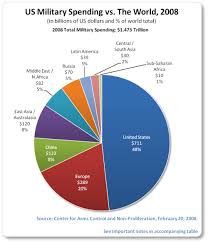
That's a great routine, as good as his "Red Roof Inn" sthick, where he detailed the Fed's purchase of a bankrupt motel chain as part of its "quantitative easing." Grayson provides embarrassing details about obvious facts that most of the obsequious, toadying members of Congress will not talk about. Everything that Grayson says about defense spending in the clip is true, of course, but that doesn't mean that the usual guardians of the Military-Industrial Complex will ever talk about this elephant lolling about the living room. Republicans consider the budget entry for Defense an immutable Law of the Universe, and Democrats will simply not criticize it in any systematic way.

Except for Alan Grayson, Orlando, Florida's star diva in the opera buffa art form. What is enormously clever about this made-for-YouTube moment is that Grayson strikes a glancing blow at the problem of defense overspending, placing it in a real-life context of taxation of the American commoner. Of course, Americans making less than $35,000 per year (1/3rd of all earners) tend not to pay income tax anyway, and if we stop appropriating $169 billion per year for "emergency spending" in Afghanistan and Iraq (emergencies which have lasted 9 and 7 years, respectively), it will not actually reduce anything other than the money the United States is borrowing at a feverish pace from all corners of the world.

But those are details which do not diminish the importance of the main point. Grayson uses a circle graph on world defense spending freely available on the Internet from many sources. It's ridiculous that the United States considers itself so imperiled by international enemies that it needs to spend, at the base Pentagon budget of $549 billion, as much as the rest of the world combined, yet also feels the need to wage completely counterproductive and unnecessary wars which run the costs up about 31% more.

Grayson gives these speeches to empty chambers during off-hours. They are of a length and style specifically tailored to YouTube upload. The idea, I suppose, is these clips might go viral, so I'm doing my part here.

A frequent criticism of Grayson is that his legislative proposals are "frivolous" diversions from "real legislation." Such as, I suppose, meaningless health care "reform" and meaningless, toothless financial "reform." You know, like give us a frigging break. There is no real legislative work being done. It is all window-dressing designed to give the appearance of getting things done for the "average American," while avoiding any change that could actually ameliorate the commoner's lot. For a specific example, if Congress was actually serious about financial reform, wouldn't they outlaw any credit card interest charge above 10% as usurious? Wouldn't they at least allow a vote on the Brown-Kaufman Amendment declaring monopolistic financial super-giants a restraint of trade and breaking them up? Wouldn't they prohibit, as Angela Merkel has done in Germany, any credit default swap speculation by a party without an insurable interest in the security "insured?"

They won't do any of these things, and Nancy Pelosi & Company will rubber-stamp Obama's defense appropriation request, after making a bunch of worried noises about "deficits," because that's how the system works. So keep throwing monkey wrenches, Alan, and be as frivolous as hell. You're our Man on the Inside.

Reconstituting the USA


I arrived on the Berkeley campus in the fall of 1966, which means I missed the Mario Savio-led Free Speech Movement, but I was around for most of the other major spasms of dissent which rocked the campus in later years. These included the People's Park riots of 1969 and the Cambodia Invasion riots of 1970, occurring, not so coincidentally I'm sure, in the spring, when the hormonal sap tends to run high, especially among the young, and no one wants to be inside anyway. Besides these two main events, there were various other causes which disrupted the university's normal functioning (or as normal as it got after the FSM), including the dispute over the firing of Angela Davis, the ongoing leitmotif of Vietnam War dissent and other causes.


Whenever one of these events seized the student body's attention, there were generally calls for the cessation of business as usual; to wit, just going to classes and grade-hounding seemed rather bourgeois with all these weighty matters to deal with. The faculty were always put in difficult circumstances by these situations, especially the younger assistant professors; they were, after all, the creme de la creme of the academic world, careerist for the most part, and anxious to stay on the tenure track and publish all the stuff they had to publish to establish themselves as Berkeley-grade intellectuals. On the other hand, they were dealing with the unruly, sometimes gifted, and often spoiled scions of the upper middle class who wanted their causes (and themselves) taken seriously, and regarded professors who wouldn't play along with these aux barricades fantasies as sell-outs and Running Dogs for the Man. Later many of these dedicated activists, such as Jerry Rubin, would run their own hedge funds and enshrine Gordon Gekko as their patron saint.

I drifted through this miasma of dissent, sturm und drang pretty much as the other Madras-shirt-wearing, white-levi-sporting members of the Baby Boom drifted through it: I played intramural sports, went to classes and the library, drank beer on weekend nights, and tried to find girls to go out with. That was the amazing thing: it was actually a pretty normal undergraduate experience. The dissent and the demonstrations were a sideshow. For some experienced activists, such as the Red Diaper Babies of the East Coast who attended Berkeley (and matriculated there because, perhaps, it was a bigger, sunnier version of Antioch), the dissent was a very serious matter, part of a family tradition. The real organizers, I have to admit (and I knew a few), kind of creeped me out. I didn't want to get into any trouble with the law, especially the FBI. There were ways to look "committed," fortunately, without really buying in, and let's face it: the Red Diaper Brigade did not make any real inroads with the Baby Boomers, because it is the vast phalanx of the Baby Boomers who are responsible for the corporatist, corrupt, warmongering, oligopolic, environmentally-destroyed landscape you see around you. Not to put too fine a point on it, but Michael Milken was attending Berkeley at the same time I was. Q, as they say, E.D. As Lewis Black said in a hilarious routine, the Baby Boomers have absolutely got to legalize pot, because that's it, that's our only shot at a legacy. The Greatest Generation defeated the Nazis and the Japanese while building an American industrial colossus, and what do we have? We've got to legalize pot!

But I digress, although I digress from the past to the future. What I meant to say was, whenever one of these spasms of dissent took hold, there were calls for "reconstituting the university," meaning, well, all kinds of things. Such as not using the class rooms, but meeting in people's apartments. I attended a few such "classes," because there was no choice. Co-opted young profs were forced to play along, on pain of not looking cool. Some were asked (and declined) to give the activist students "cover," meaning a moratorium on grading while the students pursued their true calling - the cause du jour. Secretly, I thought it was a shame not to use the campus during such episodes; I mean, those buildings were so pretty, limestone and granite-clad, classical edifices with beautiful Doric columns, old woodwork, double-hung windows, high ceilings, even urinals of vitreous china, you know? All going to waste while we sat on some cheesy wall-to-wall in a crackerbox apartment on Hillegass Avenue.

Anyway, sometimes I think I detect faint glimmers of that old spirit in what is going on in modern America. As America falls apart at the seams, I see some of those same tendencies toward easy "Reconstitution" of the U.S.A. The talk of secession, for example, of busting the country into regional principalities, and a nearly-hopeful anticipation of national insolvency. Oh I know, I see these same things in myself, but hey - I'm part of that Genus: Baby Boomus Americanus. Oddly enough, I think that the legacy of this generation may be greater than that envisioned by the hilarious Lewis Black. The bankrupting of the country actually seems well underway, and it's precisely because the Baby Boom followed its weird toward the idea of something for nothing, for borrowing when you couldn't earn it, for the unearned increment in general, such as the fixation on house price appreciation, toward early retirement, toward leisure as one's principal activity, and all while paying no price whatsoever in terms of standard of living. The Baby Boom has been living that way for about thirty-five years now, and it shows, because this nation, in its present state, is its handiwork. The average age of the Senate is 60 years old: a person born in 1950, also too late for the Free Speech Movement, but just in time for People's Park. And the United States Senate, in its blatant corruption, in its inability ever to tackle anything with thorough-going integrity and effectiveness, with something approaching competence, is perhaps the Baby Boom's most enduring symbol.

I don't think the Baby Boomers really want a "reconstitution," when you get right down to it. They're hoping against hope the American Titanic rights itself in the water. Go along to get along, and make such compromises as you must for la dolce vita. Anything else is just going to be a lot of hard work, and that, as always, is for other people.

May 21, 2010

The Blob


The Blob I was originally worried about was a piece of protoplasmic, shape-shifting Jello that starred in its own movie in 1958. The Blob's co-star was a young Steve McQueen, although they were mortal enemies in the movie. My older brother saw the horror flick at the Third Avenue theater with a bunch of his no-good delinquent friends, then he couldn't wait to tell me about it.


"It leaps and creeps and slides and glides across the floor," he said.

"I'll just close my door," I said, pretty sure that wasn't going to work.

My brother gleefully confirmed this. "It will just slide under the door," he said.

"I'll stack a bunch of books on the floor." I knew there had to be some advantage to voracious reading, even if I hadn't found it so far.

"The Blob will just eat the books." Great. So The Blob also voraciously devoured books. Not that I thought that Tom Sawyer and a bunch of Zane Grey novels were really going to do the trick anyway.

I had my ace in the hole, Sparky, the collie-shepherd mix with known anti-social tendencies who slept under my bed. Sparky had my back, but a monster which dissolved people, cars and Cleveland probably would not be stopped by a dog.

I was a worried ten year old for a while, meaning I would wake up in the middle of the night for about eight seconds before relapsing into the comatose state typical of my age group. Mom's increasingly shrill and repetitive warnings about being late for school were necessary to arouse me from my nightmarish slumber. The one consolation was that The Blob might dissolve me before the social studies quiz on Friday. I hated social studies. What were the exports from Peru? Llamas, cocaine and misery, I guessed. I could look it up in the World Book later. Right now I have to figure out how to cover all that open terrain between the house and school without being sucked into the digestive tract of The Blob.

I usually walked east on Hemlock to Shoreview, then north half a block to Dale, then up about two blocks to Ocean View, where school was. Mike and Bo lived on Dale, and they were tough kids who could help out with The Blob, if need be. By the way, there was really no shore to view from Shoreview, and the Pacific Ocean was 12 miles due west on the far side of the coastal range, so there was no view of that either. The housing tract didn't have much in the way of amenities, other than sweet-sounding, bucolic names, and it didn't have alleys either, which would have shortened my perilous journey to the safety of the class room. I guess it was safer there; my brother told me the best scene in the movie is where The Blob attacks a movie theater and then its silhouette covers the white screen as it eats the projectionist. Nice effect. That actually made me want to see the movie, sort of. So there was no real safety in numbers. Maybe you were better off on your own, or maybe I could take up residence under the bed with Sparky.

The Blob made its debut in 1958, around the same time as a hundred foot tarantula and mutant giant army ants were wreaking havoc in Southern California. My guess is that The Blob was the result of a lab experiment gone terribly wrong. Usually it was radiation or something like that which produced these monsters; I guess people of the day had an early premonition that fooling around with Mother Nature could result in real-life nightmares, and these were their cinematic warnings, as well as ways for big brothers to scare their little brothers. Technogenic disasters, we could call them.

I didn't worry about The Blob for more than a day or two, of course. I would see it myself during the summer, when they ran movies all day long at the show. It wasn't that scary; in fact, it was hokey, just like the tarantula that a young Clint Eastwood fired at from his F-86. It was better when The Blob was on the screen and not in the Gulf of Mexico, which really is the kind of thing that has me up in the middle of the night.

May 20, 2010

A fractal look at American society


As I mentioned before, I'm in the process of reading, and trying to comprehend, Nassim Taleb's book The Black Swan. Taleb takes issue with the Gaussian bell curve as a means of probability assessment, specifically its incompleteness in accounting for events in what he calls "Extremistan" (as opposed to the everyday variations in "Mediocristan"). All very cute. Taleb's dissatisfaction with bell curve analysis led him to adapt the work of Benoit Mandelbrot, the fractal mathematician, as a means of new insights.


One fundamental insight of fractal theory is the so-called principle of "self-similarity" found in nature. A common example is the structure of a tree. Each constituent part in some way replicates the structure of the whole: the leaf has veins that look like twigs; the twigs supporting the leaves are similar to branches; the branches are miniature representations of the whole tree itself. The human lung is put together along fractal lines, and the observation of a coastline will reveal similarities between the appearance of the shore at the microscopic level and a satellite photo of the entire coast seen at one go. Larger structures in nature are built up, in other words, by simply replicating the tiniest components. People have always been confused about what to do with Mandelbrot's work. Does it belong to aesthetics, to computer art, or to the world of biological mathematics? Well, I had my own idea.

I was thinking that fractal analysis might be applied in an attempt to understand the whole of American society, which is part of the mission statement here at the Pond. I've written before (maybe coined the phrase?) about the "parallax of nostalgia," or the tendency of one of later years (on the cusp of senescence/obsolescence such as myself) to see the society around him through a distorted lens, since his sensory apparatus is connected to an interpretive consciousness formed in another, outmoded era. In my case, and for most of the Baby Boom, the 1950's and 1960's. For example, I wrote once that I thought universal military service might be a good alternative to the professional standing army, since we could train, in effect, a Home Guard without the problems of (a) huge expense and (b) militarization of our foreign policy. This innocent observation was, I realize, an artifact of the Parallax phenomenon, for a recent report in the Washington Post details the insurmountable difficulties of such an approach. To wit, about 75% of America's prime military-age population (between the ages of 17 and 24) are unfit to serve:

One of the main reason recruits don't qualify for the service is inadequate education. One in four between the ages of 17 and 24 does not have a high school diploma, according to the report. And many who do still fail the military's version of the SAT, known as the Armed Forces Qualification Test.

Asthma, eyesight and hearing problems are also factors. But about a third of all potential recruits can't join because they're too fat and out of shape.

"When you get kids who can't do push-ups, pull-ups or run, this is a fundamental problem not just for the military but for the country," said Curtis Gilroy, the Pentagon's director of accessions policy. Many kids are not "taking physical education in school; they're more interested in sedentary activities such as the computer or television. And we have a fast-food mentality in this country."

Sobering observations. I think that the overwhelming majority of my own contemporaries, those who would have reached the age of 17 in the mid to late 1960's, would not have had any problem qualifying for the military. The Army's weight limit, for example, is 259 lbs. for men and 241 lbs. for women, both rather liberal standards, if you ask me. (How does someone between the ages of 17 and 24 even have the time to eat enough to weigh more than 259 pounds? is one question that occurs to me.)

My older brother informed me that one of his contemporaries, a teacher in inner city schools, intends to leave the United States as soon as he retires, because he sees all hell breaking loose as soon as his former students are in charge of things. There's both a wacky humor in his reaction and a very scary portent of things to come. Anyway, using the law of self-similarity, as applied to the American population as a whole, we might extrapolate outward to conclude that if this is the sort of progeny the society is producing (and is there some motivation for the military to denigrate its own recruiting cohort unfairly?), then things must be generally very bad indeed, and it would be miraculous if many more older Americans didn't have retirement plans similar to my brother's friend. It would not be possible to be mass-producing so many dysfunctional younger Americans (the fractally smaller component) unless the larger structure of which they are a part (the whole American society) were not also sick to its very core: uneducated, obese, degenerate.

Not to bum anyone out or anything. So one way to apply such a fractal insight is to consider the future of Social Security in this country. As we know from oft-quoted government statistics, the actual members of the workforce on which a given retiree must rely is dwindling; in the heyday of the Social Security system, as many as 15 or 16 workers might support a single retired senior; whereas as we move forward, this number will shrink to two or three. And two or three youthful Americans of the kind Mr. Gilroy of the Pentagon's Accessions Office is describing.

Hey, good luck, old friends. I'm beginning to miss the illusions of the Parallax.

May 19, 2010

Chinese menu approach to politics


Liberals, who now call themselves progressives because they were cowed into shaming themselves by Right Wing attacks, are an endangered species in American life, which will do them no good because the EPA itself is under merciless assault. I don't know if there is much to be done about it. My own political belief system might be called Jeffersonian liberalism; I am not a "Big Government" fan, per se, but I think it's unrealistic to think that modern Big Business can be regulated and controlled by a weak central government, and I'm certainly not a Free Market Purist of the Ayn Rand persuasion. That, to me, is the nuttiest approach of all. A completely unregulated business world leads to environmental and economic collapse of any complex modern society. These very days we are seeing the handiwork of unregulated Big Business, and it's not a pretty picture. The Gulf oil spill, which will probably turn into the greatest environmental catastrophe in the history of the world when its full extent is known and calculated, can be seen as the end result of believing that business, when left to its own cost-cutting devices, will take environmental effects into account. Ha ha. To save a few million in "mud pumping," British Petroleum has destroyed an entire eco-region.


Jefferson was suspicious of the power of government to oppress the individual. Such a wise political thinker. He feared the "tyranny of the majority," which is what the Bill of Rights is designed to prevent. The full power of the central government can crush any individual unless certain procedural rules are put into place to give him/her a fighting chance. It is surprising to me that the present Presidential incumbent is so indifferent to this concept, but that's the way the political winds are blowing. Jefferson (and Benjamin Franklin, another political genius) thought that society should risk some of its precious "security" to avoid tyranny, but if you are witnessing the craven capitulation of Obama and Holder to the calls for "restricting" Fifth Amendment rights of certain classes of criminal suspects, you can see that these particular Democrats do not belong in that Jefferson-Franklin tradition. They prefer pandering to the scaredy-cats. Ironically, once you begin down that path (as Franklin presciently tried to warn us), the central government itself becomes the most serious threat to personal liberty. Hitler, for example, once he consolidated power through "legitimate" means, used incarceration and execution of political dissidents to make sure no one got in his way. All tyrannies, in fact, operate this way. So while Obama nonchalantly allows (or tells) his Attorney General to use this "forum" or that (federal civil courts this week, military commissions the next) depending on how politically popular the move is, you can be assured that such a process, if it goes on long enough, will not be confined to just "Arab" terrorists of foreign citizenship. It will get to the (probably apocryphal) level of Pontius Pilate asking the mob which defendant ought to be executed today, and which set free.

Some of the Tea Party people seem, dimly, to be aware of such ideas, but of course you never get everything you want (or even close to what you want) from a Tea Party "platform." The victory of Rand Paul in Kentucky is illustrative. There are certain things he says with which I wholeheartedly agree; for example, on the necessity of declaring war if the country is going to war. That's what the Constitution says, conferring the power on the Congress and the Congress alone. So how does the United State fight war after war with no formal Declarations since December, 1941? And if the answer is, "the War Powers Act," how can this reassignment to the Executive Branch be Constitutional without an amendment? So Rand Paul is right: it gives everything a completely different feel if we require the President to seek, for example, a Formal Declaration of War between the United States and Iraq. Imagine that, a Congressional Declaration announcing that "a State of War Exists Between the United States of America and Iraq." It looks absurd, doesn't it? Iraq sitting over there in 2003, run by a tinpot dictator with no weapons to threaten anyone with, but we want the oil his country lies atop. So Congress, that mighty deliberative body, convenes and Declares War on Iraq. That means the President must carry out an invasion and wage war, because he's sworn to faithfully execute the laws. I don't think it ever would have happened. But if Congress can simply "Authorize" war, and leave it up to President Bush to decide whether or not to use his "Authorization," then Congress, Pilate-like, can wash its hands of the whole business and claim that the President thought that invasion was best. A slight difference with huge consequences.

I also agree with Rand Paul that the banks should have been allowed to fail in 2007-2008 without bailouts. If one says, arguing contra, that such a course would have caused an economic crisis, then please tell me what we're in right now if not an economic crisis, and moreover one in which the biggest banks have consolidated their power and the public debt has skyrocketed.

On the other hand, Rand is named after Ayn. That's more than just a spooky reference point; he's a dyed-in-the-wool, cradle-to-present Free Market Fundamentalist.

Mick Jagger told us we can't always get what we want, and especially these days. Anyone you can vote for, who's electable, comes with all kinds of baggage you also don't want. You wind up saying stuff like, "I'm for his position on the bailouts, while I recognize that his desire to consign homosexuals to labor camps is regrettable. So on balance..."

It's really a mess, sort of like the country this political scene is part of. November is shaping up to be a real freak show.

May 18, 2010

California as the Black Swan in the Coal Mine


Okay, partly it's a game: to salt a lot of high impact words into the title so it Googles well.


I've been reading Nassim Taleb's interesting book The Black Swan and trying to get a handle on his allusive, deliberately (I suspect) vague points about the nature of unpredictability in human affairs. He styles himself an epistemologist, and I suppose there's something to that. While he complains about "epistemic arrogance," there seems to be quite a bit of knowingness in his own analysis, to wit, he conveys the impression that he's simply writing at a level one remove above the ordinary mortal's comprehension of reality. Whatever. A "black swan," in his usage, is apparently a rare and unpredictable (or at least not predicted) event which is transformative in nature and alters the course of human nature thereafter. 9-11 was such an event. Key modern inventions (television, the personal computer and the Internet) often serve as black swans. The global financial meltdown has been a black swan.

Taleb is building on neuroscientific thinking about the "inferential sytems" in human thinking, about which I have Blooged in these very pages. Humans evolved to react quickly on the basis of sensory information, to use first impressions as a reliable guide to what's going on. We don't belabor our analysis if the shadow of what appears to be a large animal suddenly looms over the ground in front of us. Sure, it might be a eucalyptus leaning in the wind, but if it's a bull elephant and we guessed wrong, we won't be there tomorrow to "infer" differently. This kind of thinking explains why current weather conditions are cited as evidence for or against the general trend of global warming. At a slightly different level, it explains the tendency toward religious thinking. The artifacts and tools in our possession were "put together" by intelligent beings (us). Thus, if we see a whole interrelated system which functions like a clockwork (the Universe), our first inference is that someone (like us) made it.

Somewhat off the point of today's sermon, but not entirely. There is a financial crisis engulfing the civilizations of the Western world and Asia right now, but the (apparently) normal functioning of the central governments disguise the depth and severity of the problem. The sudden emergence of this crisis, while predictable (especially in the United States), nevertheless constitutes a Black Swan because this much trouble, so suddenly appearing, has that quality of rare, unpredicted but nevertheless statistically inevitable uniqueness characteristic of such events. Such developments simply do not fit under the fat part of the ordinary bell curve distribution of likely events. The limitations of our inferential systems thus tend to lead us to reject the authority of our more complicated cerebral analyses in favor of our reactions to the seeming placidity of the world around us. In a primitive way, we revert to magical thinking and belief in normal "cycles," such as "recovery" following recession, and this tendency in thinking is buttressed by the apparent normality of what is going on around us.

I saw some of this in the recent column by Paul Krugman about "surging" tax receipts heralding the normalization of American government financing. I realize that Mr. Krugman writes some of his columns while sitting in a lawn chair near his condo in St. Croix, and without doing any research, but this particular error was somewhat egregious even by his standards since the Treasury had just published their receipts for the month of April, 2010, and the print demonstrated a significant fall-off in year-over-year tax revenue (on the order of 13%) versus 2009. This is an odd kind of "recovery," and even odder as a source of confidence. 2009 was supposed to be the very depth of the Great Recession; how can 2010 be worse if things are getting better?

Anyway, the Federal government's ability to print money and recycle debt in a never-ending Ponzi scheme allows it to mask, for a long time, its essential insolvency. Which is why a state such as California may serve as the Black Swan in the Coal Mine. California is facing a $20 billion budget shortfall for the current fiscal year. It has a constitutional mandate to balance its budget, and it has no earthly way of doing so. California's GDP makes it the eighth largest economy in the world (about $1.8 trillion a year), and is running a U-3 unemployment of about 13%. Its GDP is about 13% of the entire nation's GDP (five states, including New York and California, make up about 40% of U.S. GDP). California cannot print money. Mr. Krugman recently wrote that California survives because of federal "transfer payments," but what can I say? California's return on investment (what it receives from the federal government versus what it pays in through taxes) is less than 80%. (Are they hitting that pepper-flavored vodka particularly hard in Stockholm these days, by the way? Or is it just that, as Taleb says, economics is a "science" on about the same plane as Tarot card reading? Memo to Krugman: if you've got access to wi-fi from the lawn chair, try using a search engine called "Google." You can learn a lot.) Anyway, Krugman: rely on his rosy predictions at your own risk.

Thus, California is facing now what the federal government ought to be facing itself but chooses to defer in favor of relentless borrowing. The money that California can borrow is severely limited, since the high interest rates it must pay on bonds (because of its diminished credit rating) add inexorably to the outgoes and push against its budget ceiling. The former B movie star and muscleman currently running the state, who has grown into his job although he still cannot pronounce the state's name, says simply that California is facing "terrible" budget cuts. Naturally, Caleeforneeyuh chooses to cut the subsidies for the most helpless of its citizens, such as the mentally ill, those on welfare, inner city students and similar non-politically-connected subsets. California is laying off many state employees, furloughing others on a rolling basis, closing courts one day a month, slashing higher education, letting cons out of prison, selling office buildings, and many other "Draconian" reductions, and taken together, all these changes are still not enough.

Yet outwardly, things still seem pretty normal, at least in the favored environs of the state such as Montecito, where our great leading environmentalist Al Gore just bought an $8 million house with 6 bedrooms and 6 baths and 6,000 square feet to heat (okay, look: he's not Thoreau, okay? He's a modern American with a helluva good image, and that's where the action is.) Forward momentum keeps the ball rolling for quite some time. Yet as things unravel, this huge part of the United States will present a Preview of Coming Attractions for the country as a whole. It's a shame our "inferential systems" don't get it now, but hell, we're not even to summer re-runs yet. We've got stuff to do.

May 16, 2010

"Meltup," the Viral Video

If it weren't for fearmongering, I wouldn't have no news at all. Still, as a public service I offer "Meltup," the viral video from the National Inflation Association.


If you read around the edges of the Apocalypse, as I do from time to time, you encounter certain names over and over: Peter Schiff, Ron Paul, Marc Faber, John Williams, Gerald Celeste, Max Keiser. These are the Heralds of American Economic Doom, and the route they all see, when you boil it down, is basically the same. The United States has painted itself into such a corner in terms of debt and unfunded entitlements, and the maintenance of an overseas military empire, and the destruction of its productive capacity, that there is now no way out. We are going to have to monetize our debt by printing money at an accelerating rate, which will devalue the currency and lead to collapse.

Sigh...our very own Weimar Republic. Anyway, if a picture is worth a thousand words, then perhaps a moving picture is worth a million.. It's curious, as the events in Greece and Europe have focused our attention more fixedly on the nature of sovereign default, that a convergence and truly "nonpartisan" consensus seems to be forming that mainly is characterized by class warfare. This is the golden braid that unites elements of the Tea Party with mainstream liberals. The game is rigged, and there isn't enough to go around anymore. Wall Street bankers are dividing billions of profits into huge bonuses while one in eight Americans are on food stamps and the real unemployment rate hovers around 20%. You can't make any money by putting it in the bank, whereas big banks can borrow money from the government for nothing and make a killing without risk.

As I said in my last brainbelch, perhaps many American "rebels" cannot articulate with consistent precision why they're so angry, but the gravamen of their complaint is not wrong. The differences between factions of the Pissed Off are sometimes trivial and sometimes simply related to predisposition. For example, in this video you can see an argument against the minimum wage and what appears to be a complaint about requiring businesses to set aside facilities for nursing mothers to breast feed their babies in secluded dignity. The video also bitches about "lazy Americans" who expect to be supported by the government. This is all part of the standard Right Wing catechism, of course, but what I've learned (I think) is that the emotional origins of some opinions perhaps matter less than the general accuracy of the main complaint: the Middle Class of the United States has been systematically sold out in favor of offshoring jobs, importing oil, relegating our commerce to Big Box stores full of Chinese crap, destroying tariff protection so domestic multinationals can use cheap foreign work forces, and in general allowing the Middle Class to subsist and wither away on ever-mounting piles of debt.

That reality is what ties the liberals and the Tea Partiers together. One side might favor gun control and the other rail on about gay marriage, but in the final analysis, unless the great majority of Americans can support themselves and buy food and fuel, these issues are the agenda for the Great Debating Society on the Deck of the Titanic. As money dwindles, as Social Security retirement and Medicare become threatened with insolvency, the luxury of basing one's politics purely on "social issue ideology" goes the way of....the American Middle Class.

Politics in the USA, not surprisingly, is becoming increasingly volatile. Ancient Senators are being unceremoniously thrown out of office before they can even get to the general election in their states. Things are going to get more fractious and unpredictable as things get worse, and I think this video explains many of the reasons why. I think we should watch the riots in Athens with a sense of trepidation, for they could well be coming soon to a Main Street near you.

May 15, 2010

Maintaining vital heat


I suppose if I were going to write a book about the economy, or the transformation of the American lifestyle, I would give it some such title as the above. It's from Walden, of course. Thoreau, that most logical and empirical of thinkers, performed his experiment in rudimentary living, on land owned by Emerson in rural Massachusetts, to figure out just how much of the complications of modern life were strictly necessary in order (a) to stay alive and (b) to thrive, spiritually and emotionally. He reduced the basic necessities to food and shelter, and then deduced that these in turn were essential only because they maintained vital heat.


It appears, therefore, from the above list, that the expression,animal life, is nearly synonymous with the expression, animal heat; for while Food may be regarded as the Fuel which keeps up the fire within us — and Fuel serves only to prepare that Food or to increase the warmth of our bodies by addition from without — Shelter and Clothing also serve only to retain the heat thus generated and absorbed.

[18] The grand necessity, then, for our bodies, is to keep warm, to keep the vital heat in us. What pains we accordingly take, not only with our Food, and Clothing, and Shelter, but with our beds, which are our night-clothes, robbing the nests and breasts of birds to prepare this shelter within a shelter, as the mole has its bed of grass and leaves at the end of its burrow! The poor man is wont to complain that this is a cold world; and to cold, no less physical than social, we refer directly a great part of our ails.

Thoreau didn't stop there; he wasn't actually suggesting that we should reduce human life to eating and getting dressed. He was simply attempting to establish the basic framework for existence, and to determine how little effort, time and complication were unavoidable in creating such a framework. Despite claims to the contrary (envy and professional jealousy are always prime motivators of criticism, and we secretly hate people who prove they're right by putting their money where their mouths are), Henry David proved his thesis; he stayed in the cabin on the shore of Walden Pond for 26 months, and figured it all out.

It seems like a reasonable thesis that modern American life is about as far removed from Thoreau's sylvan idyll as it is possible to be. Many of the simplicities of his approach appeal to us, naturally, but we have taken the idea of specialization, and the abstraction of existence, to extreme lengths, so that even our relationship to nature is for the most part mediated through electronic means. We still like the old verities, the ideas of conscience and ethical behavior, but they are hard to descry through the electronic static and Byzantine complexities of modern life.

I was thinking about this the other night while watching "60 Minutes" and its piece on "strategic default," the growing practice of home"owners" whose mortgages exceed the value of their houses simply walking away and starting over. Morley Safer was trying to generate some controversy over this no-brainer by shaming the defaulters into a sense of guilt and not living up to their end of the contract. Such ideas are sort of the vestigial tail of old-fashioned business practices. Think about what this hallowed "mortgage" is that Safer was referring to. It's a loan put together on the fly, immediately sold into the secondary market of the shadow banking system or mortgage bundler, jammed into a mortgage-backed security, then tranched and stuffed with many other such securities into a collateralized debt obligation full of thousands of mortgages, then sold off as a marketable security to the Norwegian Teachers Pension Fund or the California Public Employees Retirement System. Let's just say that the relationship between Mr. & Mrs. Smith in Sun City and CalPERS is a little too "attenuated" for anyone to get too excited about ethics or responsibilities. It's a very remote and impersonal business deal; if it works for both sides, fine; if it doesn't, then one side or the other has its legal remedies. End of story. Leave off with the moralizing, Morley. Go guilt trip the ratings agencies who assigned these stacks of crap gold plated Triple A's. Leave the realm of ethics to two people who depend on one another's performance and fidelity, shaking hands and looking each other in the eye. If we want to do business on the mass, impersonal and "scalable" level we now do things, this is what we get.

Oddly enough, if you read about all the sovereign debt crises, and the looming specter of hyperinflation, it seems pretty evident, almost at the level of virtual certainty, that we're headed toward a form of economic collapse which is going to bring some of Thoreau's ideas back to the forefront of our thinking. Foreclosure, job loss, worthlessness of paper money all fix the mind on essentially one issue: how do we maintain our vital heat in the face of such dislocation? That simplifies and localizes matters in a hurry. The international system of world trade, "globalization," Friedman's "plug-and-play, flat Earth" nonsense, are all pretty useless when that happens. America has so hamstrung itself with income and wealth disparities, with moving its means of production offshore, with corporate farming, with creating a giant cohort of dependent "consumers," that we're almost uniquely ill-equipped to deal with this looming crisis. This is why the national mood is so unsettled; whether the fat part of the bell curve completely figures it out cognitively or not, instinctively humans start freaking out when they see their abstract and incomprehensibly complicated means of support begin to unravel before their very eyes.

That's why I think a new energy regime designed to bring the means of maintaining vital heat to the localized level is the only way out. If the United States moved to a paradigm of a highly local system of solar power (in its various forms, wind, photovoltaic, ethanol from switchgrass and other non-food sources), then we would develop a means of support independent of the inherently unreliable, prone-to-Black-Swan vicissitudes of globalization, which plays against the interests of all but the highly-placed business and government elites.

Which, as a political digression, is why I have been so dismayed by the revelation that Barack Obama is simply another conventional American politician. I suppose it was a matter of projecting my own hopes onto someone who seems, in the fullness of realization, primarily interested in his own ambition and in proving that a slender African-American can pull off a convincing reenactment of the Clinton presidency. He's succeeded in that, but he didn't "change" a damn thing. Now he writhes and thrashes about, attempting to convince us that he's anti-oil drilling this week (since it's politic to be so) or anti-Fat Cat Banker the week before (for the same reason), as his weathervane follows winds blowing from the direction of the Villain of the Moment.

I think we'll eventually get there, to the idea of locally-produced renewable energy and a more basic economy centered on production we ourselves control, but it will be a bumpy transit as we attempt to hang on to the unworkable regime we have lazily allowed to become dominant, with its crushing trade deficits and debt-fueled "prosperity." First, unfortunately, things have to get considerably worse.


May 14, 2010

My very own Nobel Prize


A Friday joke for the cognoscenti (pronounced "cone yo shentee"):


Descartes walks into a bar and the bartender asks "The usual, Descartes?"

Descartes replies "I don't think.." and disappears.

I salute Paul Krugman for fighting the good liberal fight. He styles his blog, somewhat sententiously, "Conscience of a Liberal." I'm sure he often regrets that; there are many days when I wonder whether "Waldenswimmer" has much to do with what I'm writing about, but at least I'm not rather ostentatiously advertising the precious quality of my "conscience."

Anyway, the noted Princeton economics professor, Nobel Prize winner and New York Times columnist weighs in today with his insistence that the United States is not Greece. Good to know. Personally, I didn't think we were. Krugman means it in a good way, of course. He gives some passing recognition to the key difference: Greece is locked into the euro, which it can't print on its own, whereas the United States is the paper-hanger of the world's reserve currency, the almighty dollar. Thus, no one really has to worry about U.S. default on its sovereign obligations - if we hold an auction and no one shows up, the Federal Reserve will create the "money" to buy our own debt. It can do this in a variety of ways, such as lending a few trillion more to the so-called "Primary Dealers" of the Federal Reserve cartel, who can then bid this virtually free money into Treasuries and earn money on the spread. If you're wondering how Goldman Sachs, the BofA, JP Morgan Chase and others managed to achieve absolutely perfect trading (no day with a proprietary trading loss) for every day of the last quarter, look no farther than that factoid. You could do it, too, if someone offered to lend you money at 1/2 percent and gave you privileged access to an auction where the instruments pay you 2-3% on your trades. This has been going on for a very long time now, as Bernanke continues to insist that despite the robust recovery underway that "extraordinarily low" interest rates are justified by the "subdued inflation" and tentative nature of our recovery. Something along those lines. He seems to fall asleep as he says it over and over again to Congressional committees, and I can't blame him.

So here's Krugman on another reason we're not Greece, aside from the lack of a Parthenon:

The U.S. economy has been growing since last summer, thanks to fiscal stimulus and expansionary policies by the Federal Reserve. I wish that growth were faster; still, it’s finally producing job gains — and it’s also showing up in revenues. Right now we’re on track to match Congressional Budget Office projections of a substantial rise in tax receipts.

It's naturally predictable that the good professor would salute the fiscal stimulus, since Krugman has staked his professional reputation (and the validity of his Stockholm award) on Keynesian economics. Personally (and it's the basis for my own self-nomination for a Nobel), I think that Krugman's favorite student, Barack Obama, has made a serious mistake. Obama bought into the idea of a huge ($700 billion) stimulus, exacerbating our deficit problems, and then, realizing that he wasn't being bipartisan enough, followed this move immediately with a call for austerity in spending. No, you can't do that. If you're going all in, you need to play your bluff all the way through. You don't shove all your chips into the center of the table and then fold. That's what Prez O has done. As for Krugman's claim, we can look at the Treasury's own recently published spreadsheet for the month of April. April, of course, has a particular, shall we say, significance for tax receipts - I mean, if we're going to rake it in, that's the month you'd expect to do so. So how did we do?

Well, we hauled in $245 billion, of which $68 billion was FICA taxes. FICA taxes tend to be higher in April because it is then that Schedule C filers (self-employed) pony up the rest of what they owe for the prior year. Year to date (since October 1, 2009, beginning of the last fiscal year) we have received $1.199 billion in taxes. In the prior year (deep in the Great Recession, in other words) the tax receipts were $1.255 billion. So what does the Nobelist mean when he says that our prosperity is showing up in tax revenues? It must be in the sense of that key word "projections" of the Congressional Budget Office, and also in the recent job growth figures.

Those job growth figures are interesting, actually. Of those 290,000 new jobs, 60,000 were Census hires. 188,000 are attributable to the "Birth/Death" estimate by the Ministry of Truth (Bureau of Labor Statistics), which refers not to human beings, but to the notional increase in new businesses (Births) versus closing businesses (Deaths). One might reasonably ask, during a Recession, is it actually reasonable to suppose that new businesses are being formed at such a prodigious rate, and if so, why is the commercial real estate market cratering? But never mind. If we subtract the Census and B/D numbers from the 290,000 number (in other words, if we eliminate the numbers the Federal Government itself actually controls), we are left with 42,000 jobs. Since 120,000 new employees enter the job world each month because of population growth, we can begin to see why the actual U-3 unemployment rate went from 9.7 to 9.9% despite the "job growth."

Still, I appreciate the Good Professor's chauvinist cheerleading. Someone needs to be optimistic, even if there is no statistical evidence whatsoever for such optimism. The growth in GDP is not "thanks to" stimulus spending; the GDP growth is government spending, but since it was done on a one-time, save-government-jobs basis, we've probably already seen its zenith of effectiveness. If I'm right, then the "jobs saved" by the Stimulus will begin to disappear, because the conceptual fallacy of spending money the way Congress did (the politically expedient method of supporting employment only for the existing way of doing things) means that the "investment" is short-lived.

In truth, there is no political will to undertake steps which would actually transform the American economy, which depends on a massive reworking of our energy regime. Tepid tinkering with the economy while we await some magical process to "restore" the consumerist Shangri-la built upon borrowing from houses is what the Nobelist actually thinks will happen. I am staking my own Stockholm Dreams on my theory that it will not.