January 16, 2009

Bush in the Rear View Mirror

With any luck, George W. Bush will simply disappear into the gated suburbs of Dallas, ride his bike around his ranch, pretend to stock his library, play golf in his sweat-soaked shirts and stay out of the way.  His astonishing ego has compelled him lately to make the rounds, burnishing his "legacy," rewriting history, and distorting a clear recent public record, still fresh in everyone's mind, with ludicrous fantasies about his "competence."  I think he argued that FEMA's handling of the Katrina disaster in New Orleans was actually first-rate, just as one example.  The most stupendous screwup in U.S. military and foreign policy history, invading a country to disarm them of an arsenal which they absolutely and completely lacked -- Bush called this a "disappointment."  Bush is that most tiresome of human specimens, a dull and slow-witted man who for reasons known only to himself thinks he's the smartest guy in the room.


Everyone is ready to turn the page.  Various liberal commentators have urged that investigations and/or prosecutions of members of Bush's "team" move forward under the Obama Administration, given the manifold (and manifest) prima facie felonies under the FISA law and the War Crimes Statute. Regardless of Alan Dershowitz's opinion as a "criminal trial attorney" that Bush/Cheney could beat the rap on the basis of national security (just like Jack Bauer), I doubt that's the case.  (Having watched Alan get his clock cleaned by Johnny Cochran in a mock trial a few years ago, I think Alan must have meant to say a "criminal appeals attorney.")  Once the full extent of the gratuitous abuse of prisoners came to light, the rampant, sadistic torture for no reason other than the appearance of being tough guys, an inflamed jury would go to town on those two erstwhile cowboys.

Dershowitz misses the salient point -- Bush's secret weapon, what (real) lawyers call an "affirmative defense."  Bush's unwatchable, intolerable person. Prosecuting Bush would mean that W would not go quietly into that goodnight.   He'd be in our living rooms for years to come, doing his girlish mincing and head-ducking, slaughtering the English language in front of an array of microphones, strutting from the court house with a splayed-finger wave of his little right hand.  And we'd have to watch. After eight interminable, awful years, eight full years of my life as an American tarnished and devalued by the incompetent bumbling of this pretentious goof-off -- and we still wouldn't be done.  More Bush, all the time.  

I don't think I could take it.  So okay, O.  You're right again.  You're really a smart kid, I'm starting to see that.  I'm going to check my own ego at the door for awhile.  I was over-employing it, trying to figure out too much, because I knew I could trust absolutely nothing that Bush ever said.  If I wanted to have any grasp of objective reality in these United States Under Bush, I had to build that comprehension from the ground up, because Bush went to work every morning (well, maybe half the mornings, whatever was left after deducting his 77 vacations while in office) with the express determination to mislead, obfuscate and lie.

It's true that not dealing with Bush's crime spree will leave the country with a damaged collective psyche.  We're not going to think of ourselves in quite the same way ever again, not after eight years of this guy and his gang.  That's part of the price of Bush.  But for a little peace, a break from all that he stood for, maybe it's for the best.  Dealing with the problems he left us will remind us everyday of his true legacy.  That's inevitable.  But at least we won't have to look at him, or listen to him, or watch him fake his way through another Presidential day.  That's pretty good.  Ordinarily, I never wish any part of my life away.  Every day is precious.  But man -- is it Tuesday yet?

January 12, 2009

Collective American Denial and the Prior Japanese Experience


I have mused over the parallels between the imploding American economy and the deflationary spiral which gripped Japan in the early 1990s.  The considered opinion of most American economic experts is that our fast and massive response to the bursting of the housing bubble will avoid the prolonged malaise in the Land of the Rising Sun.  To put the Japanese problem in perspective, to this day the real estate market in Japan has only recovered to a level of about 40% of the 1989 high (when land around the Imperial Palace was said to equal all the real estate in California), and the Japanese Nikkei Index is still only 80% of its value for the same year.  This is a very long time to get stuck in deflationary quicksand.  


One frequently-voiced criticism of the Japanese approach is that the banks were "enabled" in their perfidy by the government; instead of forcing the bad real estate loans to the surface, the government helped hide them.  This simply prolonged the damage to financial liquidity.  I suppose sometimes the cultural mandate to "save face" can be counterproductive.  Here, of course, any sense of honor is completely irrelevant to the banksters who brought on our own mortgage-backed security catastrophe. Instead of committing sepuku, they were more likely to pay their bonuses early before the federal regulators could seize the money.

Anyway, the analogy fascinates me, probably a sign that writing this blog is making me increasingly weird.  Japan is the second largest economy in the world, despite its difficulties over the last twenty years, and the world's largest creditor nation. It has many of the same "structural" problems of the U.S., e.g., a reliance on imported oil and an aging work force, but is in much better shape in terms of its balance of trade and its national savings. Nevertheless, it has a large national debt, larger than the U.S. in terms of a fraction of GDP.  To say the least, however, America is going to close ground fast once we start posting those $1.5 trillion annual budget deficits, as we seem fated to do.
 
"One more thing: even with the Obama plan, the Romer-Bernstein report predicts an average unemployment rate of 7.2 percent over the next three years.  That's a scary number,  big enough to pose a real risk that the U.S. economy will get stuck in a Japan-type deflationary trap."

Thus spake Paul Krugman in his Monday opus.  So everyone seems to have Japan on the brain because, when you get right down to it, we can of course draw distinctions between ourselves and the Japanese (they speak Japanese, we speak English, for example), but the actual determinative factors seem more favorable to the Japanese situation, not less.  The Japanese have a vibrant export economy, as one factor, which allows them to earn money in international trade.  72% of our economy depends on consumerism, and a lot of that is based on domestic trade in imported goods.

So I understand that the U.S. has "aggressively" tackled the problem of its failing financial institutions by appropriating colossal sums of money to recapitalize the banks and shore up the insurance and mortgage guarantor companies.  Now Obama promises to follow that up with a large "stimulus" program to "jump start" the economy.  What I still don't get is this: how is all this supposed to help in the long run?

I sometimes think that the quality of national discourse on matters of profound importance has become so impoverished by a culture of sound-bites and cheesy political sloganeering that public dialogue has simply parted company with logic and coherence.  "Jump starting" the economy sounds swell, as one example, but does the phrase have any meaning?  

Prior to the accelerating collapse of the economy in mid-summer 2007, we inflated a huge housing bubble with cheap mortgage loans and used the "income" derived from lines of credit and refinance to supplement inadequate earnings.  Nothing about the "recovery package" is going to change that much.  As I've said before, putting people to work rebuilding a lot of failed and failing infrastructure is in and of itself a good thing.  It's miserable to be broke, for one thing, and our tax-cutting mania over the last 28 years has left us with a severely underfunded public realm.

What Congress is slapping together is a public works program (and direct subsidies to state and local governments which are also broke and have no means to borrow the deficits) based on borrowing massive amounts of cash wherever the Treasury can get it.  They're doing this not because anyone necessarily believes this is an optimal approach but because they can't face the Awful Truth: this is a crash program designed to conceal the underlying reality that the fundamental basis of the economy is shot.  A consumer economy doesn't work unless the consumers have cash to buy stuff with, and now, because wages have been stagnant for the great majority of Americans for the last thirty years, the wherewithal to keep the "growth economy" going has disappeared.  Can't earn it, can't borrow it?  Okay, the government will borrow it for you, based on "taxpayer" money, and then you can repay us with...with...Look, don't ask so many questions.

I've been reading an enlightening book called The Bridge at the End of the World by Richard Gustave Speth, who teaches environmental science at Yale.  His thesis is that an ecology-based sustainable economy is possible now using renewable energy and green technology, and that unless we move in that direction life on Earth will simply be unlivable by the end of this century. Books such as Prof. Speth's, when written in the 1970s by Barry Commoner and others, were of course laughed off as alarmist fantasies, especially by people heavily invested in the old regime of extractive industries and heavy pollution.  Now the things he describes are part of our day-to-day reality; on January 12, 2009, it was 82 degrees in downtown San Francisco.  We now have heat waves three weeks after the winter solstice, which is nice since it never rains anyway.  So we should have used the last 30 years to move in the direction of a transformed energy economy, as President Carter urged us to do.  Our predilection for basing opinions on the limited cranial space alloted to public affairs sealed Carter's fate: he couldn't rescue the hostages from Tehran.  He was therefore wrong about everything. Ah, what a frivolous people!

Oh, and I suppose it's worth asking what the Japanese themselves think about our immediate future:

"I don't think the Americans quite realize yet that behind this hill lies the Himalayas," said Takashi Watanable, a top official at the Bank of Japan in the 1990s and now a professor at Tokyo's Bunkyo University. "The U.S. is going to go through a lot more before this is over." 

Deft, spare, evocative - just like Japanese line art.

Free Bernie Madoff


I'm tired of all this piling on where Bernie Madoff is concerned.  I understand that there are those who are perhaps justifiably angry about his $50 billion Ponzi scheme, but a lot of the criticism has gone way over the top.  For example, he's been called a "sociopath," and among the reasons for this serious allegation is that he cheated his own sister out of $3 million, and she is now faced with the prospect of selling her Palm Beach house at a major loss.  I admit that this does not look good, on the surface.


Yet there is a pack mentality about the public outcry which I find personally unsettling.  Even the cable financial programs are joining in the lynch mob stuff, calling for Madoff's bail to be revoked, for the book to be thrown at him.

Is this really the time to be focused so intently on things which happened in the past?  Bernie Madoff did not kill anyone, at least not in a sense which any penal code actually defines as "murder."  Many, many rich people gave their money to Bernie in hopes of becoming even richer, in the expectation that because of their connections to this maven of Gilded Age Investment they could "outperform" the paltry returns of the ordinary market available to shlubs like, you know, you and me.  I'm not sure that's a compelling narrative; for my money, it lacks the essential elements of a long-running media scandal, unlike a disappearance of a Southern coed from a Caribbean Island.

But returning to the major point (and I'm heartened by the New York judge's ruling a moment ago that Bernie's bail will NOT be revoked and Bernie will be allowed to live in his $7 million penthouse while he awaits trial), anything that Madoff did, by definition (as suggested by my use of the past tense "did"), occurred before now, and our focus needs to be prospective, not retrospective.  

This sick, self-absorbed, self-indulgent obsession with things which have already happened ties up valuable intellectual and material resources which could otherwise be used in the serious battle to restore America's economic health, which, lying as it does in the future, has yet to occur.  Is anything likely to be recovered from Madoff?  No, of course not.  That $50 billion is gone, and we are simply throwing good money after bad in a futile attempt to "make an example" of Bernie Madoff, and the mood of the country, and more importantly, the mood of its political leaders, is impatient with such "nostalgic" indulgences as investigating crimes or "singling" people out for persecution.

So I think I would go beyond today's ruling allowing Bernie to remain free on bail.  I urge the dismissal of all charges against him.  In the largest sense, the problem is "self-contained;" only those who specifically represented that they could withstand a total loss of their capital were allowed this special opportunity to place their bets with Bernie in the first place.  The fact that, technically, there were no actual stocks, bonds or anything else in which they were investing does not materially change this crucial factor.  They said they could handle losing everything; they lost everything; and now they're all complaining.  

So the equities of the situation also favor an exoneration of Bernie.  It seems to me the investors are trying to change the rules of the game simply because they don't like the outcome, and the outcome, as I've pointed out, has already happened, which is a point on the space-time continuum where we simply can't afford to lavish our attention.  

January 11, 2009

This Week Under the Big Top


So I watched my president-elect this morning with George Stephanopoulos on This Week.  L'il Georgie was his usual amiable self.  I think I would have learned a lot more if they'd simply gotten out a B-ball and gone one-on-one.  

O worried me a little with his meandering answer about Guantanamo; turns out the issue is a "lot more complicated than people think," and closing it in the first 100 days is not realistic anymore.  I think he means that now that he's this close to the Oval Office, the campaign issue about American honor has lost some of its prior urgency.  He discussed the difficulty of trying some prisoners at Gitmo because of "tainted" (i.e., produced by torture) evidence, while at the same time recognizing the danger of simply letting them go in cases where that evidence, tainted or not, suggests they represent a threat.  So we need some "special" process to decide whether they can be released or detained even without a formal trial where they might actually have a chance to prove their innocence (or, in the language of due process, where the government could succeed or fail in proving guilt beyond a reasonable doubt).  Someone's really gotten to this guy, I'm afraid.  Why not try these desperadoes in federal criminal court, as has been done with numerous other terrorists?  Convictions were obtained without compromising national security, and the American system of justice was both honored and vindicated. Unless, of course, the idea is to keep the torture under wraps...

This Week then transitioned to the panel, where the Resident Hysteric of the New York Times, Tom Friedman, gave his prescription for the recovery of the economy: credit must get moving again to business entrepreneurs, or nothing else can happen.  Friedman was wearing his trademark black turtleneck, which gives him a kind of techie, Steve Jobsy look, but with his bellows-like throat, it makes him look like an actual turtle.  I believe that if a contest were held to elect that human who takes himself most seriously in all the known universe, Friedman would win by acclamation.

The "recovery plan" was of course the hot topic of discussion.  Should it be $700 billion, $1 trillion, $2 trillion?  The general feeling is that it must be huge.  Newt Gingrich had the audacity to point out that of the first 50% of the TARP money, about $350 billion, no one can actually say where it went or what it's doing to help the economy.  That's a peculiar state of affairs; if the House of Representatives initiated the appropriation, as they must under the Constitution, didn't they include some process to see where the money went?  Apparently not.

This reinforces my view that the Congressional Clown Troupe, more than ever, spends its time at the Capitol Hill Big Top practicing juggling, slipping on banana peels and squirting seltzer down each other's pants.  It is for this reason that it seems highly unlikely that they will actually be able to devise a spending program to "jump start" the American economy, a strange phrase that O used over and over with George S.  The economy has a dead battery?

Or, more ghoulishly, using defib paddles on a corpse.  The principal idea seems to be that the fed government is ideally placed to do what private enterprise cannot do now, put people back to work or keep them employed (such as with state and local government).  While the fed govt. does not have the kind of money on hand to fund this kind of recovery, and must raise it by borrowing, the fed can do this because of its unique status as the issuer of the world's default currency and its triple A rating as a borrower, which comes embossed with a seal stating "backed by the Full Faith & Credit of the United States [see other side for details]."  

Supposing that Mr. Gingrich's reasonable objection can be overcome.  (By the way, with the imminent departure of W, I find myself more open to any idea from anyone on the political spectrum as long as it makes sense, i.e., sounds true.  I realize that I had gotten so sick of Bush that I just couldn't stand to hear any idea associated with him, even if, down deep, I agreed with it. For example, I always agreed with Bush that the world is better off without Saddam Hussein.  How could anyone seriously argue with that?  Yet among Bush's many pernicious effects was that he drove liberals to such desperation that they began reminiscing about the "good ol' days" of the Baathist regime in Iraq.)  The basic problem with the American economy is not that there aren't jobs; it's just that a huge percentage of them are crap jobs in the consumer economy, and it's that economy which is beginning to hemorrhage and die because consumer spending is plummeting.

I'm not an economist (although I play one on my blog). However, it seems to me you can roughly divide recent American economic history into three distinct eras, from 1930 to the present.  Era I is the Depression, which lasted roughly from 1930 to 1940.  War production (a form of government stimulus) got the economy moving at last, in ways that the alphabet soup of Roosevelt's social engineering did not.  For example, a serious recession hit in 1937-38, which the Stimulus Hawks (such as Paul Krugman) attribute to Roosevelt's temporary reduction in govt. spending; still, this tends to prove that five years of govt. tinkering had not pulled the nation out of its morass.

After the rest of the world's industrial bases were destroyed (Europe, the Soviet Union, Japan), America rose to unchallenged preeminence.  We held this position for about 30 years, until the first oil shock.  It was at that point, as President Carter warned us, that a transition to renewable energy (the lifeblood of the economy) was necessary.  Brilliant environmental thinkers, such as Barry Commoner, were writing the same thing.  Carter put solar panels on the White House roof.  

The American people then conducted their first experiment in Government by Idiot and elected Ronald Reagan, who promptly removed the solar panels and all hope for a transformative energy economy.  For 30 years we've been heading steadily downhill.

You can't do 30 years of work in two or three years, and the net effects of this Recovery Program will be (1) a temporary blip downward in unemployment, (2) some new highways and overpasses and (3) a large increase in the national debt.  It's good to put people to work, for whatever length of time, but America can't attend the equivalent of an EST weekend and come home transformed.  We borrowed the economy into a hyperinflated bubble, well beyond our means of sustaining it with wages,  and now the air is leaking out.  The Congressional Clown Troupe would rather not tell you that; so watch, intead, while 535 of them climb out of a yellow Volkswagen.

January 09, 2009

Yes, We Have No Bananas

I've always eaten lots of bananas.  Call it an atativistic sentimentality about our simian ancestors, call it what you will, but I like bananas.  Loaded with potassium, which is essential for muscle contraction.  I just ate one, a diminutive yellow number with a somewhat tasteless core.  Not much like the bananas of my youth, which were big yellow jobs with creamy, sweet centers.  Made the whole lunch bag smell like banana.


Those bananas were of the Gros Michel ("Big Mike") variety.  Big Mike's gone now, felled by fusarium oxysporum or Panama Disease, a fungal infection which attacks the banana tree's roots and starves it of water.  There is no cure and it spreads like wildfire.  The big plantantion growers, like the United Fruit Co., substituted the Cavendish variety for Big Mike, and it's a Cavendish I just ate.  Smaller, not as sweet, derived from a Vietnamese strain.  Panama Disease has now hit the Cavendish and it's only a matter of time before it too goes extinct.  There is no successor in waiting.  We have to come up with something because bananas are just too important.  For example, when Jacobo Arbenz, the democratically elected president of Guatemala, hit on the idea in the early 1950s that Guatemalan peasants ought to own some of Guatemala's land, Eisenhower went along with Allen Dulles's idea (head of the CIA and also on the board of directors of United Fruit Co.) that Jacobo had to go. Arbenz was clearly a Commie sympathizer; what could be more Commie than the idea that poor people ought to own land? So the United Fruit Co., with the assistance of the CIA, overthrew Arbenz and installed a more banana-friendly dictator, thus giving rise to the term "Banana Republic."  I wonder if the company selling all those khaki pants and oversized cotton shirts ever reflects on the origin of the name?  Probably not - this is America!

I'm concerned that as America itself sinks into the economic status of a banana republic that we won't have any bananas to eat.  There are areas of the United States where we can grow okay bananas, like Florida and the Gulf Coast, but it's just a matter of time before Panama Disease shows up.  Naturally, big growers favor monocultured bananas (which is how we got into this problem in the first place), so they're looking for ways to modify the Cavendish genetically so it can resist fusarium, such as splicing in some fish genes or something. What if the bananas then get ich?  (That's a joke for tropical fish people.)  Or what if for some strange reason bananas start tasting good with a wedge of lemon and tartar sauce?  So much for the lunch bag memories.

I watched Barack yesterday give his "economic" speech.  To call his various nostrums "generalized" is probably too specific a word.  I wonder if he's having second thoughts.  Maybe this would have been the year for Hillary to become President.  The general plan of reducing interest rates to zero and pumping vast amounts of government money into the economy has already been tried, in Japan beginning in the early 1990's.  Fellow citizens of the American Banana Republic (Mackerel variety), I ask you: in all humility, and allowing for a perhaps understandable tendency toward feelings of Exceptionalism, between the two cultures, Japan & the U.S., which would you say is the harder working, better educated and more technologically advanced?  So would I.  Nevertheless, Japan has been in a deflationary slump since about 1991.  The problem was brought on by a real estate bubble, bank insolvencies and a credit freeze due to distrust among lending institutions.  Let me know if any of that sounds familiar.  Also, its manufacturing base had gotten hollowed out because of Asian competition where the cost of living was much lower.

Barack's general plan is reminiscent of a man standing on a ladder a few feet shy of the roof attempting to reach the roof by lifting the ladder on which he's standing.  (I know, I used that before, but doesn't it just get it?)  There's a Catch, and it's Catch-22, which says that the United States can borrow the money it needs to get the economy moving if the economy is moving so that Americans can buy stuff from countries like China who need our money in order to lend it back to us; but if the economy is not moving, then we can't buy stuff to give our money to China so they can give it back to us so we can get the economy moving.

That's some Catch, whistled Yossarian.  Indeed.  So perhaps, as the esteemed Nouriel Roubini prognosticates, the recession will end somewhere around mid-2010, meaning the economy will stop moving backwards.  At that point about 40% of the net worth of the United States will have been lost, and we will come into equilibrium.  But that's it.  We're there, just where Japan has been.  It's essential to recognize that the Congressional Clown Troupe is doing this Final Act, the one where they stack up four chairs on top of a unicycle and Bozo does a handstand on the top chair while holding three pool cues topped with spinning plates, not because they necessarily believe this can possibly work. They're doing it because Congress must always appear to be doing something.  Barack can't come out and say, hey, we just took a 40% hit.  Better learn to deal with it.  How do you start your Presidency with that?  And then follow it up by telling us the really bad news:  no bananas for you.


January 08, 2009

White House for Sale


I don't really know if there's an individual American citizen eliglible for the office of President who is actually capable, from the standpoint of education, experience and personal attributes, of leading the nation out of the economic morass into which it has sunk.  The big problem for Barack Obama is the two four-year terms of George W. Bush may have been way too much for the country to survive.  I realize that there are those Bush apologists who will insist, along with Bush himself, that the President was simply an innocent bystander with respect to the various disasters that occurred during his tenure.  For example, Ann Coulter recently attacked those who attack Bush for suggesting that the famous August 2001 PDB actually warned Bush that "Bin Laden was determined to attack within the U.S.," the way the PDB is titled. The leggy political satirist, blond hair flying, argued on her website that the PDB was the sort of thing a grade schooler would pull together from Google cites in a last minute effort to meet a term paper deadline.  


I mentioned recently that conservatives often do a better job of researching original source documents in their arguments as opposed to their liberal counterparts in the commentariat, who often tend to recite simply from memory Bush's Greatest Hits (on the country) without doing the same sort of fact-checking.  Here, however, I think Ms. Coulter's usually fine scholarship betrays her nonetheless, for the PDB does say:

Nevertheless, FBI information since that time indicates patterns of suspicious activity in this country consistent with preparations for hijackings or other types of attacks, including recent surveillance of federal buildings in New York.

Now if you stop right there, as Ms. Coulter, flashing exotic lengths of thigh from her little black dress, urges us to do on W's behalf, you must grant her main point, her main point being that she's a bimbo who's figured out how to parlay a cachectic body into many talk show appearances while writing very silly books.  And another point is that, in fact, W did stop right there and did not find out what those FBI reports of "suspicious activity" were, which included field reports about young Arab men learning to fly commercial airliners at American flight schools without bothering with the usual full curriculum, to wit, how to take off and land the damn things.  Now if George W. Bush was a serious man taking a serious job seriously, he would have raised holy hell about those reports.  Where's the follow up?  What's going on?  Who are these guys, and why are they doing this?  Instead, he read the report and then went out on the "ranch" and cut some more brush and went fishing with Barney.

Ann Coulter doesn't mention any of that, and she relies on our laziness in not cross-checking the PDB with the 9/11 Commission Report which reproduces the actual FBI field reports in full, all of which would have been available to our incurious President if he had been, you know, competent.

Anyway, the past is prologue and it's all kind of scary now.  I hate to see these pictures of Barack hanging out with Bush at these friendly lunches, just as I cringed when Nancy Pelosi went for tea at the White House after the Dems took over majority control of the House in 2006.  It's very collegial and all, but it tends to perpetuate business as usual and a reluctance to rock the boat, and rocking the boat till it capsizes is more what we need than "continuity of government," because our government has sucked.

And then Barack starts talking about "reforming" Social Security as part of his grand strategy for dealing with our many financial nightmares.  I understand that "everything must be on the table" when you're facing disaster, but Social Security is fully funded at the present level of benefits through about 2040 if the government grants full faith and credit to the trillions of dollars socked away in its "special issue" Treasury bonds purchased with excess FICA payments over the last 25 years.  So what Barry is actually hinting at is that maybe, just maybe, the government needs to default on its obligations to itself.  If Obama really believes that it's necessary to "reform" Social Security, meaning, of course, to cut benefits rather than to honor these IOUs, then his vaunted desire for "transparency" should also motivate him to announce to foreign creditors holding essentially identical debt instruments, such as China, Saudi Arabia and "Caribbean Island banking centers," that default is now the order of the day.

It's unlikely that Obama will take this second step, especially in light of the report in yesterday's New York Times that China is already pulling back on Treasury purchases in light of its own serious economic problems.  Without a funding source for America's huge deficits, there is simply no way that Obama or the Congressional Clown Troupe can possibly finance a "recovery program" or even the day-to-day operations of the federal government.  And at that point you can pound a For Sale sign in front of Obama's new home.

So man up, O.  Don't pull a Bush and start the shuck and jive crap of your predecessor.  On points like this, it's critical to spell out what the consequences of such "reforms" actually entail, and to describe in detail the embezzlement of FICA money that has been misdirected into the military establishment over the last quarter century.  Otherwise, you're going to slip inexorably into the Beltway conspiracy against the American people.  You promised, after all, to be our President.  We've had eight years of a guy working the other side and we need a change.


January 06, 2009

The Rotary Club & Other Espionage Agencies


I read through an interesting interview between conservative radio guy Hugh Hewitt (whose parents apparently lacked a certain felicity in choosing names) and Glenn Greenwald, whose column on Salon is linked to the right.  I admire Mr. Greenwald a lot; his analyses of media complacency in the face of the lawlessness of the Bush Administration are non pareil and frequently hilarious. It's hard to top his irony.  I assume that Mr. Greenwald is of Jewish lineage, though I don't want to jump to ethnic conclusions.  It's not essential anyway; Mr. Greenwald is a liberal and a civil libertarian (labels which can be applied to me as well, faut de mieux), and his attitudes about Israel represent the mainstream of the liberal position these days.  I'm not exactly sure what that position is, but it's definitely anti-Israel.

Mr. Greenwald begins the interview by affirming Israel's right to exist.  In my opinion, that would have been a good place to quit as well, because it's the essential question.  Mr. Greenwald, whose expertise is law and the Constitution, does not really need to join the cadres of Israel bashers with his own second-hand analysis of news reports from the battle zone.  But he can't help himself, because he's a Liberal and this is what Liberals do now, have opinions about Israel.  Negative opinions.  So he gives us this: 

HH: So what do you want, what do you think Israel ought to do?

GG: Well, I think that, for one thing, I think that real negotiations need to ensue, and I think those can only happen with a powerful and devoted mediator, which probably is a role that only the United States can play. So I think the Israelis need to be a lot more willing to make concessions than they’ve been in the past, and I also think that doing things like expanding settlements in the West Bank and blockading the Gazans to the point where they can’t even get nutrition and medical needs for their children are things that clearly harm their own interests, and make the conflict worse. I think stopping settlements, making concessions in the West Bank, and giving the Gazans more of a decent life so they don’t think it’s worthwhile to blow themselves up and shoot rockets at their oppressors is a really good first step.

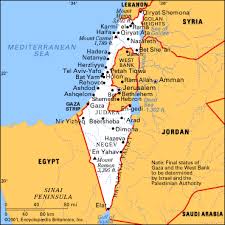
I have to admit this sounds very nice: let's talk.  And what shall we talk about?  Well, one item that might be on the agenda would concern the 7,200 rockets that Hamas has fired at Ashkelon, Sderot and other southern Israeli cities during the last 5 years.  These rockets were fired at Israel with the intention of killing anyone near their point of landing; this sort of attack represents the most indiscriminate form of civilian targeting you can imagine.  That's inconvenient for Mr. Greenwald, and for the liberal view generally, but they have comebacks.  What about those illegal settlements in the West Bank?  Well, Hamas is not in power in the West Bank; they were elected in Gaza, and it is from Gaza that the rockets are launched.  So can we focus on that?  And why does Hamas fire rockets at Israel?  Because it denies Israel's right to exist. This is another inconvenient truth for the modern American liberal view of Israel.  One nasty habit of conservatives, including even the much-maligned Ann Coulter, is that they tend to read source documents.  This causes all kinds of havoc for the feel-good bromides of the liberal position.  The Hamas Charter of 1988, after menacingly warning the Freemasons, Lions Club and Rotary Club that they're on to their role as Zionist espionage agencies (some stuff you just can't make up), lays it out: 


[Peace] initiatives, the so-called peaceful solutions, and the international conferences to resolve the Palestinian problem, are all contrary to the beliefs of the Islamic Resistance Movement. For renouncing any part of Palestine means renouncing part of the religion; the nationalism of the Islamic Resistance Movement is part of its faith, the movement educates its members to adhere to its principles and to raise the banner of Allah over their homeland as they fight their Jihad: “Allah is the all-powerful, but most people are not aware.” From time to time a clamoring is voiced, to hold an International Conference in search for a solution to the problem. Some accept the idea, others reject it, for one reason or another, demanding the implementation of this or that condition, as a prerequisite for agreeing to convene the Conference or for participating in it. But the Islamic Resistance Movement, which is aware of the [prospective] parties to this conference, and of their past and present positions towards the problems of the Muslims, does not believe that those conferences are capable of responding to demands, or of restoring rights or doing justice to the oppressed. Those conferences are no more than a means to appoint the nonbelievers as arbitrators in the lands of Islam. Since when did the Unbelievers do justice to the Believers? “And the Jews will not be pleased with thee, nor will the Christians, till thou follow their creed. Say: Lo! the guidance of Allah [himself] is the Guidance. And if you should follow their desires after the knowledge which has come unto thee, then you would have from Allah no protecting friend nor helper.” Sura 2 (the Cow), verse 120 There is no solution to the Palestinian problem except by Jihad. 

This is flowery, of course, but I don't think there's any great mystery about what Hamas is saying.  For one thing, Hamas uses an extremely broad definition of  "Palestine," including such areas as Tel Aviv, Haifa and all of Jerusalem, which we might otherwise think of as Israel.  They don't want "conferences," (none of that Camp David stuff) and they don't want to talk.  It's odd that liberals have such a hard time taking them at their word; they certainly demonstrate their disinterest in talking by firing 7,200 rockets at Israeli towns over the last five years.  The provocation of Israel is part of a plan for destroying Israel, not "retaliation" designed to bring Israel to the bargaining table.

One problem that Americans have in understanding Israel's response is that it's difficult for us to relate to a country that gives a damn about its own national security.  If you rain rockets down on Sderot and Ashkelon, then you're going to deal with the IDF. It's really that simple.  The United States was attacked on 9/11, and the most famous, the signature, response to that outrage was to use it as a propaganda tool for invading Iraq, which played no role in the terrorist strike.  When New Orleans drowned, most Americans saw the tragedy as a TV show; President Bush didn't even bother to watch it on TV.  He was playing air guitar in San Diego.  

These are important cultural differences.  Thinkers like Mr. Greenwald, so accomplished and effective in other areas, project American attitudes about crisis onto Israel and arrive at the dubious conclusion that Israel ought to be as sloppy, incoherent and soft about its safety as the United States is.  The point is that Israel can't.  Israel wants to get rid of Hamas because Hamas wants to get rid of Israel. If the liberal position is to favor Hamas, then stop the parsing of Israeli "tactics," stop the enumeration of schools hit by tank fire and the scenes of hospital corridors and the rest of it, and go to the jugular: simply state your concluding premise.  You agree with Hamas; Israel should not exist.  Then the liberal criticism of Israel has integrity and internal coherence. It's intellectually honest. If you are driven by anti-Semitism, that also has the ring of authenticity, because it's difficult to believe your real motivation is compassion for Arabs you've never visited and know nothing about. You have become a Hamas jihadist yourself, arriving at that position from whatever point on the compass brought you here.  You would like to see a "solution," as the Hamas Charter declares, take the form of a Second Holocaust.

My Peeps Come of Age

In that day and age at Berkeley there was, in truth, a kind of revulsion at the practical demands of everyday living.  Fraternities were in sharp decline because they were seen as institutions of outmoded values (connections, wealth, Old Boy networks), and the more free-form aspirations of the Information Age were taking root.  Not many of my contemporaries really aspired to make it as Organization Men.  Of course, the downside of such a conceit is that organizations have inherent power not generally available to the solo flyer.  I think this accounts, in some ways, for the ascendancy of such strange "leaders" as George W. Bush and Karl Rove: the field of "leadership" was to a large extent abandoned by what you might call the intellectual elite.


Many, if not nearly all, of my contemporaries moved into such fields as teaching, law, medicine and careers other than in Big Business and manufacturing (and I don't know anyone who went into politics).  The field of business was seen as somehow "co-opted."  One problem with this morally rarefied approach is that the things business does nevertheless remain absolutely essential--food, shelter, autos, furniture, energy--and whether my peeps wanted to get involved in the production end of such activities was not an answer to the necessity of participating in the consuming end.

The American Standard of Living, in terms of real earnings, peaked around 1974.  This coincides with the first Oil Shock, when America was held hostage by OPEC countries because of its support of Israel in the Yom Kippur War of the preceding year.  I doubt that it's coincidental that this was about the time my generation entered the Main Sequence of their careers.  It's always extremely difficult (as in impossible) to analyze a system as complex as American society in terms of rigorously controlled variables and equations.  Social science dabbles in such pursuits without any real hope of knowing anything; nevertheless, human curiosity always leads us toward a search for some understanding, however partial or notional, of the times we live in.  And whether we can really state as a series of provable propositions the factors that led America to its present state, we intuitively grasp that our condition must result from the aggregation, the Î£ effect, of all the choices, lifestyles and belief systems of the people living in the society.  The "economy" is one powerful indicator of what's going on in a society; even Henry David Thoreau gave his longest chapter this very rubric in Walden.  And the economy flat-lined about the time my generation moved into positions of economic power.

That by itself is fascinating.  I recall writing earlier about Christopher Lasch's work of pop social psychology, The Culture of Narcissism, which attempted to get a handle on the "therapeutic society" he thought America had become: one less concerned about actually doing things than with the appearance of having done so and the maintenance of high self-esteem based on such images.  Lasch had his own agenda, which was driven by a curious mix of Freudian anti-capitalism, and I think he could have seen more clearly than he did if he hadn't been constrained by the Procrustean limitations of his a priori beliefs.  Still, I think he was on to something.

My generation might have taken its professed "idealism" and worked out a new way of having an economy; specifically, our generation was the one ideally placed to put the world on a course toward real environmental sustainability.  To place humans in a balanced ecological framework is the last frontier of existence and purpose.  It is the real solution to the Age of Anxiety, scarcity and the bad conscience that comes from our "Dominionist" arrogance.  All during the youth and early middle age of my generation, there were voices that wrote powerfully about what it would take: Wendell Berry, Barry Commoner, Stewart Brand, Amory Lovins, many others.  Sustainable agriculture, solar power, desalination of seawater, efficient habitats, mass transporation, localization of markets.

Instead, driven by the consumer choices of my generation, we moved in exactly the opposite direction.  The flat-lined Seventies were followed by the go-go Eighties.  You may recall the abbreviation "A&M" from that era, from such shows as "L.A. Law" and movies such as "Wall Street."  Acquisitions and Mergers.  The consolidation of economic power in fewer and fewer hands.  It was solid work for the vast phalanxes of lawyers produced by My Peeps.  Thus, the rise of holding companies, big box chain stores, franchise food, agribusiness, crap jobs and the "service" economy. By the time the Nineties rolled around, it seemed inevitable that all these bad choices would be followed up with the creation of the most popular form of transportation in American history: the SUV.

I sometimes wonder how a generation which prided itself in such an ostentatious way on the purity of its idealism could wind up in such a wrecked, wasteful, increasingly backward economy presided over by a cretin like George W. Bush.  The answer, I suspect, lies somewhere in the ruminations of Christopher Lasch. Maybe what went on is that my generation substituted talking about the ideal society for the actual work of producing the real thing.  No one went into politics where policy might have been shaped.  We made choices reminiscent of our parents' choices in houses, cars, modes of living, except everything had to be much bigger, grander and more wasteful.  The money we didn't earn we borrowed, in increasing amounts.  In this we were only following the dubious example set by the federal government, which decided that nothing needed to be paid for now if the money to finance it (wars, a big defense budget, anything) could be borrowed, increasingly from foreign governments in nations where savings were not a thing of the past, as here.

And now we've hit the wall. The automatic assumption is that this "downturn" is cyclical, as all previous recessions have been. Here we return to the Analogy Axiom, which instructs us that apparently analogous situations are useful only if the facts are essentially the same in both cases.  And the really bad news can be stated in rather stark terms: they're not.

January 05, 2009

My Peeps, An Intro


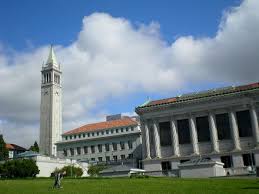
As the aleatory processes of the Universe would have it, I attended the University of California, Berkeley campus, during the years 1966 through 1970.  I sometimes free-ride on the modern cachet of this credential; that is to say, modern American kids who want to do likewise, those frenetic and obsessive grinds, look upon Berkeley as some sort of Holy Grail, and so my membership among its multitudinous alumnae is looked upon as something of a singular achievement.  In truth, I do little to dissuade them from this delusion.  Way back when, when California was a far less populous state and comprised mainly of Anglo-Saxon liberal arts majors, it really wasn't all that big a deal.  Berkeley was certainly nothing special as far as a place to get an undergraduate degree.  A professor actually interested in pedagogy was immediately marked by his peers as a scholastic mediocrity.  An award for excellence in teaching was virtually certain to get a prof knocked off the tenure track.


Still, because of the Vietnam War, Nixon, Kissinger, Cambodia, Reagan as governor of the state (you see, kids, bad times are not confined to the historical present), and Berkeley's well-deserved rep as a center of protest, the extramural aspects of being there then were definitely memorable. It was a wild scene, man, I'll grant you that.  The immediacy of an unpopular, scary, bloody war in which you might be compelled to fight gave everything a vivid realness - these weren't abstract ideas, like whether we ought to remake the Middle East along the lines of Neocon wet dreams.

Everyone who graduated from high school around 1966 is now either older than sixty or pushing up against that Rubicon. So it's fair to say that the past 40+ years have actually been The Generation of Flower Children Ascendant.  Whatever's gone on has been the handiwork of that generation's exercise of control. To be intellectually honest, we have to count George W. Bush among our number, but I consider him an outlier in the cohort. He was just sort of a weird anomaly from a half-wit dynasty.  Far more typical of our generation was Bill Clinton, a man who rose high above stupidity only to be brought down by cupidity.

Clinton, in fact, is something of a perfect avatar for the Sixties generation.  Possessed of an IQ two or three standard deviations above the population mean, and a big conceptual thinker, he couldn't really think of anything to do with the power he acquired other than to use it to satisfy his prodigious personal appetites. When he left office, he devoted himself to a feverish capitalization on his celebrity.  When it was revealed he had made over $100 million since leaving office, no one bothered to compare his singularity of true purpose (greed) with his idealistic noises.  It wasn't even worth talking about, and it was nothing that would even occur to those of us in his generation.

Paradoxically, I think the generation of which I was a part is one of the least idealistic generations in American history.  I'm mindful always of the blind-men-and-the-elephant parable (one of the more lapidary of our folk tales), and the trap it implies, but when I think back on everyone I knew in those Berkeley days, the thing that strikes me is that no one I knew (and I include myself, of course) did much other than slump down into the Suburban Project that the Clusterf**k Man rails about on the linked site to your right.  Despite all the noises that we made about "materialism" and America's hoggish overuse of energy, its disproportionate contribution to environmental damage, it wasn't as if we ever let that get in the way of our own pursuit of comfort, American Style.  We simply built on the modest prosperity of our parents' generation to provide ourselves with a more fully elaborated form of affluence.

The older I get, the more I believe that the one core truth reached by Karl Marx is in his Manifesto was his insistence that "material" conditions in a society are formative of consciousness. There was no "trial by fire" of my generation, no privation, no Great Depression, no Good War.  There was a war to avoid (and our national leaders, by and large, all avoided it), and the rest of life was devoted to acquisition, pleasure, indulgence. 

As I sort of said in the last number, one of the reasons I think the plight of the Palestinians has become such a hot cause celebre for modern Liberals is that outgunned brown people provide a kind of Revolutionary Fantasy Camp for our "idealistic compassion," which is always looking for someplace to alight.  In point of fact, Hamas is dedicated to the principle that a Jewish state cannot exist in the heart of the Muslim Arab world.  This is the announced policy of its leader, and it is the (non-idealistic) reality that Israel deals with.  It is difficult for Americans to relate to the urgency of such a situation because the truth of the matter is that we have no similar existential enemies.  We think that Israel should counter-attack a rain of missiles on towns bordering Gaza by writing blogs and letters to the editor, or by arguing vociferously at dinner parties, the way we Americans do.  Or even through street demonstrations, which we consider really, really radical.

On the Berkeley campus now one is much more apt to find a pro-Palestinian demonstration than any expression of support for Israel.  Back in the day, we all walked around with our hearts in our mouths waiting for the latest news of the Six Day War, wondering whether Israel would survive.  Such are the winds of change.  Nothing much really changed in the United States to account for the difference in opinion.  We remained the same fickle intellectual dilettantes, with no true skin in the game, that we had always been.  Our life's work has been the avoidance of pain and want and the maximizing of pleasure and wealth; yet paradoxically this vocation has brought us to the edge of the economic abyss.  I think, in the effort to make life easy, we have guaranteed that it's going to be very, very hard.  I kind of shudder to think how my generation will deal with true hardship.

Once I was young and impulsive
I wore every conceivable pin
Even went to the socialist meetings
Learned all the old union hymns
But I've grown older and wiser
And that's why I'm turning you in
So love me, love me, love me, I'm a liberal.


Phil Ochs, "Love Me I'm A Liberal"

January 02, 2009

So What Should Israel Do?


To read the discussions of Israel's retaliation against Hamas in Gaza is to experience something akin to the feeling one has on arriving late at a movie and trying to understand the sequence of events unfolding on screen.  The film's been running for awhile, let's say, and a guy who needs a shave walks into a seedy bar, pulls a gun and shoots another guy sitting on a stool apparently minding his own business, who turns in the last instant to face his assailant and registers surprise at seeing him.


That's all you know.  The modern Leftist sentiment, which is anti-Israel, would focus on these factors: the killer had a gun and the victim didn't.  It was unexpected.  The victim died and the killer walked away.  Everything must be done to stop this senseless bloodshed, preferably by way of UN Resolution.

Most Leftist criticism of Israel operates at about that level.  The questions that are not answered, or even addressed, are these: In the absence of Palestinian provocation (firing rockets indiscriminately into towns such as Sderot), would there be any Israeli military action at all?  Second question: if the Israeli response is "disproportionate," what level of response would be effective so that Hamas stops shelling civilian populations in Israeli towns near the Gaza border?

If Leftist critics deign to deal with such questions at all, the responses usually run along these lines: Israel's attacks are a "massacre" of innocents and a form of "collective punishment" for the attacks directed by Hamas, the civilian government in Gaza. As to the second question, certainly some form of retaliation is justified under international law, but whatever it is that Israel is doing, it's too much.  

If one then points out that firing rockets into towns such as Sderot is also a form of "collective punishment," since the town folk there are not the same thing as the Knesset in Tel Aviv, the movie is rewound a little bit to introduce a new element.  It turns out that the Hamas rocket attacks are actually justified by the blockade (land, sea & air) of Gaza by the Israelis.  Naturally, pro-Israeli advocates will point out that this blockade was the very sort of "non-military" sanction or "retaliation" which Leftist American sentiment is now demanding in place of the military attacks, to which Israel resorted because the blockade failed to stop the rocket attacks, and the blockade was the sort of "non-occupying" tactic employed by the Israelis after they pulled all military from Gaza (as the American Left demanded).  Hamas then used the power vacuum to stage rocket attacks from Gaza free from Israeli interference, in order to provoke Israel into a retaliation which can be condemned by the American Left, who like condemning Israel.  And so it goes, as Kurt Vonnegut used to say.

The movie, it turns out, has been running much, much longer than you dreamed possible when you first took your seat.  While it's true that the Israeli blockade was a measured response to a violent program of indiscriminate rocket attacks and Hamas anti-Israel agitation generally, the Israeli occupation of the West Bank, and its expansion of borders generally since the Six Day War of 1967, are the actual proximate and justifying causes of the Hamas rocket attacks.  In turn, the Israeli partisans (who never lack for historical scholarship on such matters) point out that the Six Day War, and the retention of "strategic depth" since 1967, were themselves reactions to Arab attacks on the integrity (and survival) of Israel.

Which brings us back to 1948, when the movie actually started running.  This is why I find it's always easier just to start there and find out from the person who directs such criticisms at Israel whether he/she simply disputes Israel's right to exist.  That's actually the fulcrum point.  If someone supports Israel's right to exist, then of course it doesn't take long to reach agreement that Israel has the right to retaliate against military attacks against its own people.  One might argue about specific tactics, or the extent of appropriate retaliation, or whether some pacifistic party in control in Tel Aviv might produce a better result with less bloodshed -- these are all legitimate points of discussion.  But the kneejerk condemnation of Israel for doing anything at all would not be the main focus of the argument.

Yet that's precisely the focus of the discussion which emanates from the American Left.  Sometimes I think this irrationality can best be explained by a form of high-flown anti-Semitism: a persistent anti-Jew feeling dressed up in the rarefied dialectic of international relations.  Another possibility, more Freudian and perhaps complementary to the first point, is that the fairly recent emergence of Israel as a country in world history allows the liberal intellectual an opportunity to discharge a gnawing point of discomfort and cognitive dissonance.  Israel was "imposed" on a native Arab population.  Sure, maybe for altruistic and compassionate reasons at the time, but still an act of European colonial imperialism.  And the Left hates Euro-American colonial imperialism.  The only problem is that the USA itself was founded through just such an "imposition;" indeed, an imposition a great deal worse, since there were no pre-Columbian Europeans living for thousands of years among the Native Americans at the time of the Western usurpation.

Well, we aren't going to do anything about the Apache or Navajo or Seminole or Algonquin or Cherokee Indians.  But by golly, we'll stand up for the Palestinians because, hell, that's so easy! It's not like deeding my own extensive real estate back to Ishi and the Coastal Miwok, or giving People's Park back to the Costanoans, as the old Berkeley radicals wanted to do (see? they were principled and walked the walk, not like modern American leftist dilettantes.)  We'll be in solidarity with them because they're the low-tech side of the military confrontation, and anyway, the Bush Administration supports Israel, so they can't be right.

One thing I'm pretty sure of: one will never understand the hail of criticism directed Israel's way by rules of logic applicable everywhere else.  Israel's people are attacked; they respond in kind.  Seems simple enough, but only because you left to get some popcorn at a critical moment.

December 31, 2008

Bush Administration's Greatest Hits

It is that time of year when columnists, pundits, movie critics and even bloggers tend to write "Best" lists for the preceding 12 months.  This particular New Year's Eve we stand at the juncture of a truly great event, the End of the Bush Era in American Life.  Perhaps then it is fitting to reflect on some of the singular accomplishments of the Bushian National Nightmare not only of this past year, but of the preceding seven as well.


1.  The Complete Absence of Weapons of Mass Destruction in Iraq:  We all have our personal favorites, I'm sure, but for me this event, this occurrence, this unbelievable fact, represents Bush's Sistine Chapel Ceiling.  I consider it the single greatest error ever made by any President of the United States in the history of the Republic.  It is difficult to get one's mind around it because you blow your own mind in the process.  Regardless of latter-day historical revisionism, the fact remains that the main, the chief, the only rationale for invading Iraq was that it constituted an act of preemptive self-defense (surely very controversial even at that) against a "clear, present and gathering danger" to the security of the USA.  Not a single cannister of nerve gas, nor a single vial of anthrax, nor a gram of weapons-grade uranium has ever been found within the borders of Iraq despite our virtual ownership of the country for the past six years.  This colossal blunder, this incomparable error in judgment, constituted the basis on which we committed the military forces of the United States with consequences which have been detailed on this blog and everywhere else for numerous years.

2.  Hurricane Katrina:  The range of Bush's incompetence is perhaps his defining characteristic.  While the American public watched the city of New Orleans drown on national television, Bush, FEMA and the Department of Homeland Security remained unaware that there was any sort of problem there. Bush breathed a sigh of relief and remarked that we "had dodged a bullet."  

3.  The Reintroduction of Torture by a Modern Twenty-First Century Democracy:  This is another of Bush's signature accomplishments.  As with Iraq & Katrina, I think it will take years, perhaps a decade, before the enormity of what Bush has done in this field can be truly evaluated and placed in context. Bush specifically approved the use of waterboarding, a form of torture devised during the Spanish Inquisition and prosecuted by the United States against the Japanese as a war crime following World War II.

4.  The Establishment of a Concentration Camp in Guantanamo: As the stories leak out, it becomes increasingly apparent that Bush, with the aiding & abetting of his consigliere Alberto Gonzales, created a legal black hole in Cuba where hundreds of innocent men who had nothing to do with a "war on terror" were incarcerated in cages and denied, for years on end, any form of challenge to the legality of their detention.

5.  The Obstruction of International Efforts to Deal with Global Warming and Ocean Acidification:  Perhaps in no other arena have Bush's innate anti-social tendencies wreaked greater havoc, and with such ominous long-term consequences, than in his obdurate, non-scientific, malicious interference with the international consensus that drastic and immediate responses are needed to deal with climate change.  He has sided with the yahoo, know-nothing idiots who have watched passively as the accelerating effects of climate change (which have tended, in nearly every instance, to be worse than the long-range predictions of the IPCC) have engulfed the world.

These are highlights, but of course any summary of Bush must be truncated to avoid rewriting something approaching the combined length of War & Peace and Moby Dick.  Historians will have to figure Bush out in the fullness of time.  One question that always perplexed me: what was Bush for?  It doesn't suffice to say he was for a "strong America," because he ignored the clear warning signals preceding the attacks of 9-11.  He wrecked the military by overusing it in unnecessary wars in Iraq and Afghanistan.  He destroyed the nation's economy through a reckless and stupid regime of "deregulation."  He leaves behind a trillion dollar annual budget deficit for the US government, reeling safety net and health programs, and the essential bankruptcy of all 50 states.  Had he actually designed administration policy with the specific intent of damaging the safety and common welfare of the American citizenry, it is difficult to see how he could have surpassed his actual record of destruction.  75% of the American population disapprove of his presidency and are "anxious" for him to leave office.  The other 25%, of course, are clinically insane.  

So one must look out upon this vast landscape of destruction and conclude, as perplexing as the conclusion might seem, that this is actually what Bush wanted.  He wanted to wreck the country and found the best (which is to say: worst) people he could hire to help him do it.  As Sherlock Holmes instructed, in deducing the truth one must eliminate all possibilities until one is left with a single explanation that fits the facts.  And that explanation, however unlikely it might have seemed at the outset, must be the truth.

December 30, 2008

Twenty Days of Bush


As I begin writing this, Bush has 20 days and 9 hours left.  While he has been preoccupied over the last month or so with environmental destruction of a truly deranged character (opening wilderness up to mining, for example, and Endangering Species already listed as Endangered Species under the Endangered Species Act), I suspect that the last 3 weeks or so are going to be devoted to business of a more personal nature.  To wit, undertaking necessary measures to ensure his own freedom from incarceration over the balance of his life.


One thing we know about Bush is that the outrageous does not faze him.  The commutation of sentence of Scooter Libby, for example, was so clearly a repudiation of his own pledge to deal harshly with classified information leakers within his administration that one might have been forgiven for thinking that even Bush, that most hypocritical and morally indifferent of men, would second-guess himself on that one.  No, he went right ahead with it.  He didn't even pretend that the putative reason given (the sentence was "too severe," although it was actually less than federal sentencing guidelines) had any plausibility.  He would have been content, I'm sure, to give no reason whatsoever.  I am virtually certain that one of the things he'll do during these last 20 days is to grant Libby a full pardon.

I suspect, however, that Bush is reluctant to grant himself a pardon, either through an unprecedented auto-pardon or by the Cheney Two-Step, where Bush resigns close to the end of his term so that Cheney can preside over the Bush Absolution.  There may, in fact, be legal ramifications to resignation of a President, even for so brief a period as one day, of which I'm unaware.  But mainly I think that Bush, who is in a curious way obsessed with his "legacy" (a narcissistic fussiness about his historical image), does not like the ignominy which attaches to so craven a legal dodge.

Which must mean that his Administration is actively engaged in conversations with the Obama transition team. The historical precedent is the Nixon-Ford "understanding" reached at the time Nixon resigned.  Ford, for the good of the country, would put it "all behind us."  Certainly, in the smoking ruin that Bush has bequeathed us there are plenty of rationales for getting things behind us so we can focus on pressing concerns such as our economic survival. 

In a larger sense, however, a Bush Auto-Pardon would contradict the reigning ethos of the Bush Administration.  Bush& Cheney are devoted to the principles of illegality without accountability; it is their credo, their calling, in a way.  The Unitary Executive was an exercise in lawlessness.  They were most at home with themselves when blatantly breaking the law and defying a prostrate Congress to do anything about it, which Congress never did.  Never even a successful censure motion.  Think about that.  With all we know about what has gone on, from the fraud used to sell an unnecessary war, to the lack of preparation and seriousness re: the attacks of 9/11, to the torture regime, to the warrantless wiretapping, to the felonious disclosure of a CIA agent's identity, not a single peep out of Congress.  That, more than anything, will be the the Bush/Cheney Legacy: a completely broken system of checks and balances.  And any act of contrition, such as that implied in a pardon, even if prophylactic, demeans this proud legacy of doing whatever they felt like doing. It would almost amount to some sort of tacit admission of doing something wrong.

It's a chancy play, an obeisance to vanity, but I think Bush will risk it.  He will sneer at Congress one more time by going "bare," leaving office with no pardon in his pocket.  It's probably not that great a risk.  Since the attitude of indifference is now so firmly established, since Congress, no matter who's in charge, seems institutionally incapable of taking remedial action, I suspect that Bush may safely forgo that final safety measure of complete executive exoneration.  He will strut out of the Oval Office one last time on January 20, having hastily signed a final batch of Executive Orders authorizing nuclear testing in ANWR, and oil drilling in Lake Tahoe, and head off toward the sunset in the West, to his strange retirement in Texas.  If he does things that way, I doubt that Cheney will get a pardon either.  It's not like Bush to be selfless.  He'll withhold Cheney's clemency out of spite, just to razz him.

Obama & Co will look into things, form a commission, let the statute of limitations expire, and that will be that.  We'll all move ahead as if nothing happened.  We don't want to criminalize, you know -- policy differences.  Or much of anything else, as long as it happened in the Beltway.  The true Bush Legacy is that the nation's capital has become an accountability-free zone.

December 28, 2008

Back in the USSA, Reprised


Been away so long I hardly knew the place,
Gee, it's good to be back home.
Leave it to tomorrow to unpack my case,
Honey, disconnect the phone,
I'm back in the U.S.S....

A."   "Back in the USSR" (almost), John Lennon & Paul McCartney

With "change" in the air, the Magical Thinkers are enjoying a Renaissance.  The Resident Hysteric at the New York Times, the noted Friedman Unit, recently called for a "reboot" of America as Obama takes charge.  Conflating his two most recent columns, I get the idea that unless we enact Friedman's cherished idea of a gasoline tax immediately, we're toast, and we'll never have high speed rail or battery technology or a green economy, because without that tariff, Americans will just go back to buying used SUVs and Hummers.  The Unit said so.  Also, that the "next few months" will be among the most important in U.S. history.

I appeal to the good judgment of the American people: does anyone seriously believe that major changes in the basic way this country does business, lives, works and gets around the landscape, will be in place by, for example, June, 2009? Friedman, who travels a lot, keeps seeing the high speed rail of China and Europe, with their vastly superior Internet infrastructure, and the roll-out of the Chinese electric car and the Israeli nationwide system of electric vehicles with renewable electric power, and The Unit asks: why not us?

I would add to his list a fascinating piece in the Times recently which detailed the development of the "passive thermal" house in Darmstadt and elsewhere in Germany (a phenomenon spreading throughout the Northern tier of Europe), wherein hermetically-sealed houses are built without furnaces and maintain their comfortable temperatures with energy usage equivalent to a single hair dryer.  About 1/20th of a conventional furnace-heated house.  The houses are super-insulated, use an ingenious heat-exchanger to bring fresh air in from the outside, and cost only slightly more to build (in Germany) than conventional houses, because in Germany, you see, they have the technology, materials and inclination to use them.  It is the way out of dependence on natural gas supplies from Russia - simple, brilliant, vibrantly Green.

Our foreign energy dependence is certainly no less dire - about 70% of our petroleum is imported.  Yet the Unit concedes that unless Americans are in effect blackmailed (through a gasoline tax), they will more or less immediately revert to their old patterns of buying gas hogs.  Indeed, with the average price per gallon now again below two bucks, this is beginning to happen. In December trucks and SUVs outsold cars, and hybrid car sales took a beating.

The Unit was born in 1953, which makes him old enough to be susceptible to a fallibility which a psychiatrist I know calls the "trance of everyday living," a useful heuristic tool for analyzing things you hear people say which seem at odds with what you perceive with your own senses.  In essence, our Gestalt of perception is formed in childhood and shapes our interaction with the real world.  We imagine that The Others in our lives think and behave in line with a certain number of notional prototypes, based on our childhood experiences.  So The Unit is more or less mentally trapped in the go-go spirit of the American Colossus, the superpower, the inventive, infinitely adaptable U.S.A. of his youth.  Thus, he imagines that this huge juggernaut, which has been headed in the wrong direction economically, environmentally, culturally, militarily, for over 30 years can be "rebooted" through the incantation of Hi-TechSpeak, as easily as hitting the Restart button on Windows.  And taking shape on the screen as it boots up: A Brand New America.

Not so fast, Friedman.  Believe me, you will get the economic privation which you believe is essential to readjustment of attitudes, but it will come about as the result of natural processes and not government policy.  The United States is fundamentally changing now, but it has nothing to do with a capitalist fantasy of regeneration.  We are turning into the United Socialist States of America because the old system we were running has crashed and burned.  It has all happened so fast that we haven't taken in just how deep and basic these changes are.  The changes we will see in those "next few months" include the death of the U.S. auto industry, for example, which will result in the subtraction of a large percentage from the small residual manufacturing base of this country.  The financial system has already been poleaxed. The housing market is in ruins.  The crap job economy is now even incapable of producing enough crap jobs.  Roads, bridges, schools, national health - all moving toward Third World status.

To get to the Eden of The Unit's pipe dream, we first have to continue along our devolutionary path, and for quite a while longer than a "few months."  The huge "recovery plan" which has been forced on the Obama Administration is not the result of some minor glitch in the way things work here, but reflects a fundamental failure of the system.  Obama/Biden, and the economists advising them, are undertaking this crash program not as a "tweak," not as a "reboot," but as a desperate measure to avoid catastrophe.  Even at that, it seems unlikely that we're going to be allowed to remain in a trance too much longer.


December 26, 2008

Gay Marriage Considered Under the Equal Protection Clause


Perhaps it would be good, from time to time, to drop the grandiloquence and the witty turn of phrase and do more close-in legal analysis of some things which are in the public realm of discussion these days.  Such as, gay rights & gay marriage, two issues given higher visibility by the nomination of Rick Warren as the Communicator with our Invisible Friend as the religious start of a secular proceeding next month.  (First question: why are we praying at a state function?  It's unConstitutional in the extreme.)


I am taken to task from time to time for not observing the distinction which the Christian Evangelicals, as exemplified by Rick Warren and his Orange County cult, maintain between "tolerance" for homosexual activity and "endorsement" of such activity.  Herein, I am told, lies my failure to comprehend.  Evangelicals have "compassion" for gays; it's just that their belief system does not allow them to go so far as to "sanction" or "legitimize" such unholy practices as marriage between two persons of the same sex.  If I could understand this, you see, I would see The Light.

One wonders, of course, if the confidence of Evangelicals is this serene and untroubled, why Rick Warren told his Webmeister to take down the "No Gays Allowed" part of his website (saddlebackfamily.com) a few days ago.  It seems so...what's the phrase?  PR driven.  It's almost as if some deal got worked out by the Obama Transition Team and the madhouse in the OC.  (I was honestly trying to keep this post high minded, but it's just too much fun to write like this.  Sorry.)  Wouldn't you love to have a transcript of that telephone call?  "Hey Rick," Rahm says, "we don't mind you busting gays there in wherever the hell you are, but you gotta pull that 'Keep Out' sign from the website, capisc? We're taking some real heat from our side."  Rick:  "No problem. It's not like I believe any of this shit anyway.  It's just red meat for the Wal-Mart sales staff in the pews."  

Still...and along more serious lines.  The fundamental error in the specious distinction offered by the Evangelicals, which they use as a means of avoiding a charge of bigotry, is based on two false premises: First, civil rights in this country are not determined according to a religious standard.  And second, civil rights are not a matter of majoritarian "tolerance;" it is not the province of Evangelicals, or any other pressure group, to determine who gets to enjoy their fundamental human liberties.

The first error is based upon a confusion, in the case of gay marriage, between religious and secular institutions.  The state-sanctioned union of two people in marriage carries with it a great number of practical ramifications and exists as a legal arrangement. While the state permits marriage ceremonies to be performed by religious officials, marriage licenses are issued by the state.  You can get married with a marriage license in a ceremony performed by a judge, for example.  But the Catholic Church does not issue marriage licenses binding on the state.

Gay marriage offends the religious ideas of the Evangelical right wing because they perceive of marriage as a holy arrangement ordained by God.  That's fine if they want to believe that.  Such an attitude is not binding on the State.  The inability of the Evangelicals to see this easy and fundamental distinction lies at the root of their difficulty in being fair.  An analogy might make the point clearer.  If Evangelicals believed that the black man was a racial inferior who should be denied public office (as the Mormons, world leaders in this new intolerance, once did), that would not make the case for such discrimination.  The Equal Protection Clause would strike down the discrimination anyway, and the First Amendment's Establishment Clause would be cited in support of the ruling.

It is simply because "marriage" and "family" have acquired such a totemic, proprietary status among Evangelicals that they feel they have the right to enforce their bigotry in this area of civil rights. The "institution" of marriage will be threatened if gays are allowed to marry, they say.  No it won't.  The institution will be enhanced and made more generally available.  Pastor Rick's fear that gay marriage will lead to polygamy, pedophilia and incest, as he expressed in an interview on national TV, demonstrates only one thing: he's a really dumb guy, which is another reason I'm scratching my head over this Obama sell-out.  (Pastor Rick also expressed his desire to sleep with all the beautiful women he sees.  Oh man, there is going to be such a scandal someday down in Saddleback.  Obama is so going to regret this choice.)

The second point is that we don't subject fundamental civil liberties to popular vote.  We protect fundamental rights from "the tyranny of the majority," in de Tocqueville's wonderful phrase.  One day (ironically, after Obama replaces the Medieval thinker Antonin Scalia with a secular judge) the Supreme Court will rule, under the Equal Protection Clause, that gays, possessing an unalterable natural trait, sexual orientation, are denied equal protection on the basis of that innate characteristic by preventing them from marrying in the one, honest way they can.  This ruling will be, first, a victory of science over religious obscurantism and its sin-obsessed views of homosexuality, and second, a triumph of compassion and justice over bigotry.

As a civil libertarian and a believer in freedom of religion, I will, of course, go on arguing for the fundamental right of Evangelicals, Mormons, Catholics and others afraid of science and progress to be safe and secure in their discrimination and hatred, as long as it doesn't spill over into their old practices of violating secular laws, such as burning people at the stake.  Also, I would encourage them to read the New Testament a little more closely, since it doesn't really have a bad word to say about consensual homosexuality.  It was concerned with pederasty, a form of sexual assault upon adolescent prostitutes and slaves which was as much a problem among heterosexuals as the "gays" of Biblical times.  This is the sort of distinction which Pastor Rick, of course, is not likely ever to grok.  Jesus himself was a very tolerant guy; I'm pretty certain I know how he would have voted on Proposition 8.

December 25, 2008

A Christmas Story


The story surrounding the birth of Jesus on December 25 in Bethlehem is occasionally worth a second look, as part of one's own maturation process, because so much of what we take for granted about the story is based on childhood impressions that, for one reason or another, we never bother to disturb with later reading. The birth is described in what Christians call the "New Testament" and what Jewish scholars call "Mishagoss."  


I suppose it's actually unlikely that Jesus was born on December 25; one factor often cited is that the weather would not have been conducive to shepherds tending their flocks in the field.  But let's check today's weather in the West Bank and see:  It's 54 degrees, with an overnight low predicted of 40. Light rain.  C'mon: shepherds could hack that.  Other objections include the contention that Christians borrowed the birthdate of Mithra, a pagan character who was born on the Solstice of the old Julian calendar, which happens to be December 25.  Coincidences happen, I say.

Only Matthew and Luke actually write about the birth of Jesus. Mark & John shine it on, and pick up the story later.  Matthew goes into a lot of detail about Herod's role in the story.  Herod was a local despot and Roman puppet who heard about this birth and was a little worried about his sinecure being disturbed by the upstart.  So he convened a council of scribes and the rest of his cabinet to talk it over.  He's the one, according to Matthew, who sent the Magi to track down the newborn.  "Bring him to me, " he said, "so I can worship him too."  Heh heh.  That crafty Herod.  The Three Wise Men "followed a star" to Bethlehem, which was a neat trick, in a way, because Jerusalem was only about 8 kilometers from Bethlehem. Plus, stars tend to move east to west in the night sky, and Bethlehem is south of Jerusalem. Anyway, this star shone on one particular house in the West Bank and the Magi knew they had arrived. Matthew says it was just a house, by the way, not a manger.  Luke's story has the manger, which was fortunate because a lot of Christmas carols would not work without a manger.  Try singing "Away in a house..." if you don't believe me.

Never mind.  Matthew's always been a little sloppy, but what I like about him is his vivid imagination.  He came up with names for the gifts they gave to Jesus, and he also added the part where another angel comes to Joseph & Mary and tells them to go to Egypt to avoid Herod's ethnic cleansing, another in an apparently endless series of pogroms to which Jesus's people have been subjected.  So they decamp for several years, and Herod's slaughter of the innocents (all kids under two years old) rages through the Holy Land.

Herod's reputation would suffer more but for the historical game-changer that he died in 4 B.C.  I chalk this minor error up to Matthew's lack of access to Google.  It's easy to take potshots at Matthew now, because that looks like a huge blunder.  But keep it in context.  Anyway, Joseph & Mary return home after a few years.

Luke places J&M in Bethlehem to respond to a census ordered by the Roman Emperor.  They move from Nazareth to Bethlehem, which is odd since a census usually records where you live.  One must applaud Joseph's courage; to move his pregnant Jewish wife on a four-day journey.  "Hey!" she says.  "I'm about to blow here!"  "It's not my kid," Joseph retorts.  That's why the alter kakers liked Joseph at the card tables.  Always quick with a retort.

Although he knew it was his kid.  Matthew wasn't too good at translating Hebrew either, or maybe he was led astray by relying on a second-rate Greek translation. (How did Matt even get the job writing the first Gospel?  Where did he get his history degree, Oral Roberts?  Was he on a basketball scholarship?)  The ancient Hebrew word found in Isaiah 7:14 was "almah," which means a young woman of marriageable age, not a virgin.  "Bethulah" means virgin, but the Greek Septuagint translation renders "almah" as "parthenos," which indicates virginity.

Luke never has the doughty couple and their heralded offspring flee to Egypt.  They just go home after the "census," although maybe that didn't happen either, since there was no direct Roman rule over Nazareth or Bethlehem at the time of Jesus's birth.  I'm getting confused now, since I think this part of the history is screwed up by Luke, not Matthew.  Also, these census operations only applied to Roman citizens, and Joseph was a Galilean.  Other than that...What I will commend Luke for is that he doesn't libel the already-dead Herod by accusing him of mass murder.  The slaughter of the innocents is only in Matthew.

Yeah, there are other problems.  Matthew & Luke don't even agree on the name of Joseph's father, how many generations there were between David & Jesus, or even whether Jesus was within the "royal succession."  Jesus himself didn't seem to care and I commend him for it.  I commend him for a lot of things.  He doesn't need to be God for me to appreciate him as an extraordinary Jew born to a nice Jewish couple, and to honor his deep wisdom about ways that humans ought to conduct their lives and treat each other.  All this from a humble man, the son of a carpenter, a Jewish man, in other words, who made his living by being good with his hands -- now there's your Christmas Miracle.