February 07, 2010

Roadblogs to Governance?


Recently (on Groundhog Day) Robert Wright wrote an Op-Ed for the New York Times in which he argued, on a basis I didn't completely understand, that the world of blogging and the Internet in general was making the country "ungovernable" for Obama, citing (I think) the ease of organizing public opinion into pressure groups in a "frictionless, low cost way" that makes it impossible to navigate policies to successful fruition in Washington.

The open forum nature of the Internet does make it possible for an overwhelming array of opinions on everything to enter, instantaneously, the bloodstream of national discourse. Of course, for probably 99.999% of all such blogging, that's about where it begins and ends. Talk. Most of it sheds more heat than light. I do think that the best of the blogs offer analysis and factual reporting that is simply unavailable in the mainstream media. The rest of it (perhaps me included) is just another form of the "e-mail forwards" that were all the rage during the culture shock years of the early Bush Administration. That's actually why I started doing it. It didn't seem fair, or even polite, to impose an opinion on someone just because they were in my address book. Just put it out there as an exercise of First Amendment rights.

The coverage of the Christmas Day bomber is an excellent case illustrating the usefulness of the Internet in rounding out the analytical picture, as accomplished by the blogs. The fracas here centers around whether Abdulmutallab should be treated as a "criminal" or an "enemy combatant." Similarly, an inchoate "national conversation" followed the decision to try Khalid Sheikh Mohammed in New York City, in federal district court, which the Obama Administration is now backing away from. If I were to derive all of my information and legal framework from the usual national media (cable and network news, conventional press, radio), and I had no legal background of my own, I would probably not know that there is, after all, an existing statutory and Constitutional structure under which these issues are supposed to be decided. Very similar to this issue is the question whether Khalid Sheikh Mohammed (KSM) should or should not be tried in federal district court in New York, as opposed to before a military commission in Guantanamo.

Jane Mayer in The New Yorker does her usual excellent job of chronicling the sequence of events which led to the decision to try KSM in New York, the resulting firestorm of criticism, and then the waffling by Eric Holder and the Justice Department. It's worth reading at http://www.newyorker.com/reporting/2010/02/15/100215fa_fact_mayer. What's evident from this account is that the Obama Administration's equivocation has to do solely with political considerations, and many of those calculations emanate from Rahm Emanuel, the White House Chief of Staff. Emanuel feels Obama "needs" the cooperation of Sen. Lindsey Graham of South Carolina to close Guantanamo, and he can't get that cooperation without trying KSM in front of a military tribunal. Mayer notes in passing that Emanuel is a "non lawyer."

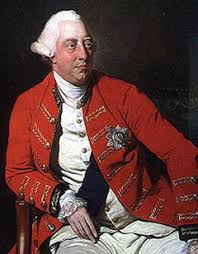
Yeah, and that's kind of the point. We are supposed to be a nation of laws, not men. That was the most important principle in the founding documents of this country. The Patriots (the original New England Patriots, not the gridiron version) had had their fill of arbitrary English decisions handed down by King George III and Parliament. They wanted, most of all, a reliable, predictable legal structure. As we phase out strict adherence to the Bill of Rights, that is what we are moving away from, and that is very, very dangerous.

For example, we should simply figure out and act consistently about this "civilian trial," "crime paradigm" versus "war on terror" argument. It should not be decided by mob rule, even if members of the mob are Rudy Giuliani and Lindsey Graham. What's it gonna be? The argument now usually takes the form of rhetorical questions: What shall we do, give Osama bin Laden his Miranda rights? For Jim DeMint, Mitch McConnell, Sarah Palin (and Dianne Feinstein), the argument is won simply by posing this question. But that doesn't actually answer the question. "Liberals" are being frightened away from bedrock principles of civil liberties by browbeating and accusations that they are "soft on terror." Barack Obama is not soft on terror, and neither is Eric Holder. But the political climate (and not the one created by the Internet) is apparently forcing them (so they say) to make up rules on the fly in order to stay ahead of the increasingly lawless trends in this country.

That's not what we need. Here's what the Authorization for Use of Military Force dated September 18, 2001, actually says about the President's authority to use the military apparatus to deal with the threat of terror:

SEC. 2. AUTHORIZATION FOR USE OF UNITED STATES ARMED FORCES.

    (a) IN GENERAL- That the President is authorized to use all necessary and appropriate force against those nations, organizations, or persons he determines planned, authorized, committed, or aided the terrorist attacks that occurred on September 11, 2001, or harbored such organizations or persons, in order to prevent any future acts of international terrorism against the United States by such nations, organizations or persons.

So the general consensus of opinion is that al-Qaeda was responsible for the attacks, and the Taliban was complicit in harboring and aiding. So there's a starting point. So how do we determine when someone is an "enemy combatant" under this AUMF and when they're a common criminal, thus becoming a "person" within the meaning of the 5th and 14th Amendments? (And the term "person," as recognized by the Bush Administration in giving civilian trials to Richard Reid, the Shoe Bomber, and Zacarias Moussaoui, the "20th hijacker" and a member of al-Qaeda, applies to everyone in U.S. civilian custody, not just to American citizens.)

The problem, of course, is in formulating a clear, Constitutional rule. Do we want to say that any Muslim who engages, or attempts to engage, in an act of terror or asymmetrical warfare against the United States is an "enemy combatant?" That's actually how we enforce the concept, if you think about it. Whether they are a member of "al-Qaeda" is often pretty hard to tell. Were the 19 hijackers of 9-11 members of al-Qaeda? It seems likely that the ringleaders, Mohammed Atta and Marwan al-Sheihi, were actually radicalized through connections to the Egyptian jihadist movement known as the Muslim Brotherhood, and then went over another line into full-scale terrorist planning as the result of "exposure to the West" in Hamburg, Germany. Congress, the White House, and all the mainstream opinion-makers don't know if they can come up with a satisfactory statement of policy which doesn't seem (a) overtly racist or sectarian or (b) unconstitutional. So the response is to make it up as they go along, referring to the AUMF (as Bush did) as if it answered anything, which it doesn't, not really. Is this Christmas Day bomber in the same category as the 9-11 hijackers because they can connect his training to al-Qaeda in Yemen nine years after 9-11? What is al-Qaeda, exactly? I think it's an organizational structure that we superimpose on Muslim groups which may or may not have anything to do with each other in order to keep them within the framework of the AUMF.

Bush denied habeas corpus rights to the enemy combatants at Guantanamo, using the AUMF as the legal basis for the designation of the detainees there as enemy combatants, but that didn't work out when tested by the Supreme Court (which was the same result in the Hamdan case regarding the constitutionality of the Military Commissions Act procedures).

The whole thing is a mess, but the real danger is in the arbitrary nature of the responses by government officials and the complete politicization of civil liberties, which are supposed to be decided by legal principles, not mob rule. I think the real position taken by the government (both Bush & Obama) is as I've stated: a Muslim jihadist engaged in terror activities will be treated as an enemy combatant, because the war on terror is a war, not a crime-fighting exercise. It just isn't much like any other war we have fought: no uniforms, no specific national allegiance of the enemies or backing of a specific foreign power, no entity capable of "surrender" or signing a peace treaty. And no end in sight. Whether everyone (and everyone on the Internet) agrees with the wisdom of such a statement, it is nevertheless vital to enunciate the principle so we don't get too used to deciding things as King George III did a long time ago.

Opinions on such matters, expressed by individuals on the Internet, don't produce a country which is "ungovernable." They simply fill out the picture and keep the discussion from being cast solely in terms of the "manufactured consent" of a narrow bandwidth of the "opinion elite," who increasingly decide everything solely in terms of the next election cycle. I guess it's a jealous guarding of such "horse race" politics that the New York Times feels is threatened. Call guys like Glenn Greenwald, the lawyers at Balkinization and Cenk Uygur "roadblogs" and we're good to go.

February 04, 2010

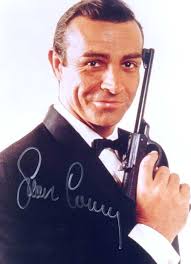
Obama, Barack Obama: Shaken, Not Stirred


Director of National Intelligence Dennis C. Blair testifying to Congress on Wednesday:

Director of National Intelligence Dennis C. Blair said in each case a decision to use lethal force against a U.S. Citizen must get special permission...He also said there are criteria that must be met to authorize the killing of a U.S. citizen that include "whether that person is involved in a group that is trying to attack us, whether that American is a threat to other Americans. Those are the factors involved."

The special permission must come from the President or someone like that, which is definitely reassuring. It's not from a court, however, which makes it less so. There's that whole Due Process Clause, after all. No one shall be denied life, liberty or property without...hey, it's the very first one. It seems that President Obama has been given a License to Kill, which previously had been granted, other than in a time of declared war, only to agents with a Double O rating. Now the Obama Administration has decided the 9/11 AUMF (Authorization for Use of Military Force) is good enough. Man, that piece of paper has been given a workout. Anyway, here's some mood music: http://www.youtube.com/watch?v=Ii1tc493bZM. If you open that in a separate window, you can listen along while you're reading.

Well, now that I see how things are, let me make a couple of things clear. I'm NOT a member of al-Qaeda, never have been. I don't like the guys. Hate 'em. Wish I could put that in a meta-tag, so the NSA would be sure to find it. I used to know how to do some basic HTML, but I can't remember, for the life of me, how to do it now. An unfortunate turn of phrase, I guess.

Look, President O(O), I get a little grumpy, but it's only because I'm disappointed, you know? I lo-o-o-ve this country, love it, love it, love it. I'm definitely no threat at all, not to Americans most of all. And a member of an organized group? I'm a Democrat! So that deals with that.

Just for a couple of points of clarification: when Mr. Blair talks about Americans trying to "attack" "us," I'm going to assume that the attack part refers to physical attack. Am I right? And the "us," he means the whole of America, right, and not some, you know, particular ideological group or in-crowd or power elite or nothin' like that? I'm sure that's what he means. See, because once you go outside the Constitutional framework of the 5th and 14th Amendments (that Due Process thing - but look who I'm talking to! A Con law prof!), and start making up rules based on language that clearly is not in that 9/11 AUMF, and not in any federal statute, and not in the Constitution, and further, the rule you're making up is that you can gun down an American based on the suspicion (and it's only that, because there's certainly been no trial, hearing, nothing) the American is part of a group that threatens America ---

Okay, just for a moment here I'm feeling a little like Captain Mandrake when he realizes why the world has to end, after all. Back to what I was trying to say: I'm sure you'll do fine with this new power, right, license, whatever it is. I'm glad it's you, if it has to be somebody. (It has to be somebody, right? Okay.) I admit I didn't see this one coming, and I'm a little surprised no one in Congress really said anything. Is this Standard Operating Procedure now? We wake up one day and discover the President has the right to put out a hit on an American citizen anywhere in the world (or shoot the guy himself, which would be cooler, more Bondian - you look great in a tux, by the way, Prez! Is the music still running?) and no one says a thing? So the whole rigmarole the Bush Administration went through with Padilla -- you've got a more efficient way to deal with that now?

Look, I'm just trying to understand. I don't have a problem with it, obviously, given my extreme patriotic nature. Count me in as one of "us," you know? Oh, and one olive or two?


Congressional Clown College, Cont.


To amend and extend my remarks: actually (and I of all people should remember this, since I acted as counsel for Friends of the Earth on more than one occasion) Congress did pass the Clean Air and Water Acts and the Endangered Species Act in the early 1970's, and created the Environmental Protection Agency to oversee it all. Those statutory enactments had actual, tangible results that are still everywhere around us, the completely degraded state of our environment notwithstanding. I mean, it's all relative, and you have to put up with minor inconveniences like the Great Pacific Garbage Patch, that roiling gyre of plastic soup just west of here (twice the size of Texas, in fact). And the impending demise of life on Earth because of climate change, which Congress cannot get it together to deal with. Stuff happens.


You might also include the Foreign Intelligence Surveillance Act of 1978, although that was remedial, simply designed to stop thugs like Nixon from spying on the American people without a warrant, which Bush II resumed doing anyway, and now Congress has given the whole Fourth Amendment repeal its imprimatur. Telecom immunity, as you'll recall, and the assorted crap that came with it, which Barack Obama was against before he became a Republican (no doubt to balance Arlen Specter's move the other way) and is now all for. Well, things change. Certainly no one can accuse our President of a mind hobgoblined by a foolish inconsistency. There is, indeed, no consistency whatsoever, other than consistently being all things to all people and hoping no one notices. (Nota bene, Prez: they have.)

Anyway, so I think Alan Brinkley has it right after all: Congress put the alarm clock on snooze somewhere there in the 1970's and the buzzer simply never went off again. With the advent of the Reagan Regency, Congress began the systematic process of bankrupting the country which has been ongoing ever since. They "fixed" Social Security by raising FICA taxes in the early 1980's to create a "surplus," which they then appropriated for war & materiel, year after year, in a clever scheme to bankrupt the Soviets by daring them to imitate our folly. We can say with confidence that we forced the Soviets to dissolve first; having succeeded in that epic struggle, we decided it was so much fun to go bust we simply kept it up, long past the point where there was any credible threat, spending almost as much on defense as the rest of the world combined. The Social Security "surplus," meanwhile, is about $2.5 trillion now, but unfortunately it is part of the national debt, the ceiling for which was just raised by Congress to $14 trillion. Now that the Social Security system is beginning to crack, it would be nice to tap into that rainy day fund, but it's already been dispensed to Boeing and Northrop and Martin Marietta and Halliburton and our brigades of mercenaries, all representing Congressional appropriations down through the years. But if we hadn't gone bankrupt, think how safe we'd be! Other than having the southern part of our largest city knocked down by 19 guys armed with Exact-O knives and our own airplanes.

Still, no other nation would dare invade us with a real army. Not that they were going to do that anyway. The countries that might be interested in doing that are too busy building the things we used to build, selling them to us and using our money to develop their own countries.

It's becoming apparent that Washington's chronic indolence and short-sightedness are exacting a very high price. The unemployment funds of half the states are now bankrupt (with 18 more soon to follow) and reliant upon the Feds to simply ship back money they received from the citizens of the same states in the first place (those states now in penury). Not on a dollar for dollar basis, of course; Washington has expenses which must be deducted as part of the laundering process, and without the federal system, how would any of us ever feel safe? I mean, we're constantly reminded now that we're not really safe, and that's with the full panoply of nuclear and conventional weapons and the largest defense establishment in the world, all kept afloat by the contributions of those same (largely unemployed) citizens of the several states (well, half of it, anyway - the other half is borrowed or conjured out of thin air). The pension funds in many states are also reeling, of course, with massive losses in the equities and real estate markets, a lot of it caused by investments in the crooked scams of Wall Street enabled by Congress's refusal to regulate derivatives and its repeal of the Glass-Steagall Act. So I guess it's not quite fair to call it a "do-nothing" Congress. They do stuff, it's just mostly idiotic and destructive.

I think we're up to date now. Credit where credit is due. Congress had a pretty good run between 1789 and 1978, almost two hundred years of occasionally brilliant legislation and accomplishment, mixed in with periodic lapses such as the House Un-American Activities Committee, which, in retrospect, seems actually pretty tame.

February 02, 2010

The Comatose Congress


Frank Rich mentions Alan Brinkley briefly en passant in Rich's Sunday column to the effect that Brinkley has written that Congress is now “entering its fourth decade” of failing to deal with any pressing national problem. A while back, I read Brinkley's The Unfinished Nation, and that is certainly one of the themes of this “liberal” history professor at Columbia. (I think it's kind of telling that we categorize historians according to political ideology, as if admitting the truth of the old bromide that history is simply the polemics of the victor.) The fiasco of “health care reform” over the last year can be added to Congress's Marx Brothers approach to national priorities. Brinkley dates things from the beginning of the Reagan Administration (I guess that's why he's “liberal”), but I'm trying to remember anything which happened in the 1970's which might be characterized as a Congressional breakthrough.

I think we need to go back to the Great Society, and the institution of Medicare to find anything definite which was passed by Congress specifically to assist the American populace. That can be added to Social Security, a Depression-era program, and you've got the main components of the “Entitlements.” The 60's also saw the triumph of Civil Rights legislation, including the Voting Rights Act, which eliminated onerous obstructions of the exercise of the franchise by African-Americans (there's a nice museum in Selma, Alabama, devoted to this landmark breakthrough, worth seeing, just over the river past the “Bloody Sunday” bridge).

I think Brinkley's on to something, which brings up a profound question: what the hell has Congress been doing for the last forty-five years? Really, nothing much at all, which is why I guess I never expected much from this latest effort. If we wanted to generalize broadly (and what else is a blog for?), I guess one could say the goal has been, certainly since the Reagan years, to minimize the role of the federal government except in its one dominant sphere of influence, the maintenance of a big military apparatus and the prosecution of wars of dubious utility. Beginning with the amateurization of air traffic control (what a great idea, Gipper!), government has mainly been about getting out of the way. Out of the way of regulating banks or financial markets, out of taxing the populace (except on a regressive basis, with marginal rates declining), out of protecting American jobs by facilitating the transfer of jobs overseas with the tax code and with numerous free trade agreements designed to encourage offshoring and importation. The relentlessness of Congress's anti-American bias (Big Business excepted, which can leverage the globalization paradigm to its great benefit), has resulted in the clear hollowing-out of America's middle class, the concentration of wealth at the top to an extreme degree, the destruction of the tax basis (aided and abetted in particular by W's mindless tax cuts), soaring deficits, an epidemic of foreclosures, and looming national bankruptcy.

Quite a resumé. Somewhere in there Congressional politics became about one thing and one thing only, the pandering to the public on “social issues,” and, of course, the dire state of our national security. I mean, we're just never going to be safe enough, are we? Since Congress's main donors (Big Business and their brigades of lobbyists) don't really care about any of these issues other than the military-industrial complex, the financial, pharmaceutical, insurance and banking sectors are perfectly content with whatever arrangements Congress works out on the Yahoo Agenda. Sure, gay marriage, no gay marriage, abortion, no abortion: whatever, dudes. Just don't regulate, don't tax, and keep fighting all these pointless wars, because that's how we can tap into the tax revenue on a sustained basis (when you're not bailing us out).

Am I counseling despair? Well, yeah. What do you think? Congress has been asleep for forty-five years, longer than Rip Van Winkle. The tax receipts are down to $2 trillion, against a budget that will surely come in at $4 trillion, as soon as it is Christmas-Treed. The Federal Reserve is playing shell games to create the appearance of money where none exists. Our foreign creditors are looking elsewhere for places to invest. And we still can't cut a dime from military spending; on the contrary, it keeps going up.


Comes a time, you see, when all this neglect begins to exact a terrible price. Not necessarily in a “linear way,” either. As Mike said in The Sun Also Rises, answering a question about how he went bankrupt: “Gradually, and then all at once.”

January 30, 2010

Barry & the Knuckleheads


Along with most other fair-minded viewers, I came away from Obama's "Question Time" with the National Academy of Nonscientists (a/k/a, the Republican House caucus) with the general impression that the President had cleaned their clock. It put to rest some of the questions I had had about his ability to think and respond on his feet. He slapped these chumps silly, actually. So much so that the Fair & Balanced Network (Faux News) finally cut away from the questioning, much as a Spanish network with delicate sensibilities might cut away from the ultimate stages of a bull fight, I suppose.


"Progressives" are in a state of ecstasy bordering on the priapic, of course. Obama was good, very good. We used to wonder what would have happened if George W. Bush had ever been subjected to a process similar to the British Parliamentary ritual of the "Prime Minister's Questions;" yesterday's American version answered this inquiry where Obama was concerned, emphatically, since even in the British system the Prime Minister's own party breaks up the hectoring with a few soft ball questions. In Obama's situation in Baltimore yesterday, it was 100% opposition, and they never got anywhere with him.

Which leaves me wondering -- why does the O Man spend so much time worrying about these people and their "opinions?" He was, as usual, full of schmaltzy rhetoric about "bipartisanship" and doing the people's work. At the same time, there was no question that Obama "gets" the fundamental dynamic of American politics: the Right Wing plays solely to the home crowd, in Georgia and rural Texas and in the Mormon reaches of Idaho and Utah and in Redneck Florida, and while these Republican Reps might be gushing over their chance to spend so much uninterrupted time with America's Rock Star (and they did seem to be as much in thrall of the O Man as, say, a crowd in Berlin), they aren't going to change their Immediately-Post-Prelapsarian views of the world one iota as a result of this confab. The people in that room (other than Barack) represent the American Theocratic Movement of American politics. They are a cult, and the most extreme expression of their cultist views takes the form of the Tea Party people. Careful polling demonstrates this over and over, although the Tea Party people are often described as if they were a larger, more inclusive cohort of lunatics.

You do not change the views of a cult through reasonable colloquy. One can make this confident statement almost by means of tautological argument: if you could change their views through this method, they would not be a cult. There is a reason that "deprogramming" is such an arduous, difficult, uncertain process. Cults are self-reinforcing. The cult members believe what they believe and are warned forcefully not to challenge the consensus of the group on pain of ostracism, shaming and exclusion. The reward for membership is the feeling of community and strength that comes through surrendering one's rational faculties to obscurantist nonsense.

So Obama was engaging in to-and-fro with people who don't take seriously issues such as climate change (because they see science as a liberal conspiracy), think abortion is murder (because clumps of post-coital cells are injected with a "soul" absent from the sperm and ovum microseconds before), think gay people "choose" their sexual orientation out of plain cussedness, instead of biological necessity, and whole rafts of other happy horseshit.

Since Obama gets this fundamental point so well, and understands that these CultReps have no choice (if they want to remain in office) but to keep spouting this stuff, to keep denying the Copernican Solar System, and the globular shape of the Earth, and the law of gravity, and Newton's Laws of Motion, and the existence of subatomic particles, and the accuracy of carbon dating, and to maintain that the Flintstones are an accurate cartoon history of actual human-dinosaur coexistence within the last 6,000 years because evolution is a "fraud" (propagated by the same Liberal Scientific Conspiracy), one is left with the question: what the hell is he doing?

That part I haven't figured out yet. The only answer that comes to mind now is that Obama is completely aware of the total futility of these feel-good (momentary as the feeling must be) exercises in...talking. And that's the point for him. He is such a pure political animal (as Clinton was before him) that he just likes talking about "issues," and hearing himself talk, and patting people over and over on their shoulders, and beaming big smiles, and joshing, and calling people by their names with his prodigious memory for names, and going on and on in his helpful, hortatory, collegial, nice way because he just likes doing that, whether it gets anywhere or not. And it doesn't, of course. The Republicans all vote alike, en bloc, because they're a cult, and that's what cults do. They subscribe to inerrant belief systems, they never waver, and they're very, very scary.

So have fun, Barack. Keep talking to them, use sweet reason pointlessly, keep "compromising" without picking up a single vote, keep diluting genuine progress with placating sops to your Cro-Magnon colleagues Across the Aisle, but remember one thing: it's utterly useless.

January 27, 2010

My President can dunk over your president


I thought it was a pretty good speech. The O Man brought his A game to the House. He was less deferential, more realistic, and he said a great many things that made sense to me. I think he's beginning to realize that he never got into gear during the first year and needs to make up for lost time.


His outline of an alternative energy future was the most hopeful thing he talked about. An economy runs on energy. We've built up a massive trade deficit and an unsustainable debt burden by relying on imported oil. By contrast, wind and solar energy arrive here in the United States free of charge. I have thought (for what that's worth) for a long time that the only real way to transform the economy so that Americans can go to work again and build wealth (instead of shipping it all overseas) is by fundamentally altering the energy paradigm. Harvey Wasserman has outlined a quite plausible future in his text/comic book Ecotopia (it's the size of a big comic book with lots of colorful pictures), and it's a nice world he describes.

Obama seems to understand the need for a breakout move in that direction, and his reference to the Chinese and German efforts in the same direction (he should have mentioned the Israelis and Danes, too) injected just the right note of competition into the idea, so that the troglodytic, knee-jerk rejection of the superannuated Republicans lolling in their seats would make them look even more anti-American than they are. A canny touch, because Being #1 in the world is what Republicanism is all about. They just want to do it in the stupidest, most self-destructive way possible, and preferably one that always smells like sulfur as a by-product.

Anyway, Barack threw them a few sops: we'll keep wasting vast amounts of money on a largely irrelevant conventional military establishment, which, although it completely failed to stop 9-11, will surely stop the next 9-11, although no future 9-11 will look exactly like 9-11 anyway. I was just trying to see if I could say 9-11 in one sentence as many times as Dick Cheney can. Also, nuclear power plants, Barack said, looking to his left like a puppy hoping for a Milk-Bone. The Repubs liked that one. They like all the ideas that are antiquated, cost-ineffective and dangerous.

I wonder what Barack could do if he didn't have to deal with that hopeless Congress. As a body, they really are an immensely useless aggregation of frauds, cheats and scoundrels. They are America's Great Work-Around. Obama had to remind the Democrats that they had the largest majorities in decades, and that they might consider, you know, doing something with them. That's how pathetic the Democrats are: they're unaware they're in control. I think it frightens them, and they're secretly pleased they have party in opposition whose basic platform was fashioned during the Bronze Age (particularly John Boehner, although he shades a little toward cordovan, like fine Coreentheean leather.)

It's possible this next decade will be better than the last. It almost has to be; if it's worse, we won't survive as a nation. Obama may have hit on a useful way to tag his opposition, as the party which defines itself solely by obstruction. That seemed to make them squirm a little, being called out as a political organization which works night and day to make certain America can't get anywhere. Keep it up, O Man. You may be getting your shot back in the groove.


January 26, 2010

If the Senate Democrats were an athletic team...


(In the spirit of the old Mad Magazine. Imagine drawings by Mort Drucker. Alas, I'm no Larry Siegel.)


SCENE: Locker room, halftime. Coach Harry Reid is finishing up his pep talk to the Senate Dems, an NBA franchise.

Coach Reid: I just want you guys to know how proud I am of each and every one of you. We came so close...

Dodd (power forward): Coach! We can still win this thing!

Coach Reid (sadly, patiently): No. No, we can't.

Bayh (two-guard): We're up 59-41, Coach!

Coach Reid: I know. That's the problem. This game is lost. But we gave it a shot, and that's all I've ever asked of you guys.

Schumer (point guard, hanging head, forearms on knees): It's because I missed that free throw at the end of the half, isn't it Coach?

Coach Reid: Chuckie, I'm not going to lie to you and say that helped. But it was Hatch hitting that fall-away three that sealed it. If only it could have been 60-40! Now -- the game is over.

Tester (center): Should we even play the second half? With only this 18-point lead?

Coach Reid: Damn right we will! And don't leave anything on the floor, fellas! We don't have a chance, defeat is certain, but let's make this loss one to remember. Now get out there and lose like men!


SCENE: RFK Stadium. The Washington Democrats have the ball on the 9-yard line of the D.C. Repubs. 4th quarter, 5:53 left to go in the game. The Dems huddle up.

QB Max Baucus (in huddle): Okay, guys. This is it. We're up 59-41, first and goal. This is the moment we've been waiting for. We've got to punt.

Casey (WR): Punt? What for? Let's punch it in!

Baucus: Coach Reid has sent in the play. Hasn't he, Nelson?

Nelson (TE) (glumly): Yeah, Max. We've got to punt.

Durbin (HB): I don't think Franken can even hit the coffin corner from here! He'll be kicking from the 20-yard line. What do we got to lose?

Baucus: The game, Dick. Let's stop kidding ourselves. We're going to kick, then they're going to score two quick touchdowns, recover a bunch of onside kicks, make two two-point conversions, kick a field goal, and win this thing. It's good as done.

Merkley (RG): We gave it a shot, though, didn't we, Max? If Lieberman hadn't run the wrong way on that play...

Baucus: You're darn right we gave it a shot, Jeff! Now let's kick it away, roll over and let this game get away from us! I'm so damn proud of you guys!

(Fade out.)


January 25, 2010

Prez O's First SOTU Address, On Deck


Probably the blog post of mine which prompted the most reaction was something I wrote years ago, when W still ruled the land, called "A Guide to Controlling Your Gag Reflex During the SOTU," or something very close to that. It became apparent during Bush's term that his subjects simply reached the point where they couldn't stand the sight or sound of the man. It was a low point in citizen disaffection, you could say.


I don't feel that way at all about Barack Obama. He's having a rough go, that's for sure, but a lot of it, I would say most of it, is that he inherited a country which was way, way down the path toward collapse when he was sworn in. It is part of his conciliatory nature that he doesn't really emphasize this point very often. Compared to the way that another, more aggressive politician (in other words, someone other than a Democrat) would handle the same situation, Barack has been remarkably reticent about assigning blame. Meanwhile, he's attacked from all sides, by the Right for being a Socialist/Fascist/Communist/Muslim/Kenyan Tyrant, and by the Left for selling out.

The hysterical nature of the criticism reflects the hysterical fear rampant in the country. Very strange and unprecedented things are going on. For example, the Brookings Institution recently published a somewhat astounding social analysis which demonstrated that the fastest growing areas of poverty in America are in its suburbs.

By 2008, suburbs were home to the largest and fastest-growing poor population in the country. Between 2000 and 2008, suburbs in the country’s largest metro areas saw their poor population grow by 25 percent—almost five times faster than primary cities and well ahead of the growth seen in smaller metro areas and non-metropolitan communities. As a result, by 2008 large suburbs were home to 1.5 million more poor than their primary cities and housed almost one-third of the nation’s poor overall. http://www.brookings.edu/papers/2010/0120_poverty_kneebone.aspx

Did you see that one coming? The suburbs are supposed to be where you go to escape, or rise above, the poverty of the inner cities, right? Wasn't that what Leave It To Beaver and Father Knows Best were all about? It's another example of what I have called, during Blooging moments, the parallax of nostalgia. Reality keeps going out of focus; we look at it through dated lenses, like glasses with an obsolete prescription. Lots and lots of poor people are filling up the burbs.

You can get a sense of that sometimes when driving through the conjoined and contiguous towns and cities of Southern California, through housing tracts which were built to last maybe 50 years and are now in their six or seventh decade. South Central L.A. and East Oakland are both suburban slums, really. As all the other old housing tracts age, they undergo a similar devolution. They go down in the world. And now with the blight of foreclosure, the process of decay has been accelerated.

You can't blame all this stuff on Barack Obama, to say the least. There isn't a lot that can be done, in fact, except very gradually re-orient the country toward... something else. Most of his critics don't see it that way. Most of his liberal detractors are Cornucopians who believe, in their hearts, that there are no fiscal restraints on the U.S. Treasury. Oddly enough, many of these kibbitzers are also the main detractors and opponents of Ben Bernanke, but it is Gentle Ben who has devised nine or ten sleight-of-hand tricks to prop up the U.S. Treasury auction business so that despite falling demand from the countries who used to fund our debt (Japan, China), the auctions keep right on humming at interest rates approaching zero.

As the fellow over at The Automatic Earth archly notes:

Kyle Bass’ Hayman Advisors estimate that 45% of the $4.5 trillion in sovereign debt to be issued in 2010, or $2.025 trillion, will be American. Multiple voices have expressed grave doubts about the true identity of the buyers of US debt. There are serious suspicions that most of it has anonymously been bought by the Federal Reserve, simply for lack of other buyers. And that would mean the country buys its own debt, presumably in an effort to keep Treasuries attractive internationally.

You can be assured that Prez O does know who is actually buying American debt, and you can also be certain that he's not going to be talking about such a delicate subject on Wednesday night. The jabbering critics (like the guy at "Waldenswimmer") prattle on endlessly (and irresponsibly) about where Obama should be spending the money we don't have, but Obama actually has to deal with this simple, implacable reality: we're broke, tremendously in debt, and we may actually have resorted to conjuring trillions out of thin air to keep the game afloat.

Those are deeply disturbing ideas, and I think Obama is caught in a kind of cognitive dissonance where he must keep a sunny, optimistic mien for public consumption while he conducts closed-door meetings with his money people where they tell him about stuff like the Fed's program of buying up all the toxic garbage (mortgage-backed securities) on the books of insolvent banks, on the understanding that the "payments" (printed money) paid to the banks will in turn be used to participate in Treasury auctions. And the "Primary Dealer" participation in recent auctions supports the idea that this is what is going on. When you think about it, it's an enormously clever game. The Fed's balance sheet has become an elephant graveyard - it's where the bad debt goes to die, and where its worthless nature is forever hidden from view. And at the same time, by treating this garbage as real value, it gives the Fed a cover story for giving the banks "money" (which the Fed simply prints), and which in turn funds the U.S. deficit. C'mon, folks: give it up for the Bernank; could you have thought that one up?

Although: it is, however, a high-wire act with no net, and may end in the utter worthlessness of the dollar.

The hope, the dream, of the Obama Administration and its designated Merlin at the Fed is that all this levitation will reinflate the housing bubble, and then, in some magic moment, the mountain of debt on the books of American banks and Fannie & Freddie, and on the Fed's own balance sheet as it takes on more and more of this toxic sludge, will be made "good" as the underlying equity in the houses again approaches loan values. And then the mighty American consumer can again drain out the "wealth" and the buying fiesta can resume.

Well, hell, the cavalry used to arrive right after the first of the conestogas caught fire, and the Indians circled tighter and tighter, and Ol' Jeb had an arrow sticking out of him just below the clavicle - not mortal, just indicative of how desperate things were getting. This is pretty much what the Obama Administration is hoping for now. Barack will give the whole thing a different name Wednesday night - "jobs," I think he'll call it, but that's way too slow. Ol' Jeb will bleed out before that can happen. He's waiting for that bugle sound.

So let's give the guy a break, ya think? Meanwhile, jes' keep firin'.

January 21, 2010

Things Are "Changing" All Right


Probably the best blog I read on a regular basis is Glenn Greenwald's Salon column, which is alternatively labeled "Unclaimed Territory," which is how his old independent blog used to be titled. Glenn gets quoted a lot in news media, and is something of a thorn in the side of Establishment journalism because of his habit of pointing out the systematic fallacies in "Beltway Conventional Wisdom." You might summarize Glenn's main point this way: what is cited as "mainstream opinion" in America is actually nothing of the kind; rather, it is a self-serving consensus worked out by media and political elites as a justification for what they would like to keep doing regardless of "mainstream opinion." Whether he is conscious of it or not, I think Greenwald's ideas are derivative of Noam Chomsky's seminal insight, that "manufactured consent" actually controls the parameters, or bandwidth, of "acceptable" political opinion in American public life.


Two political issues illustrate the accuracy of Glenn's argument: the war in Iraq and the late, lamented "public option" in the increasingly useless "health care reform" bill staggering its way through Congress. On the cable talk shows, on the editorial pages of the Washington Post or the Wall Street Journal, the claim was often made that the "people" supported the Iraq War and did not favor a withdrawal, precipitous or otherwise. As Greenwald documented over and over again, citing statistically accurate surveys of public opinion, by about 2005 the majority of Americans in fact did favor a withdrawal of American soldiers from Iraq, and this percentage grew to over 60% as the war raged on and casualties mounted. This did not stop the Democratic and Republican leadership in both the Senate and House from labeling the "anti-war" crowd radical and "leftist," nor did it stop the talking heads on "This Week" with George Stephanopoulos from repeating ad nauseum that the "people" wanted to withdraw from Iraq only on a "responsible basis," when the "mission had been achieved." The "people" interposed no such caveat; they just wanted us to get the hell out.

The same dynamic has occurred with respect to the public option. A decisive majority, more than 70% of the American people, favor the essential expansion of Medicare to cover everyone. Some polls put the number as high as 74% when support crested. That hope is gone now, lost in the dilatory and confusing "deliberations" of Congress, as they and the White House worked out deals with the insurance and pharmaceutical industries. Party operatives within the Democratic Party, such as Evan Bayh, nevertheless claim that Massachusetts was lost because the Democrats kowtowed too much to their "leftist" wing in the health care debate. Run that one by me again? No, don't think so. The Democrats lost because they never get anything frigging done.

The media and political elites in the Imperial City live in a comfy and insulated little world where the maintenance of the status quo is profitable, career-enhancing and self-perpetuating. The madding crowd out there on Main Street is a disturbing element for this complacency; the trick is to mollify the unrest while maintaining the status quo, because that's what keeps the money flowing from Wall Street, Big Pharma and Lobbyist Nation.

It now appears that this gambit is becoming less and less successful. The "Renegade," Barack Obama, threatened to upset the apple cart when he was running for office, to challenge this smug self-satisfaction when he arrived at the White House. On arriving there, however, something happened. The origins of his reversal (many call it a betrayal) can be debated without any kind of definitive answer. I choose to look at the situation "behaviorally;" I don't think there's much doubt that he's not doing what he said he would do (one can cite many, many examples of his reversal of position), and the reasons for that are beside the point. The real point is that now he, and the other political elites who played the game of placating the unrest of the common man with ineffective gestures, are beginning to pay a heavy price. The election of Scott Brown and the Republican upsets which preceded his victory in Virginia and New Jersey signal a further advance in what I called in a previous blog "the rise of grudge voting."

These Republicans are being put over the top by independent voters, the same voters who elected Barack Obama. I note today that at long last Obama is talking about (horrors!) actually using the anti-trust laws for the purposes they were enacted: to break up monopolistic behemoths that are "too big to fail" and pose a threat to free competition. That's how far the Washington Establishment had slipped into its solipsistic trance: it looks "radical" now when a Chief Executive talks about enforcing laws put on the books during the term of Teddy Roosevelt. What next? A prosecution for violating the War Crimes Act? (Let's not get hysterical.)

My guess is that these impotent gestures won't make any difference now. It's just a little too obvious what they're doing, and why. Besides, this kind of stuff is not the same as actually being on the side of the Little Guy. If they were on the side of the Little Guy, they would tell credit card companies that they cannot charge usurious rates. They would make the re-importation of prescription drugs legal, and they would allow (for crying out loud) Medicare to use its bargaining leverage with pharmaceutical companies to bring down the price. They would repeal the Bankruptcy Reform Act, Joe Biden's Frankenstein monster of anti-populist intent. These things all provide direct, immediate help to the cash-strapped denizens of Main Street, and they don't cost the federal government anything (they save money). And Congress and Obama won't do any of these things because they would upset their corporate donors. So they engage in these pantomimes of compassion, like "regulating" the size of Wall Street banks. Whoop-de-you know, like-do.

The slightly satisfying feeling now, however, is that this crap isn't going to work anymore. Obama is going to do for the Democratic Party what George W. Bush did for the Republicans: bring it down around his ears. And seriously - who would have predicted that?

January 20, 2010

So long, Massuchusetts


The one positive development I can see in the election of Scott Brown to Ted Kennedy's former seat in the Senate is that I don't think we'll have to listen to Harry Reid talk about the "60 vote rule" nearly as much anymore. Indeed, I imagine that 2010 will be Harry's own last year in the Senate, since if the Republican "tsunami" is going to sweep anyone from office in November, surely Mr. Mumbles would be one of the first to go.


I never quite understood why the Democrats thought they had 60 votes before this election, however. There were only 58 Democratic Senators when Ted Kennedy was with us. They count Bernie Sanders, the independent Socialist from Vermont, as one of their own, of course, and that makes sense. But they also count Joe Lieberman, and that makes no sense at all. Joe Lieberman is an Independent who simply plays the Democratic Leadership for fools, claiming to caucus with them in order to keep his committee chair, and otherwise doing anything he can to thwart their ambitions, whatever those might be. Joe Lieberman campaigned for John McCain. How bright a picture does a guy have to paint?

Still, this nonchalance of mine can only carry a person so far. The election of a Republican as a Senator from Massachusetts, cradle of our liberal democracy, is a very ominous sign. The cable news guys & gals, always looking for a takeaway line, read these results as a "wake up call" for the Dems. They better get cracking, et cetera. We all know it's too late for that. The Democratic ascendancy was about one thing and one thing only: public revulsion at the manifest atrociousness of the Bush Administration. It did not have much to do with enthusiasm for Democrats per se. They were, however, the other brand, and the good people of this battered land invested their hopes with them.

That would have been the moment to do everything differently - January, 2009. A Democratic Renaissance. Institute radical departures from everything Bushian. Withdraw all the troops from Iraq and Afghanistan, begin the process of dismantling half of all those foreign bases and forts, investigate and prosecute all the horrendous torture and detainee abuse, perp walk half of Wall Street for massive securities fraud, begin massive investment in a new energy regime and public transportation - clean the frigging house. The American people would have been thrilled with the prospect of a new sheriff in town, and American progress toward sustainable prosperity.

Instead, Obama and the Democratic Leadership wanted to see how many of the Bush-era "initiatives" and "approaches" could be salvaged and continued under their regime. Can you believe that? That's what they decided to do. In their view, Bush had been such a singular success in managing all of his wars and the American economy that he was worthy of emulation. It worked for him, why not for us? Let's just leave everything the way he left it.

Astounding. So, for now, we have 57 Democratic Senators, 41 Republicans and 2 Independents, one of whom is a Democrat and the other is another Republican, so it's 58-42, which means Harry Reid can stop counting and resume mumbling about parliamentary procedure or whatever it is that he gets paid to do. As we all have learned by now, absolutely nothing can be accomplished in American government unless there are 60 Democratic Senators.

Except, of course, when the Republicans win a few seats in November and, mirabile dictu, for some reason find themselves capable of doing anything they want, just as they did under Bush. That's something I never quite understood. I'm at a loss to think of a single crappy thing Bush wanted to do where he was stymied by the "60 vote" rule. Did the Democrats ever deny him war funding? Stop his illegal wiretaps? Repeal the Patriot Act? Force him to balance a budget?

Nope, none of that ever happened. I would say it's just as well that the Republicans Are Coming, the Republicans Are Coming, but it isn't just as well, as we all know. It's going to be a nightmare. The Republican Party has transmogrified into some very weird parody of its old self, typified by such political practitioners as Sarah Palin and Liz Cheney, who operate on the outside (currently), and by guys like Tom Coburn ("death penalty for ob-gyns who do abortions!"), James Inhofe ("global warming is the greatest hoax on mankind in history!") and Mitch McConnell (well, - Mitch McConnell). All the solons in Washington are going to be living in communal frat houses with Bible readings every morning, and carrying on strange, ritualistic practices at night by candle light, and then swaddling themselves up in diapers and calling in the madams to administer their discipline. American government is going to descend into a kind of hybrid version of 1984 and Rosemary's Baby.

So - a weird, fetishistic government, crucifixes painted on our tanks as they roll through Islamic countries as our wars rage on, a bankrupt Treasury, a lawless approach to Constitutional rights, a decimated economy. Let me know when the fun begins.

A pundit once said, commenting on Michael Jackson's habit of sleeping each night in a hyperbaric glass coffin, "there's a fine line between the weird, and the really, really weird, and Michael has crossed it." We are nearing that Rubicon ourselves. Think fondly on 2009 and 2010; for all of their shortcomings, they will be remembered as the pause before the Storm.

January 18, 2010

The Mysterious Mr. O

I've spent a fair amount of time trying to come to terms with my feelings about the Obama Administration, my pervasive sense of disappointment and loss of interest in the political process in general. As the old Yiddish saying has it, live long enough and you'll see everything; and I don't recall ever being this surprised (I think that's the word) by a candidate as I've been by Barack Obama.


In one sense, of course, I'm just jealous. He's got a cool job: the Oval Office, good salary, huge perks, immense staff, and his future is secure. He'll really start making the money after his term or terms are up. That's the way it goes in modern American politics. It's really a branch of the entertainment business for its media-genic stars.

I understand that Obama is constrained by finances. He's the CEO of an insolvent company. Revenue from sales (taxes) is much, much lower than expenditures. There are probably many things he would like to do that just aren't possible because we don't have the money. Activity in the main product line of the U.S. Government, war, remains brisk, although there is a very low return on investment (ROI). We don't really know why we're fighting all these wars, but I can understand the appeal of the President's Commander-in-Chief role. So much of what the federal government does is simply the redistribution of taxes (entitlements) that war is about the only area of leadership that makes a president look presidential. Social Security, for example: money in, money immediately out. You don't really need a President for that, just a large accounting agency. The same with Medicare. In a normal fiscal year, that's over half of the budget right there.

So the war budget is without doubt the most fun to play with. It involves large wall maps of Asia, lots of military brass in olive green with gold braid, their chests heavy with medals and decorations, all of them meeting in high-tech rooms to discuss strategy and geopolitics. I imagine it must have been pretty intimidating for Barack when he first presided over such a Situation Room...situation. He was never a soldier, and he doesn't really look like the kind of guy who got into a lot fistfights when he was a kid. Still, he's gotten very good at that gravitas essential to ordering "troops into harm's way." "It's the hardest decision a President has to make," he told Steve Croft of "60 Minutes." That's exactly how George W. Bush used to say it. I notice, however, that it's not so hard that Presidents don't routinely make the decision.

I think in a lot ways Barack Obama is a more talented actor than Ronald Reagan. I know what you're thinking: damned by faint praise. But think about it. Reagan had actually been the CEO of California, the nation's largest state, prior to becoming President. So he had executive experience. He was a remarkably shitty governor, of course, and best remembered for closing the doors of the state's mental health facilities, thus creating the first generation of California's open-air lunatic asylums called the "homeless population." Reagan, a profligate spender, warmonger, delusional fantasist, anti-intellectual to his core: he set the standard by which all succeeding Presidents have been measured, and all of them, even Barack, have made their obeisances to the Great Communicator's lasting influence. They base their impersonation of leadership on his model.

If you'll permit a little armchair Freudianism, I'll tell you what I think might be going on here. Obama is the second Democratic president in a row who grew up without a strong masculine presence in his life. No father, no real father figure. Clinton and Obama were both raised by women who idolized them and nurtured their dreams, perhaps in part to overcome obvious difficulties in their (the mothers') own lives. Boys raised in households where a strong father or father figure rules the roost learn a couple of early lessons about the nature of the greater world. One is that fucking up often has severe, immediate consequences. The other is that the world outside is pretty much a non-ending shitstorm of competition, disappointment, conflict and difficulty, because that's the world Dad inhabits.

Barack Obama's bizarre penchant for "bipartisanship" and consensus, no matter how utterly unrealistic it is in light of the Republican Party's implacable opposition to everything he suggests, may arise from Obama's formative experience. In Clinton's case, I could never understand why the guy always folded so easily when met with opposition. For example (and to cite my favorite case), Clinton backed down on Lani Guinier, his choice for a high post in the Justice Department, because of an academic paper she wrote on cumulative voting as a solution to under-representation of blacks on Southern political councils, boards, etc. Her paper was a theory. Clinton dumped her (the first black woman tenured as a professor at the Harvard Law School) because the conservatives said she was undemocratic. By contrast, Clinton's successor, George H.W. Bush, succeeded in the confirmation of Clarence Thomas, he of the pubic hair on the Coke can remarks, because Bush the Elder refused to back down, the Dems be damned. George the First's son, W, was the same way. No matter how bad his idea, he told everyone to pound sand.

O is more like Bubba. Obama doesn't seem to understand that the masculine style of interaction is to take what the other guy will give you, and to fight for the rest. Competition is hard enough as it is; if the other guy wants to concede, great, let's move on to the next round. So Obama repeats his lawn-chair act over and over and over. He gives in on everything. Authority figures (Gen. Stanley McChrystal knee-capped Obama by leaking his own surge plans to the Washington Post, and Obama did nothing about it) intimidate Obama, and he doesn't like conflict anyway.

War, under such circumstances and under such leadership, becomes a nice sublimated outlet for thwarted masculinity. Obama is showin' 'em. He's got more wars going now (I think about four) than Bush ever thought of fighting. Clinton used to bomb Iraq whenever the CSI boys would find a semen stain in another unfortunate location.

It's interesting that the last President who made his abhorrence of war very vocal, who worked (often against the wishes of his own party) to methodically reduce military spending, and who presided over a booming peacetime economy, was Dwight Eisenhower, former Supreme Commander of the Allied Forces. It used to be that American leaders rose to the top through participation in the violent crucible of masculine conflict, like Ike and the Reverend Martin Luther King, Jr., and they learned a balance between diplomacy and defiance. Sometimes one, sometimes the other, whatever works. They were natural leaders who distinguished themselves by the example they set, and not through the simulation of leadership qualities highlighted as part of a marketing campaign.

January 16, 2010

Blague, Fr.: trick, joke or blunder


I wonder if the French are influenced by the homonymic referent. That they find it difficult to take blogs seriously as a result.


My sense is that blogs are reaching the outer limits of their utility at this point. They've driven print journalism almost out of business, and since bloggers always relied upon print journalism for the actual content of blogging, to the extent that blogging has ever had any content, this is a somewhat ironic development.

The other effect of all these blagues is that they have served to diffuse the dissident impulse. Dissent now has an omni-directional and onanistic quality - just a million isolated voices complaining to the electronic void, which is why it has no effect on the Establishment.

The Establishment, as you'll recall, is a very big, powerful central federal government in Washington, D.C., which has arrogated unto itself far more power than the Framers ever intended it to have over the Several States (now grown to 50), and which those Wise Men attempted to restrain by the all-important (now become all-impotent) Tenth Amendment. Alas. No restraint in sight.

Paul Krugman's latest column compared the social democracies of Europe to the pure, naked capitalism of America, and seemed to favor the former. What's curious about such comparisons is that writers such as Krugman never seem to remember that "Europe" is not actually a country. It's a continent, and there are many separate countries on that continent. There is a lot of variation among them, but conversely, within a given country there is more homogeneity and a stronger sense of national identity than here in the States. That's why it's so easy for the feds to roll the general populace here - there is no organized opposition to the central government. More like 300 million separate interest groups.

Not so in Europe. The countries are too small, and their citizenry too active, for the central governments to be immune to the dissatisfactions of the populace. So their safety nets, and social cohesion (including health care, of course) are based on an organic cohesion which is completely lacking here. We're in the same boat at this point as the People's Republic of China and India, the only two countries with populations larger than ours. Our central government is primarily interested only in two things: the maintenance of power for the 545 people actually in charge (Congress, the President, the nine justices on the Supreme Court), and the care and feeding of the military-industrial complex (which is related to, and essential for, the first point). So there will be much talk in our straitened circumstances of "curtailing" so-called entitlements, but no policy maker in Washington with any power is going to talk about reducing military spending, closing all the foreign bases and forts, or cutting back on the Wars in Progress. And once you eliminate all the practical changes that could be made to ameliorate our situation, it's pointless to talk about "reform." It was ruled out in advance.

That's just the way it is now, and I do think we've gone over an Event Horizon so that organized dissent to the "direction the country is heading" (always the headline poll question) is meaningless and ineffective, whereas Reality remains the essential nemesis of this arrangement. So we have to wait on Reality to call the shots in the long run, while the blogging world looks on and snarks about it, tricking and joking but mostly just blundering our way toward stochastic destiny.

January 10, 2010

Once Again, Back in the USSA


I see where the Governator of Kal-ee-fornee-yuh has asked (more or less demanded) about $4 billion to help close the state's yawning budget deficit. The Austrian muscleman even played the ROI Card, which was perhaps a harbinger of things to come. Most things American, after all, begin in the Golden State. Historically, California has received about 78 cents for each dollar it sends to Washington in the form of taxes. Ahnold pointed this out in his petition. That's more significant than it might seem on first hearing.


California probably contains 13% of the American population, or more than 15% if you actually counted everyone who lives here, legally or otherwise. As is the case with New York state, California has huge budget deficits as far as the eye can see. At least $20 billion over the next two fiscal years (including this one, which will prove to be the mild one). That delta between money sent and money returned (22%) would close the budget deficit almost exactly. Analogizing to the old USSR, in some ways California is sort of the East Germany of the Union. A once-prosperous polity brought low by the fortunes of the country of which it is a part, and for many of the same reasons.

The United States, like the Soviet Union before it, has proceeded over the last 30 years or so with a mindless, corrupt build-up (and use) of a military-industrial complex. While the various Presidents and the Bureau of Labor Statistics would prefer not to talk about it, over the last decade or so the United States only added about one million private sector jobs on a net basis. In the public sector, the number is 2.5 million, or 250% as much. This owes to the relentless increases in military and defense contract spending, all part of the never-ending War on Terror, which has served as the convenient rationale ever since the USSR dropped out of the Cold War.

The economy is now running on fumes. Not even, so much, on the kindness of strangers, since the big traditional donors (Japan, China and UK) are flicking it in insofar as increased purchases of U.S. Treasuries are concerned. They're holding the line. The U.S. deficits, on the other hand, will require about $40 billion in sales of new Treasury debt per week over the next year. There is increasing suspicion, and even forensic evidence, that the Federal Reserve and Treasury have been faking the sale of Treasuries for well over a year. One well-publicized analysis from a Canadian financial group estimated that the Fed had attributed $500 billion in sales to the "household sector" by backing into the category; in other words, there was that much in unsold IOUs last year, and since we know the U.S. doesn't just print money without an offsetting sale of debt (ahem), it must have been all those loyal, patriotic Americans in the boonies running the vacuum attachment under the sofa cushions and coming up with the 500 bil to put us over the top.

Yeah. That's what happened. Having the world's fiat currency does have its advantages, which in combination with the opacity of the Federal Reserve may allow the country, for a little while at least, to extend and pretend while the mythical "recovery" gains traction. I really do regard this financial charade being played at the highest level as The Greatest Show on Earth. I mean, really: when has deception ever been practiced on such an epic scale? The National Debt will soon be at $14 trillion, or 100% of GDP, and the fraction of foreign debt to public debt will soon surpass 60%. Both of these parameters are bellwethers for national breakdown, historically speaking.

Obama, Bernanke, Geithner, Summers - they all know these things. They can look at the dwindling tax revenues and the soaring federal deficits, they can see that foreign economies are no longer in a position to fund our profligate ways; they know that if they simply once performed the simplest of fractional analyses, where the People in the Work Force Who Want a Job = the denominator (WF); and where the People Who Actually Have Any Kind of a Job = J, that the resulting fraction, J/WF, would not produce the percentage 90%, which is the official myth for the employment picture. A simple, statistically-designed, random survey of Americans would result in a real number, and that's the last thing on Earth that Washington wants. It would cut through all the crap about "Birth/Death Models," and "Discouraged Workers," and "Seasonal Adjustments" and all the rest of the nonsense.

We hollowed out the economy by sending millions of good jobs overseas, in our innocent belief that one, kind of tubby, not too bright columnist for the New York Times knew what he was talking about with this "flat earth" stuff. We refused to protect American manufacturing with tariffs, because it interfered with the bottom lines of American multinationals. For the Great American Unwashed, they created a housing bubble so that the commoners could stay afloat by borrowing during the seven years between 2000 and 2007. Now the game is up, but we think that time will bring us back to those halcyon days of nonstop shopping and easy credit.

Meanwhile, those state politicians who actually have to balance budgets, and can't find a "household sector" of their own as a phantom slush fund, are entertaining Dark Fantasies. If Kal-ee-fornee-yuh is East Germany, who is West Germany? Japan, Mexico? Who can the Golden State elope with to escape its collapsing marriage?

January 05, 2010

The Irresistible Rise of Arturo We


Sometimes it seems that there has been a Zelig quality to my life, an accidental placement of myself at the scene of some historically significant event which I did not appreciate at the time was of such moment. As one example, I was working at Cowell Hospital on the Berkeley campus the day that Governor Ronald Reagan ordered the student body bombed with tear gas. I helped the nurses as we ran from room to room closing the double-hung windows on the second floor to protect the patients, some of whom were pretty sick already, after all.


And in the early 1970's, by an odd confluence of events, I was in West Berlin, and watched a performance of Bertolt Brecht's "The Resistible Rise of Arturo Ui," the German playwright's satire on the coming of the Third Reich. Brecht used a Chicago setting for his strange play, which analogized Hitler and his cronies to American Mafiosi. My German at the time was just good enough to follow most of the story, but it was pretty obvious anyway what was going on. The Hitler character (Arturo Ui) was hilariously over-dramatic and histrionic. Brecht's point was that there was no essential difference between Hitler's politics and the methods of organized crime. Both relied on brute force, intimidation and the uses of corruption.

So the 1970s passed, then the Eighties, then the Nineties. As with all of my contemporaries, I came of age during a particularly blessed era in American history. The U.S. was the great superpower democracy of the post-war age, with abundant wealth and unmatched power. It was in the process of perfecting its democracy through the Civil Rights Movement and the expansion of social safety nets. My generation can be forgiven for thinking that the United States which existed during this particular period was in some sense an unalterable condition. America was the way it was, and always would be.

That America doesn't really exist anymore. We were lulled into a false sense of security by accidents of history, and mistook the exceptional for the norm. Over the last ten years, without a doubt, America has made its own progress toward gangster politics and a gangster economy. I don't know what Brecht would say about us, but he would surely recognize the signs. The essential fusion between the federal government and Big Business. The outrageous disparity in wealth between the elites and the common man. The exemption of political and business elites from the rule of law, while the commoners are incarcerated at a rate which exceeds the per capita incidence of any other country in the world.

We live now in a lawless state which would have been unthinkable twenty years ago. I suppose that's what shocked me first and foremost about Obama's presidency: his easy acquiescence in the extra-legal and unconstitutional precedents of the Bush Administration. The routine, casual denials of due process to foreigners. The pick-and-choose style of deciding how much justice a person ought to get, depending on whim. The complete control over the legislative process by Big Business agents. The invasions and expansions of wars with or without Congressional approval or consultation. We just bomb and attack where we feel like it now, with no notice and no fanfare. War is routine and unending.

The government and the semi-private financial behemoth the Federal Reserve now essentially own the American economy. There is no meaningful distinction between the central government and the financial system. The government owns the American mortgage business. On Christmas Eve, thinking no one would really notice, or would not care if they did, the Treasury decided that it would expand its financial support for Fannie Mae and Freddie Mac to infinity, instead of the $200 billion that Congress had approved. No one in Congress said anything. The government owns a controlling interest in the country's largest insurance company. It controls what was formerly the world's largest auto manufacturer. It funds the world's largest military-industrial complex. The Defense Department hires huge numbers of private contractors and mercenaries. Large parts of the penal system are increasingly in private hands, so that a profit motive exists for the incarceration of commoners.

While there are philosophical differences between the two political brands, Democrats and Republicans, they are both vassals of corporate America. Money owns the political system, root and branch. The voting populace, moved about by slogans and issues given an exaggerated importance by their newsworthiness (sex scandals especially, e.g. Spitzer), are manipulated by one party or the other into sustaining their power or taking it away. Right now, the Democrats are in the ascendancy but are losing their grip because the headline issues (unemployment, federal deficits) have moved against them. The Republicans will recover enough seats to assure further stalemate, but nothing will be done for the average citizen after their "comeback."

And so it goes, as Kurt V. used to write. History strongly suggests that regimes in such a decadent shape do not reform themselves through "internal" processes. They are acted upon, in Hitler's case by Soviets from the East, and Allies from the West, but there are many more historical examples of what you might call involuntary devolution.

Watching this process gives me that old Zelig feeling again. I suppose it was all too good to last.


Obama Cracks Whip, Connects Dots


I used to Connect the Dots. Remember those sketch books with pages of heavy pulp paper? You could look at the dots and know before you started that it was a clown or a horse, but it was still thrilling to Connect the Dots and see an actual image that you drew, sort of. I Connected a Lot of Dots in my youth.


The President, confrontation-averse as he may be, is not going to tolerate any more Dis-Connecting the Dots. He ascribes the failure to figure out that the Nigerian Underwear Bomber posed a threat to American airliners to a breakdown in "integrating and analyzing" the intelligence the U.S. already had in its possession. A couple of Dots the intelligence community might have "integrated and analyzed" included the bomber's father calling the U.S. Embassy in Nairobi and telling them, "My son poses a serious threat to your country," and the inconvenient fact that Great Britain had already pulled the bomber's visa before the Christmas incident occurred.

I had the usual sinking feeling that Obama's big meeting today was mostly PR when I heard that about "two dozen" security officials would attend. That's a sure sign it's all show, no go. If you really wanted to figure out where the breakdown happened, you would identify who screwed up before such a photo-op meeting was conducted, haul that person or those people into the Oval Office, and fire their asses. Then you could hold the big meeting and use the prior terminations as an object lesson in the perils of going to sleep on the job. Now that would be reassuring to the rest of us.

"While there will be a tendency for finger pointing, I will not tolerate it," he told the high-level officials, according to the statement.

If that makes any sense, I'm not following it. I'm having trouble Connecting the Dots. Someone or a group of people received specific, incriminating information about the Nigerian Boxer Bomber and did nothing with it. Why wouldn't Obama identify those people and point a finger at them? Of course there's a tendency to do that. It's called figuring out who screwed up. But if you hold a large enough meeting, and include lots of people who obviously had nothing to do with the error, then you can submerge the whole idea of accountability in the feel-good vibe of an Encounter Group. We're all responsible. We'll all have to do better and work together as a team. All of us must Connect the Dots.

Maybe what President O should do is to distribute Terrorist Drawing Books and No. 2 pencils to his field operatives, with Dots marked "trained in Yemen with al-Qaeda," "banned in Great Britain," "father phoned embassy with advice son is terrorist," and then the ops could draw lines and see if it looks like someone ought to be on the No-Fly list, instead of putting people like Ted Kennedy on the list, the way Bush's "Homeland Security" did. Maybe the data points, or Dots, could be arranged so that when they're all Connected, it looks like a mushroom cloud or a stick of dynamite. You know, make it fun. Then maybe the rest of us could have a blanket when we fly the red-eye coast-to-coast in a cabin pressurized at 5,000 feet.


December 27, 2009

Airline Travel Enters Lower Ring of Hell


From this day on, the official language
of San Marcos will be Swedish.
Silence.
ln addition to that, all citizens will be required
to change their underwear every half hour.
Underwear will be worn on the outside -- so we can check.  
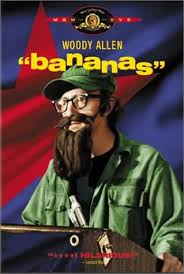
[General Esposito, driven mad by power,  gives a speech following the 
successful revolution in Woody Allen's "Bananas." (1971)]

I'm so glad the "system worked," as Janet Napolitano, Secretary of Homeland Security, assured us this morning, having read and memorized her copy of the memo from the Message Control Team at Obama, Inc. Can you imagine what a tragedy we would have had on our hands if the system hadn't worked so well?

It's worth a shot, you know, requiring all airline passengers to wear their underwear on the outside from now on. It would be fun to see (in some cases - not all, of course. It might be a better rule for Brazil.). Plus, this new rule would fit right in with the Me Too approach of the TSA in reaction to any given breakdown. Whatever a specific terrorist does, in a specific instance, becomes the basis of the new rule. For example, this guy Abdulmuttalab waited till the flight was on its final approach (spooky new implication there) before he went to the bathroom, put a blanket over his lap and tried to set his pants on fire. So the new rule is that you can't have anything on your lap, and you can't go to the bathroom, during the last hour of the flight. The Shoe Bomber tried to blow up his shoes, so now you have to take off yours. Those British flakes were going to make bombs out of liquids. So now you can only bring 3 oz. bottles on board. Whatever just happened, that's what they're going to prevent. This should tell you all you need to know about the reality of this "security."

The last hour of the flight isn't actually the problem, of course. But since the Department of Homeland Security won't do its job, they use words and the imagery of safety in place of actual security. Why can we go to the bathroom and put something on our laps in the middle of the flight? My guess is that this was what Abdulmuttalab actually had in mind when he boarded the plane in Amsterdam - to blow the plane up over the Atlantic. He lost his nerve, he lost track of the time, the in-flight movie was too good - something held him up so that he waited eight hours or so before he tried to detonate the bomb.

The "system" didn't work. What also didn't work was the detonator - that's all that saved those souls aboard the Northwest/Delta flight, and everybody knows it. The "system" had this guy on a list, and that data point was enhanced by the warnings given by his prominent banker father to the U.S. Embassy in Nigeria. The way that Napolitano and Robert Gibbs and the rest of them are reporting the story now is that the warning from the father took the form, "My son has gotten extremely religious."

I don't know why they start out like this every time, because we all know this story is not going to hold up. We're getting into the Soviet mode now: "No fact is true until the government officially denies it."

I'm trying to imagine an analogy. Let's say that I know a Greek citizen, a member of the Greek Orthodox Church, who wants to go to mass every day, who keeps talking about Orthodox liturgy all the time, and I become concerned. So then I call the Greek Consulate and tell them, "My friend Constantine, he was always Orthodox, but now he's gotten very, very Orthodox. I think you should look into it."

The father of Abdulmutallab said more than that, or he wouldn't have called the U.S. Embassy. He was trying to avoid the very thing that almost happened two days ago - he knew his son was hanging around with Islamic radicals and had become dangerous.

But we have to listen to Janet Napolitano tell us about how the "system worked." The hell it did. This is essentially the same pathetic lesson not learned after 9-11. The FBI, the field offices, did their work. They reported that a group of Arabs were taking flying lessons in a very unconventional way - midflight steering, but no landing or takeoffs. And the CIA had followed two al-Qaeda operatives and 9-11 conspirators from Malaysia to Southern California - and then they were allowed to live unmolested in San Diego, even listing their names in the phone book. So after all of that, this new bureaucracy, this tremendously expensive, complicated Department of Homeland Security, gets set up and basically does the same thing all over again.

And they can't tell the truth about it. They can spin it, they can drench you with the cognitive dissonance of telling you (as Napolitano did this morning) that travelers are "completely safe," even when the events of Christmas Day refute this statement as it leaves her mouth. Let's face it: they don't do anything. Their internal testing and monitoring constantly demonstrate that it's easy to get explosives, guns, knives, small nuclear devices through airport screening. The only safety is in numbers - there are many more flights than would-be terrorists. That's it. That's your margin of error, and asking you to hold it for the last hour of the flight isn't going to make any difference.

December 23, 2009

It's that time of year


We're nearing one year of President Obama's tenure, and I was thinking it might be nice to lighten up a little. One way of thinking about what we've been through, after all, is to recognize this is what most of us thought would happen. We knew last year that 2009 would be a lousy year for anybody to be President. Remember? I think the President was so caught up in the campaign to become President that it perhaps did not register just how tough this job would be at this particular time.


"America was in a throe, a kind of eschatological heave..." Norman Mailer wrote those words in his wonderful Armies of the Night book, way back in the Vietnam protest days. Something like that is going on now. Most of the bad news is economic, of course. We're going through a painful and long-delayed transition from the import/service/information economy to something else, probably based on Green energy and smaller scale enterprises. Obviously it will take years to get there, but the journey has to be made. Presidents who govern at such times, during difficult transitions, usually have a miserable time and are thrown out of office as thanks for their efforts. I'm thinking of Jimmy Carter in 1976-1980. He's generally denounced as a lousy president in our revisionist histories, and a lot of this concerns high inflation and the Iranian hostage crisis. But another major problem he faced was the transition from American peak oil (around 1970) to the beginnings of OPEC power over the American economy, which we allowed to happen by not dealing with the energy crisis then. Carter was definitely on to this, but Americans did not want to hear about "shortages" or "conservation" or efficiency or anything else sensible. It was better just to get rid of the guy who talked this way, and give us a President who would tell people what they wanted to hear: it's Morning.

So we went from oil self-sufficiency to the present state of helpless dependency where we import about 2/3rds of what we use: 14 million barrels out of a daily habit of about 20, or 25% of world usage. All that oil costs a fortune, and it has been the main driver of the imbalance of trade. And it makes us responsible for a hugely disproportionate (per capita) contribution to climate change. My guess is that Barack Obama, a bright guy, figured out what happens to Cassandras who acquaint Americans with inconvenient truths. The problem is: how do we ever confront the necessity of change without having it forced upon us in the present, chaotic, dislocating way by Reality? This seems to be the chief problem with over-reliance on "free market" ideology: it's a blind pig staggering around a crystal show room.

Meanwhile, the blogs (like mine) are in full roar, having gotten addicted to negative dissidence during the Bush years. At this point, you can read so many different versions of the same apocalyptic prognoses, on so many different blogs, in so many different ways, that it's getting a little silly. I do think there is quite a bit of stabilizing inertia built into the world's interlocking economies, after all. It's not all negative stochastics. For example, the Chinese have warned us that they don't have as much money to buy Treasuries anymore. The Selbstschadenfreueders immediately leap upon this as definite proof that America's complete bankruptcy is only days away. They drive this point into the ground. I read it one place, then see that blog's point quoted on another blog, then another blog starts talking about the "consensus" that we're bankrupt, and pretty soon 5 million angels are doing the mazurka on the head of a pin. I think what the Chinese were trying to convey is that they've got a large stake in dollar-denominated assets, and the U.S. needs to cool it in terms of demanding more investment.

And so Obama has begun talking about fiscal restraint as a main focus next year. You know: duh. Then the liberal Keynesians (Krugman, Dean Baker) call this restraint "idiocy" and bad economics because only by running up the deficit can we hope to revive the economy that wasn't really working in the first place. I think this is the difference between pundits and people who actually have to make decisions in the real world, based on real world restraints. Krugman is reciting something he read in a text, Obama is looking at an overdrawn check book and a banker making ominous noises about calling loans. Obama's right, Krugman's wrong.

If Obama can get past this economic crisis, maybe he will have the elbow room to demonstrate some innovation. It's not really possible now - it's all damage control, all the time. I'm not that optimistic about him, however, and that's a conclusion I'd rather not reach. Some very exciting, interesting things could be done, but I don't think he's going to do them. But maybe the American people will lead the way, for once, and the leaders will rush to get in front of a parade already in progress.

Merry Christmas, one and all.